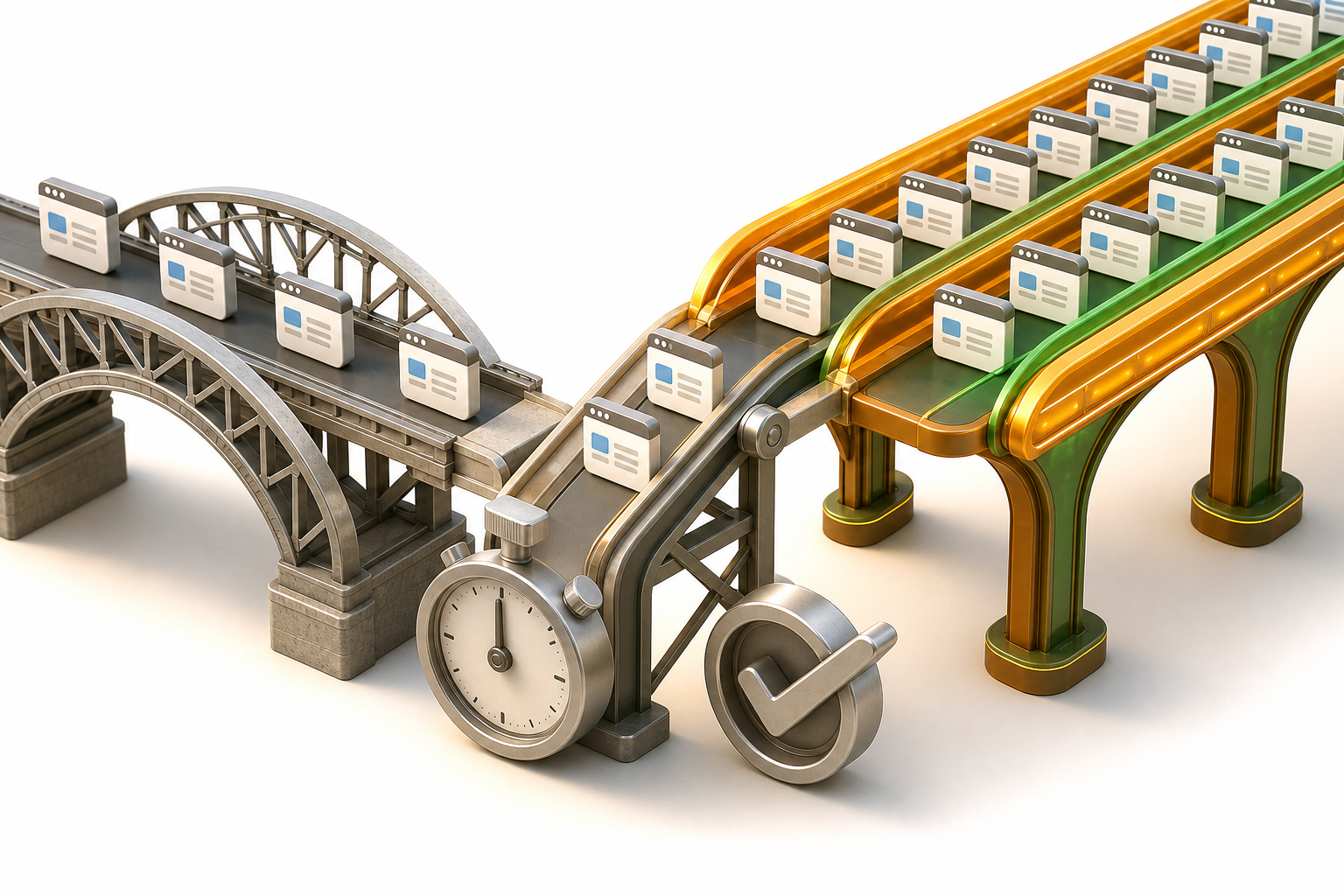
Self-healing tests are automated tests that use AI or rule-based intelligence to detect broken selectors, infer alternative locators, and keep execution moving when the application changes in expected ways. For mature teams practicing test automation frameworks, the value is not novelty; it is lower test maintenance, fewer false failures, and faster signal from CI pipelines.
Self-healing tests use AI to recover from common automation failures, especially locator changes and minor UI shifts, without immediately breaking the pipeline. They work best as a controlled resilience layer inside a disciplined automation framework, not as a substitute for good selectors, stable test design, and root-cause analysis.
Why Self-Healing Tests Matter in Modern Automation Frameworks
Self-healing tests matter because UI and workflow change faster than most automation suites can be manually maintained. In high-change products, they can convert low-value red builds into actionable stability data while preserving release confidence.
AI-driven automation is the use of artificial intelligence, machine learning, computer vision, or probabilistic matching to design, execute, maintain, or analyze automated tests. In the self-healing context, AI-driven automation typically evaluates multiple signals, such as DOM attributes, visual position, accessible names, historical locator success, and surrounding elements.
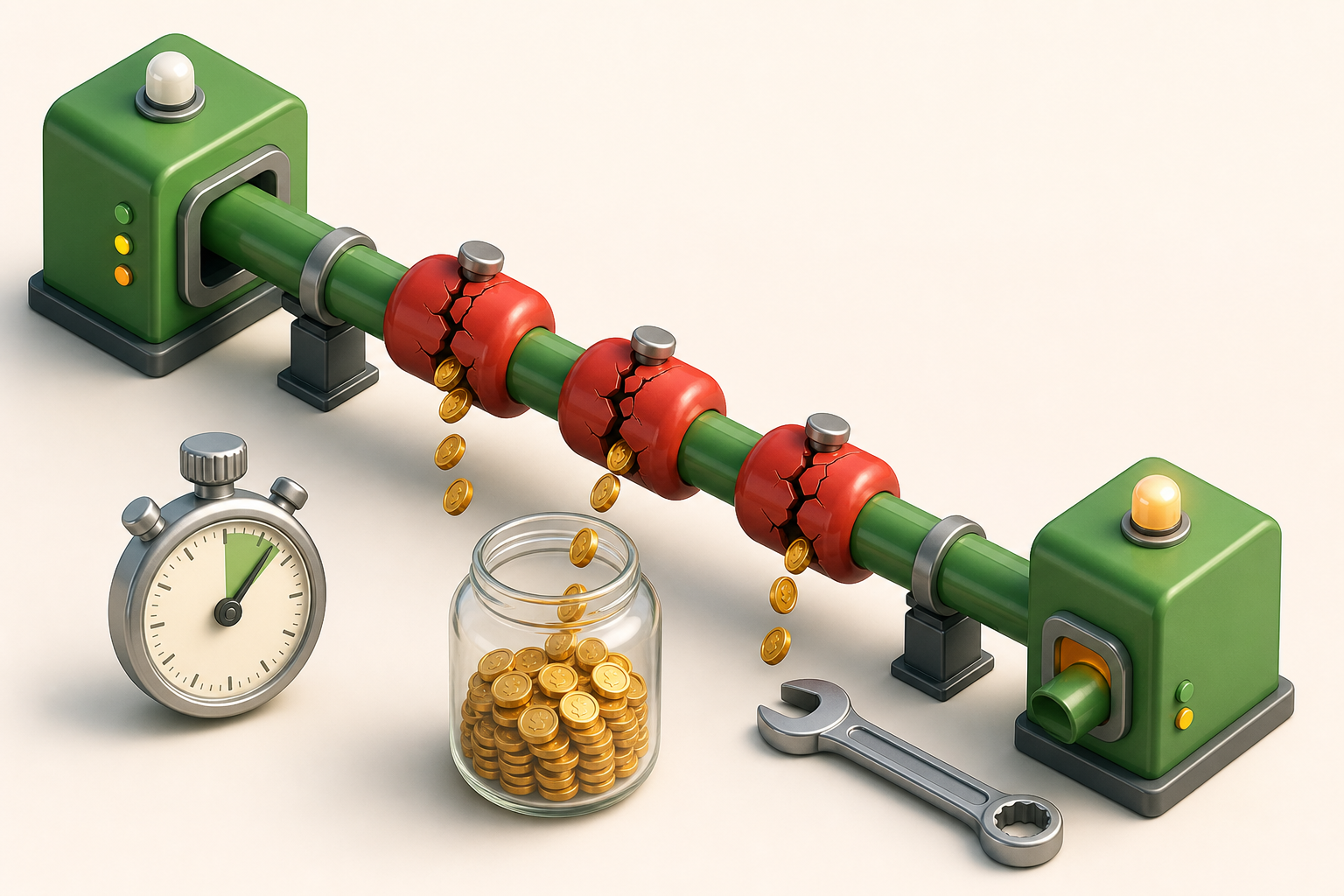
Test maintenance is the ongoing work required to keep automated tests accurate, stable, readable, and aligned with the product. In large suites, test maintenance commonly consumes 20% to 40% of automation engineering capacity, especially when tests depend on brittle CSS selectors, dynamic IDs, or unstable data.
Flaky tests are tests that pass and fail inconsistently without a corresponding product defect. Self-healing cannot eliminate all flaky tests, but it can reduce one major class of flakiness: failures caused by small, non-functional UI changes that break element identification.
Teams adopting self-healing layers often report 25% to 45% fewer locator-related failures after the first two release cycles. The more important benchmark is not raw pass rate, though; it is the percentage of healed steps that are later confirmed as safe, intentional application changes.
How AI-Driven Automation Actually Heals Broken Tests
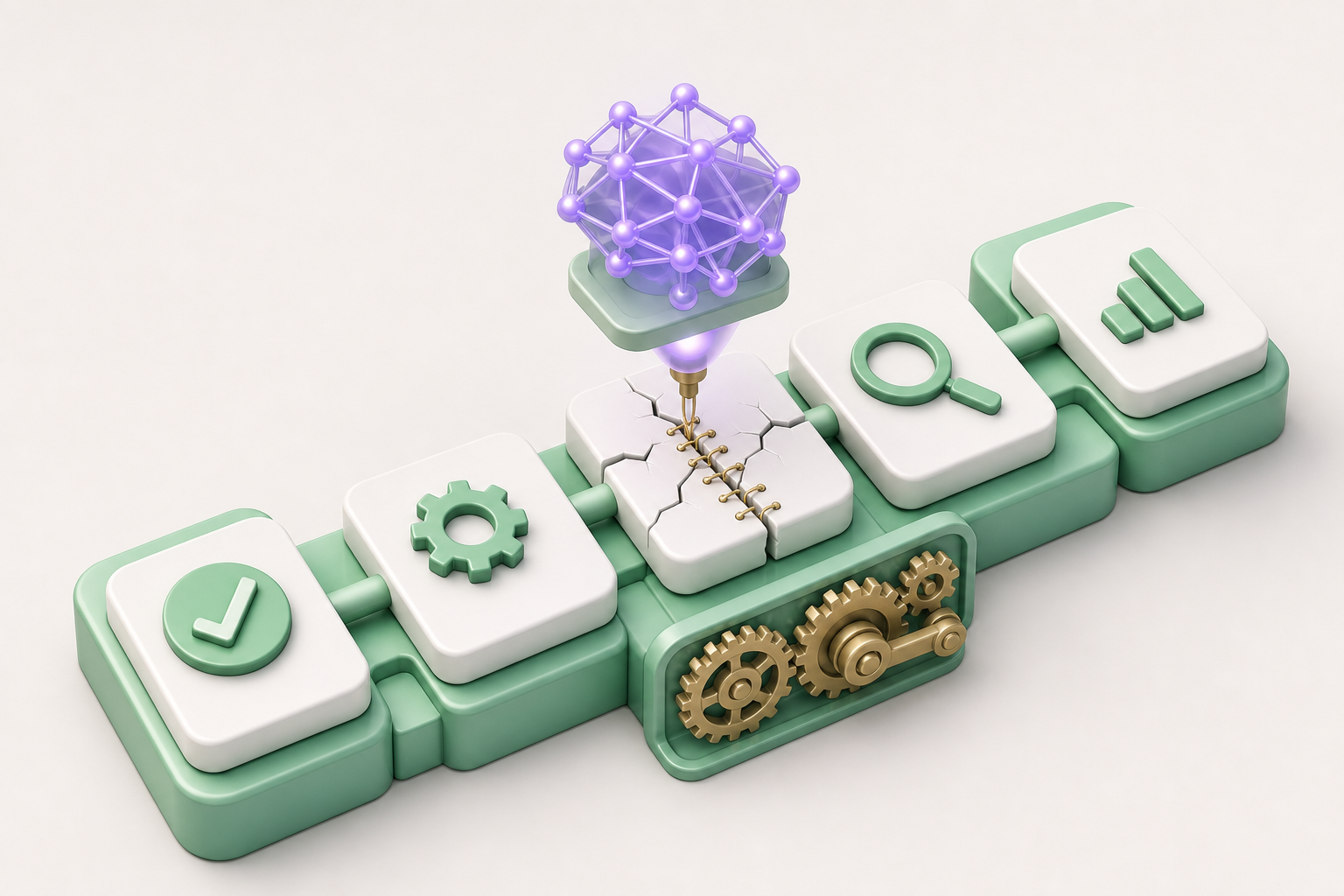
AI-driven automation heals tests by replacing single-point locator dependency with ranked evidence. When a selector fails, the framework searches for the most likely equivalent element using historical, structural, textual, visual, and behavioral signals.
A classic automated test fails when the locator no longer resolves. A self-healing layer intercepts that failure, checks whether the application state is otherwise valid, evaluates candidate elements, and selects a replacement only if confidence crosses a configured threshold.
The strongest implementations store a baseline snapshot of element metadata from previous successful runs. That snapshot may include role, accessible name, label text, DOM path, sibling context, CSS classes, visual coordinates, and event behavior.
A weaker implementation simply tries a list of fallback selectors. That can still be useful, but it is deterministic fallback rather than AI-based self-healing, and it should not be marketed internally as machine learning.
How does locator healing decide which element is correct?
Locator healing decides correctness by scoring candidate elements against the known identity of the original target. A button previously identified by accessible role, visible label, form context, and click behavior is safer to heal than an anonymous div matched only by screen position.
Reliable healing engines combine semantic evidence and interaction evidence. For example, a candidate with the same accessible name inside the same checkout form should score higher than a visually similar control in a promotional banner.
Confidence thresholds are essential. A healing engine that clicks the highest-scoring element at 42% confidence may hide real regressions, while a threshold near 80% to 90% usually produces better signal in regulated or revenue-critical workflows.
When should visual AI be used for self-healing tests?
Visual AI should be used when the user-facing layout or component identity matters more than the underlying DOM. It is especially useful for canvas-heavy apps, low-code platforms, dashboards, design systems, and mobile screens where native element metadata is limited.
Visual regression testing and self-healing overlap, but they solve different problems. Visual testing asks whether the screen changed; self-healing asks whether the test can still identify and interact with the intended element.
Visual signals should rarely be the only signal. Combining image recognition with accessibility roles and text labels gives better resilience than matching pixels alone, especially across responsive breakpoints and localized builds.
Self-Healing Versus Traditional Locator Strategies
Self-healing is not a replacement for strong locator strategy; it is a safety net around it. The most stable suites still prioritize accessible roles, test IDs, contract-backed selectors, and clear page object ownership.
Traditional locator strategy assumes the test author can choose a selector that remains stable. That assumption breaks down when third-party components generate IDs, teams refactor UI markup frequently, or product experiments change copy and layout without updating tests.
The best automation frameworks layer locator quality from most intentional to most inferred. A dedicated data-testid or accessibility role should beat a CSS chain, and a healed locator should trigger review rather than silently becoming permanent.
| Approach | Best use case | Main strength | Main risk | Maintenance impact |
|---|---|---|---|---|
| Stable test IDs | Core web workflows owned by engineering | Explicit contract between app and test | Requires developer discipline | Low when governed well |
| Accessible role locators | Forms, buttons, navigation, and semantic UI | Aligns tests with user intent and accessibility | Breaks if accessibility quality is poor | Low to moderate |
| CSS or XPath selectors | Legacy apps and hard-to-instrument components | Flexible and widely supported | Brittle under DOM refactoring | Moderate to high |
| Rule-based fallback locators | Known alternate markup patterns | Predictable and auditable | Limited adaptability | Moderate |
| AI self-healing locators | Fast-changing UI and large regression suites | Adapts to minor change with confidence scoring | Can mask genuine defects if unmanaged | Lower if healing events are reviewed |
For Playwright, Selenium, and Appium teams, the practical question is not whether AI should choose every locator. The question is where a healing mechanism can reduce operational noise without weakening the test oracle.
Where Self-Healing Tests Deliver the Highest ROI
Self-healing tests deliver the highest return in mature suites with many legitimate UI changes and frequent regression execution. They deliver weaker returns in small suites where selectors can be fixed faster than a healing layer can be governed.
Large enterprise web apps are strong candidates because their automation failures often cluster around component refactoring, naming changes, and A/B experiments. A 3,000-test suite with a 6% daily instability rate can waste dozens of engineer-hours each week in triage.
Mobile automation can benefit when native views expose limited identifiers or when cross-device layout changes shift element hierarchy. However, mobile self-healing needs careful device and OS segmentation because a valid Android candidate may be invalid on iOS.
Low-code and SaaS admin platforms are another strong fit. These products often generate markup that changes without feature intent, making selector brittleness a recurring cost.
How do self-healing tests reduce CI noise?
Self-healing tests reduce CI noise by preventing non-defect locator breaks from failing the entire build. Instead of a red pipeline caused by a renamed button class, the framework can complete execution and report a healing event for review.
This distinction improves continuous integration testing because engineers receive fewer false alarms. Teams that separate healed warnings from true assertion failures typically see triage queues shrink by 30% or more after stabilization.
The CI policy matters. A healed step in a smoke test may produce a warning, while the same event in payment authorization or identity verification may require a failed build until a human approves the new locator.
Can self-healing improve developer trust in automation?
Self-healing can improve developer trust when it reduces false failures without hiding real regressions. Trust rises when every healing event is explainable, logged, and linked to a product or markup change.
Developer trust collapses when AI behavior feels magical. A framework that says only “test healed” is less useful than one that shows the original selector, replacement selector, confidence score, screenshot, DOM diff, and affected commit.
Teams should treat healing as observability data. If the same component heals repeatedly, the automation issue may actually be a missing selector contract in the application code.
Architecture of a Next-Gen Self-Healing Automation Framework
A next-generation self-healing framework needs governance, telemetry, and deterministic boundaries as much as it needs AI. The architecture should make healing observable, reversible, and reviewable.
A practical design starts with a normal automation stack such as Playwright, Selenium, Cypress, or Appium. The healing service sits between locator resolution and test execution, collecting failure context only when a locator fails or when proactive comparison detects a high-risk drift.
The framework should record element identity at successful execution time. That identity becomes the baseline used to evaluate candidates in future runs.
The reporting layer is non-negotiable. Without detailed reports, self-healing becomes a hidden mutation mechanism inside your suite, which is unacceptable for audit-heavy domains and high-risk release gates.
What should a self-healing event log include?
A self-healing event log should include enough information for a reviewer to decide whether the recovery was correct. At minimum, it should capture the failed locator, healed locator, confidence score, screenshot, DOM excerpt, test name, build number, and owning team.
The event should also record whether the healed step affected an assertion or only a navigation action. Healing an element click is lower risk than healing the target of a critical assertion, because assertion healing may alter the meaning of the test.
Good logs support trend analysis. If 70% of healing events originate from three shared components, the best fix is usually component instrumentation rather than more AI tuning.
How should healed locators be promoted into the codebase?
Healed locators should be promoted only after human or policy-based review confirms that the application change is intentional. Automatic promotion can be safe for low-risk internal tools, but it is dangerous in workflows tied to money, privacy, or compliance.
A healthy workflow opens a pull request with the proposed locator update, attached evidence, and confidence metadata. The owning QA engineer or feature team approves it just like any other code change.
Promotion rules should differ by suite tier. Smoke tests, regression testing, and exploratory automation usually deserve different thresholds because the cost of false recovery is not equal.
Example Configuration for Controlled AI Locator Healing
A controlled configuration keeps self-healing powerful but bounded. The key is to allow recovery for safe interaction steps while blocking silent mutation of business-critical assertions.
The following Playwright-style example shows how a team might wrap locator resolution with confidence thresholds, audit logging, and suite-specific policy. The snippet is illustrative, but the design principles apply across Selenium, Cypress, and Appium frameworks.
import { test, expect } from '@playwright/test';
import { healingLocator } from './framework/healing-locator.js';

test('returning customer can complete checkout', async ({ page }, testInfo) => {
  await page.goto('/checkout');

  const emailField = await healingLocator(page, {
    primary: '[data-testid="checkout-email"]',
    intent: 'customer email input in checkout form',
    allowedSignals: ['role', 'label', 'dom-neighborhood', 'visual-position'],
    minimumConfidence: 0.86,
    audit: {
      testId: testInfo.title,
      buildId: process.env.CI_BUILD_ID,
      failOnAssertionHealing: true
    }
  });

  await emailField.fill('returning.customer@example.com');

  const payButton = await healingLocator(page, {
    primary: 'button[data-testid="pay-now"]',
    intent: 'primary payment submission button',
    minimumConfidence: 0.92,
    requireHumanApprovalForPromotion: true
  });

  await payButton.click();
  await expect(page.getByRole('heading', { name: 'Payment confirmed' })).toBeVisible();
});
The important pattern is that the test still expresses intent. AI can recover implementation details, but the test author owns the business meaning of the step.
Teams should avoid using self-healing to patch vague tests. If the intent is not clear enough for a reviewer, it is not clear enough for a healing engine.
Common Pitfalls That Make Self-Healing Tests Risky
Self-healing tests become risky when teams use them to compensate for poor automation discipline. The technology reduces maintenance drag, but it does not forgive weak assertions, uncontrolled test data, or missing ownership.
The first pitfall is over-healing. If every failed interaction is allowed to recover, the framework may click the wrong control and continue into an invalid state, creating false confidence.
The second pitfall is ignoring root causes. Repeated healing against the same component indicates a product or testability problem, not an automation success story.
The third pitfall is treating AI confidence as truth. A 94% confidence match is still a probabilistic decision, and the remaining 6% matters when the workflow affects invoices, medical records, or account permissions.
Why do self-healing tests sometimes hide product defects?
Self-healing tests hide product defects when they recover from a change that should have failed the test. For example, if a checkout button is replaced by a visually similar disabled control, an aggressive healing engine may select the wrong element and obscure the user-impacting issue.
The risk increases when assertions are weak. A test that only verifies navigation after clicking a healed button may miss that the wrong payment option was selected.
Mitigation requires hard boundaries. Do not heal critical assertions silently, require higher confidence for destructive actions, and fail the build when healing changes the business meaning of a workflow.
When does self-healing add more complexity than value?
Self-healing adds more complexity than value when the suite is small, the product is stable, or the team lacks reporting discipline. In those cases, stable selectors and better page object model design usually deliver a faster payoff.
It can also be excessive for API-first systems where UI selectors are not the dominant failure source. If most failures come from data setup, environment instability, or asynchronous timing, focus on test data management and synchronization before adding AI.
The break-even point appears when locator-related failures are frequent enough to justify tooling overhead. Many teams see that point when UI automation exceeds 500 to 1,000 tests and runs multiple times per day.
Governance Metrics for Measuring Self-Healing Success
Self-healing success should be measured by signal quality, not by inflated pass rates. The best metric is how often healing preserves valid feedback while reducing avoidable triage.
Track the healed execution rate, but interpret it carefully. A rising healing rate may indicate improved resilience, or it may reveal worsening selector discipline.
Track confirmed-correct healing percentage after review. Mature teams should aim for more than 90% confirmed-correct events in low-risk interactions and a lower tolerance for critical workflows.
Track mean time to repair for locator failures. When healing reports automatically produce actionable pull requests, teams often reduce locator repair time from hours to minutes.
Track escaped defect correlation. If escaped UI defects increase after enabling self-healing, thresholds are too permissive or assertions are too weak.
- Healed step rate: Percentage of steps recovered by the framework during execution.
- Confirmed-correct rate: Percentage of healing events approved after review.
- False-heal rate: Percentage of recoveries that selected the wrong target or masked a defect.
- Promotion latency: Time between healing event and approved locator update.
- Component hotspot count: Number of components responsible for repeated healing events.
Implementation Strategy for Enterprise QA Teams
Enterprise teams should roll out self-healing tests incrementally, starting with observability before automated recovery. This reduces risk and creates evidence for where AI adds real value.
Begin by classifying failures from the last 30 to 60 days. If locator failures are not a top-three contributor, self-healing may not be the right immediate investment.
Next, run the healing engine in shadow mode. Shadow mode is a non-intervention setup where the engine predicts recoveries but does not alter test execution, allowing teams to measure accuracy safely.
After shadow validation, enable healing for non-critical interaction steps in a limited suite. A good pilot includes enough volume to generate data but avoids business-critical release gates until the false-heal rate is understood.
- Define which suites, workflows, and actions are eligible for healing.
- Set confidence thresholds by risk level instead of using one global value.
- Require screenshots, DOM evidence, and audit records for every healing event.
- Review repeated healing hotspots during weekly automation health reviews.
- Promote healed locators through pull requests or controlled policy automation.
- Measure pass-rate improvement alongside false-heal and escaped-defect trends.
This staged rollout keeps AI helpful rather than disruptive. It also gives engineering leaders the evidence needed to decide whether to build, buy, or extend their existing automation platform.
The Future of AI-Driven Automation Beyond Locator Healing
The future of AI-driven automation extends beyond locator repair into test design, impact analysis, failure clustering, and risk-based execution. Locator healing is the entry point because it solves a visible pain, but broader value comes from optimizing the whole feedback system.
Failure clustering is already reducing triage time by grouping related failures across browsers, devices, and branches. Instead of reading 200 failed test logs, teams can inspect five likely root causes.
Risk-based selection is another high-value area. AI can evaluate code changes, historical defect density, component ownership, and user analytics to choose the most relevant tests for a build.
Generative maintenance will also mature. Rather than merely healing selectors, frameworks will propose refactors, generate missing test IDs, detect redundant coverage, and recommend when a UI check should move to an API or contract layer.
The strategic direction is clear: automation frameworks are shifting from script execution engines to quality intelligence systems. Teams that combine AI with strong engineering controls will get faster feedback without sacrificing trust.
Key Takeaways
- Self-healing tests reduce locator-related failures by using AI or intelligent matching to recover from minor, expected application changes.
- AI-driven automation works best as a governed resilience layer, not as a replacement for stable selectors and clear test intent.
- Every healing event should be auditable with the failed locator, proposed replacement, confidence score, screenshot, and ownership metadata.
- Self-healing can reduce CI noise and test maintenance, but over-permissive recovery can hide real product defects.
- The highest ROI appears in large, fast-changing UI suites where locator failures are a measurable source of flaky tests.
- Teams should roll out healing in shadow mode first, then enable it gradually by workflow risk and confidence threshold.
- The next generation of automation frameworks will combine self-healing with failure clustering, risk-based test selection, and AI-assisted maintenance.