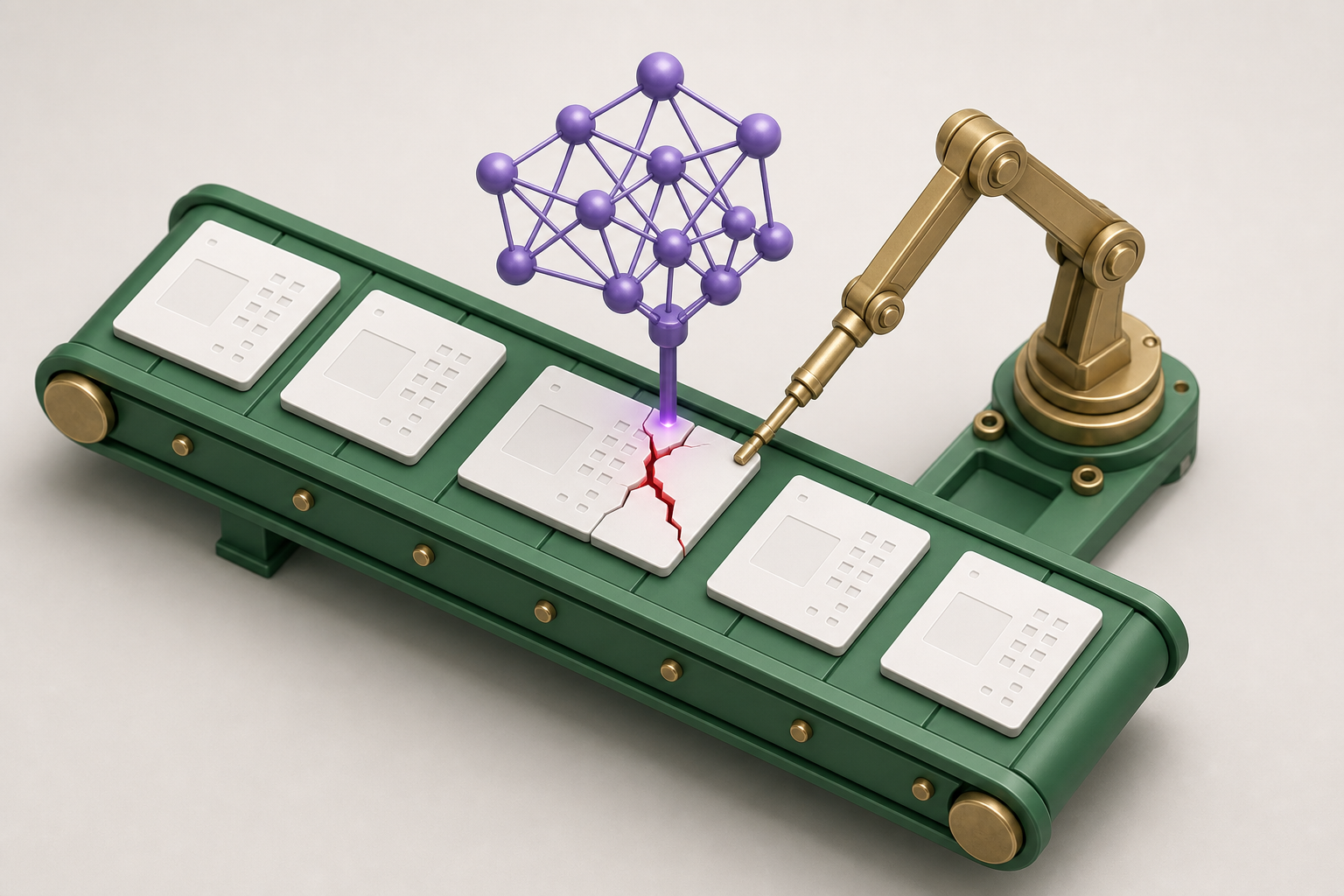

Performance regression is a measurable decline in speed, stability, scalability, or resource efficiency after a code, configuration, infrastructure, or dependency change. CI/CD is the automated practice of integrating, validating, and delivering software through repeatable pipeline stages, and it is where performance regression detection becomes most valuable because feedback arrives before a bad build reaches production.
AI-powered performance regression detection compares current CI/CD performance signals against learned baselines and flags statistically meaningful degradation before release. Machine learning is the use of algorithms that learn patterns from historical data, while baseline profiling is the process of capturing normal performance behavior for a service, endpoint, workload, or environment. The best implementations combine automated load tests, production-like telemetry, model-based anomaly detection, and human-readable release gates.
Why AI-powered performance regression detection belongs in CI/CD
AI-powered regression checks belong in CI/CD because performance defects are cheaper, clearer, and easier to isolate when they are linked to a specific change set. Teams that move performance validation earlier often report 30 to 50 percent faster feedback loops for latency and throughput issues compared with periodic performance test cycles.
Traditional load testing catches obvious failures, but it often misses subtle degradation: a 7 percent rise in p95 latency, a memory allocation pattern that only appears after warm-up, or a throughput dip masked by autoscaling. These issues rarely look dramatic in a single test run, yet they accumulate into user-visible slowness and higher cloud cost.
AI-assisted detection improves the signal-to-noise ratio by learning the expected shape of performance data. Instead of enforcing one static threshold for every branch, model, hour, or environment, it evaluates whether the latest run is abnormal relative to the service's own history and workload profile.
The key is not replacing performance engineers with a model. The value is creating a pipeline gate that surfaces credible performance risk early enough for developers, SREs, and QA engineers to act while context is still fresh.
Core terms that shape a reliable regression detection strategy
A reliable strategy depends on shared definitions because teams often use the same performance words to mean different things. Performance regression detection should be framed as a decision system, not just a dashboard or a load test report.
Baseline profiling is the disciplined capture of expected performance behavior across representative workloads, environments, and time windows. A useful baseline includes latency distributions, throughput, error rates, CPU, memory, garbage collection, database timing, queue depth, and saturation indicators.
Machine learning is not automatically better than statistics for every pipeline gate. In this context, it usually means anomaly detection, time-series forecasting, clustering, or supervised classification trained on historical test and telemetry data.
Performance benchmarking is the repeatable measurement of system behavior under controlled conditions. Regression detection uses benchmarks as one input, but it also needs change metadata, infrastructure context, and confidence scoring to avoid blocking builds for irrelevant variance.
A CI/CD performance gate is a release decision point that passes, warns, or fails a build based on performance risk. Strong gates explain what changed, where it changed, how confident the system is, and which metric drove the decision.
How baseline profiling turns noisy performance data into a reliable release gate
Baseline profiling makes AI performance gates trustworthy by separating normal variance from meaningful degradation. Without a baseline, the pipeline can only compare a run with an arbitrary threshold or a single previous execution, both of which are fragile.
A strong baseline is not one golden number. It is a profile of expected behavior for each critical transaction, API route, user journey, data volume, infrastructure class, and concurrency level.
For example, an order checkout endpoint may have a stable p50 latency but a volatile p99 latency when payment provider mocks slow down. A model that understands this historical tail behavior can avoid false alarms when the pattern is normal and raise a sharper alert when the tail expands beyond expected bounds.
Baseline data should be versioned like code. When a new index, caching layer, or runtime version intentionally changes performance characteristics, the baseline update should be reviewed and traceable rather than silently overwritten.
How many baseline runs are enough for CI/CD confidence?
Most teams need at least 20 to 30 comparable runs before model-based performance regression detection becomes stable. Fewer runs can still support simple statistical comparisons, but the confidence interval is usually too wide for aggressive release blocking.
The right number depends on variance. A deterministic API in a controlled test environment may need fewer runs, while a distributed service with asynchronous queues, autoscaling, and shared infrastructure may need more history.
Include both clean passes and known regressions where possible. Even a small library of labeled incidents helps calibrate severity and teaches the system what real degradation looked like in your architecture.
When should the baseline be recalibrated?
The baseline should be recalibrated when the system's intended performance envelope changes, not every time a run looks different. Good triggers include infrastructure resizing, runtime upgrades, database migrations, caching strategy changes, or a new workload mix.
Automatic recalibration is convenient but risky. If every slow run is absorbed into the baseline, the model normalizes degradation and the gate becomes less protective over time.
A practical pattern is to require several consecutive healthy runs after an approved performance-affecting change before promoting a new baseline. This keeps the model adaptive without letting regressions become the new normal.
Machine learning models that work for performance regression detection
The best model is the simplest one that catches meaningful regressions with explainable evidence. In CI/CD, interpretability and low operational cost often matter more than algorithmic sophistication.
Many high-performing teams start with robust statistics, then add machine learning where variance, seasonality, or multi-metric interactions exceed what fixed thresholds can handle. A hybrid approach is common because latency, error rate, CPU, and throughput behave differently under load.
| Approach | Best fit in CI/CD | Strength | Risk to manage |
|---|---|---|---|
| Static thresholds | Hard service-level limits such as error rate above 1 percent | Easy to explain and enforce | Creates false positives when normal variance is high |
| Rolling statistical baselines | Stable endpoints with enough repeat test history | Fast, transparent, and inexpensive | Can miss multi-metric regressions |
| Anomaly detection | Latency distributions, CPU patterns, and queue behavior | Finds unusual shapes without fixed limits | Requires careful tuning to avoid alert fatigue |
| Time-series forecasting | Services with predictable seasonality or scheduled load | Handles trends better than point comparisons | Needs clean historical data and stable sampling |
| Supervised classification | Organizations with labeled pass, warn, and fail outcomes | Can learn complex regression signatures | Labels are expensive and may encode past bias |
How does anomaly detection reduce false positives?
Anomaly detection reduces false positives by comparing the full behavior pattern of a run against historical normal behavior instead of judging one metric in isolation. A p95 latency increase may be acceptable if throughput increased and CPU remained efficient, but suspicious if latency, garbage collection, and database waits rise together.
Useful models consider metric correlation. For example, a throughput drop with lower CPU can indicate client-side test saturation, while a throughput drop with higher CPU may indicate server-side inefficiency.
Explainability still matters. If the model cannot show which metrics contributed to the anomaly score, engineers will bypass it during urgent releases.
Can supervised learning work without many labeled regressions?
Supervised learning is usually weak without enough labeled regressions because real performance failures are sparse and context-dependent. Teams often get better results by starting with unsupervised anomaly detection and gradually collecting labels from triage decisions.
A pragmatic label taxonomy is pass, investigate, fail, and expected change. This avoids forcing every unusual run into a binary good-or-bad outcome.
Over time, those labels become a high-value data asset. They capture institutional judgment about which performance changes matter and which are harmless noise.
Reference architecture for AI-powered regression gates in CI/CD
A practical architecture connects repeatable performance tests, telemetry collection, model scoring, and release gating in one feedback path. The model should receive both metrics and context so it can distinguish a code regression from a noisy environment.
The pipeline usually starts with a targeted performance suite, not a full production-scale test. Smoke-level performance checks can run on every pull request, while deeper stress testing and endurance tests run nightly or before major releases.
Telemetry should be captured from the application, infrastructure, runtime, test driver, and dependencies. Relying only on response time hides the root cause and makes the gate harder to trust.
The scoring service compares the current run against the approved baseline, computes a risk score, and writes a decision back to the CI/CD system. A mature implementation stores raw metrics, model inputs, model version, threshold configuration, and the final decision for auditability.
Where should the gate run in the pipeline?
The gate should run after deploy-to-test and before promotion to a shared staging or production-like environment. That placement gives the test realistic runtime conditions while keeping slow or risky builds from consuming downstream environments.
For pull requests, use a lighter gate focused on critical APIs and recent code paths. For release candidates, use broader workload coverage and stricter confidence requirements.
Do not block every build on a long performance suite. The fastest programs use layered gates: cheap checks on every commit, representative benchmarks on merge, and heavier validation on scheduled or release-triggered pipelines.
import json

baseline = json.load(open('perf-baseline.json'))
current = json.load(open('perf-current.json'))

signals = ['p95_latency_ms', 'p99_latency_ms', 'error_rate', 'throughput_rps']
risk = 0

for signal in signals:
    base = baseline[signal]
    now = current[signal]
    drift = (now - base) / base
    if signal == 'throughput_rps':
        drift = (base - now) / base
    if drift > 0.08:
        risk += 1

raise SystemExit(1 if risk >= 2 else 0)
This simplified gate fails only when at least two important signals drift beyond 8 percent. Production systems should add confidence intervals, environment health checks, model versioning, and a human-readable explanation for every failure.
Metrics and thresholds that make regression detection actionable
Actionable regression detection uses metrics that point to a decision, not just metrics that look impressive on a chart. The best signal set combines user impact, system saturation, and test validity indicators.
Latency percentiles are essential, especially p95 and p99, because averages hide tail pain. Throughput should be interpreted with concurrency and error rate, since high throughput with elevated failures is not a pass.
Resource metrics reveal efficiency regressions. A build may meet latency targets while using 25 percent more CPU, which can become a cloud cost regression or a future scaling limit.
Dependency timing is often the difference between a useful alert and a blame game. Database query duration, cache hit ratio, external API latency, and queue wait time help distinguish application regressions from environmental instability.
Test validity metrics protect the model from bad input. Load generator CPU, network saturation, data seeding errors, warm-up duration, and virtual user ramp shape should be stored with every run.
Which thresholds should fail a build versus warn the team?
Build failures should be reserved for regressions with high confidence and meaningful user or cost impact. Warnings should capture suspicious but lower-confidence drift that deserves review without stopping delivery.
A common operating model is fail for severe tail latency, error-rate increase, or throughput collapse, and warn for resource efficiency drift, moderate percentile movement, or anomalous but unexplained model scores. This creates room for engineering judgment while keeping the gate credible.
Teams that tune fail and warn bands separately often reduce noisy pipeline failures by 20 to 35 percent. The improvement usually comes from treating detection as risk management rather than a binary assertion.
Common pitfalls that make AI performance gates unreliable
AI performance gates fail when teams feed them inconsistent data, hide environmental noise, or treat model output as unquestionable truth. Most problems are operational rather than mathematical.
The most common mistake is comparing runs from non-equivalent environments. Instance type changes, noisy shared runners, cold caches, background jobs, or different test data can produce a regression-shaped signal without a code regression.
Another failure mode is training on unstable baselines. If historical data includes frequent incidents, flaky test drivers, or partial outages, the model learns chaos as normal behavior.
Teams also overfit to synthetic workloads. A benchmark that exercises only happy-path APIs may miss regressions caused by pagination, authorization checks, cache misses, or large customer datasets.
Alert fatigue is a serious risk. If developers see three false performance failures in a week, they will start rerunning pipelines until one passes or requesting bypasses from release managers.
The fix is governance: baseline review, environment health checks, confidence scoring, and visible triage outcomes. Performance regression detection becomes stronger when every alert teaches the system and the team something concrete.
Operational practices for maintaining trust in the model
Trust is maintained by making every regression decision reproducible, explainable, and easy to challenge. A gate that cannot be audited will eventually be disabled during delivery pressure.
Store every model input and decision artifact. This includes test version, data set version, environment metadata, commit hash, dependency versions, metric windows, model version, baseline version, and the final pass, warn, or fail decision.
Use canary mode before enforcement. Run the AI gate silently for several weeks, compare its predictions with human review, and tune thresholds before blocking builds.
Review false positives and false negatives as part of continuous testing operations. False positives waste engineering time, but false negatives are more dangerous because they erode production reliability while the gate appears healthy.
Integrate with observability platforms so CI findings can be compared with staging and production telemetry. When the same regression signature appears after release, the team can refine earlier gates and strengthen future detection.
Finally, keep ownership explicit. QA engineers may own workload design, SREs may own telemetry and infrastructure stability, and service teams may own remediation, but the release policy must be shared.
Key Takeaways
- Performance regression detection is most valuable in CI/CD when it links degradation to a specific change set before release.
- Baseline profiling is the foundation of reliable AI gates because it defines normal behavior across workloads, environments, and time windows.
- Machine learning works best when paired with robust statistics, explainable scoring, and clear pass, warn, and fail policies.
- Static thresholds are still useful for hard limits, but anomaly detection is stronger for multi-metric drift and variable systems.
- False positives usually come from inconsistent environments, unstable baselines, weak workload design, or missing test validity metrics.
- Trustworthy performance gates store model inputs, baseline versions, environment context, and triage outcomes for auditability.
- The goal is not to block more builds; it is to catch meaningful performance risk earlier with fewer noisy interruptions.