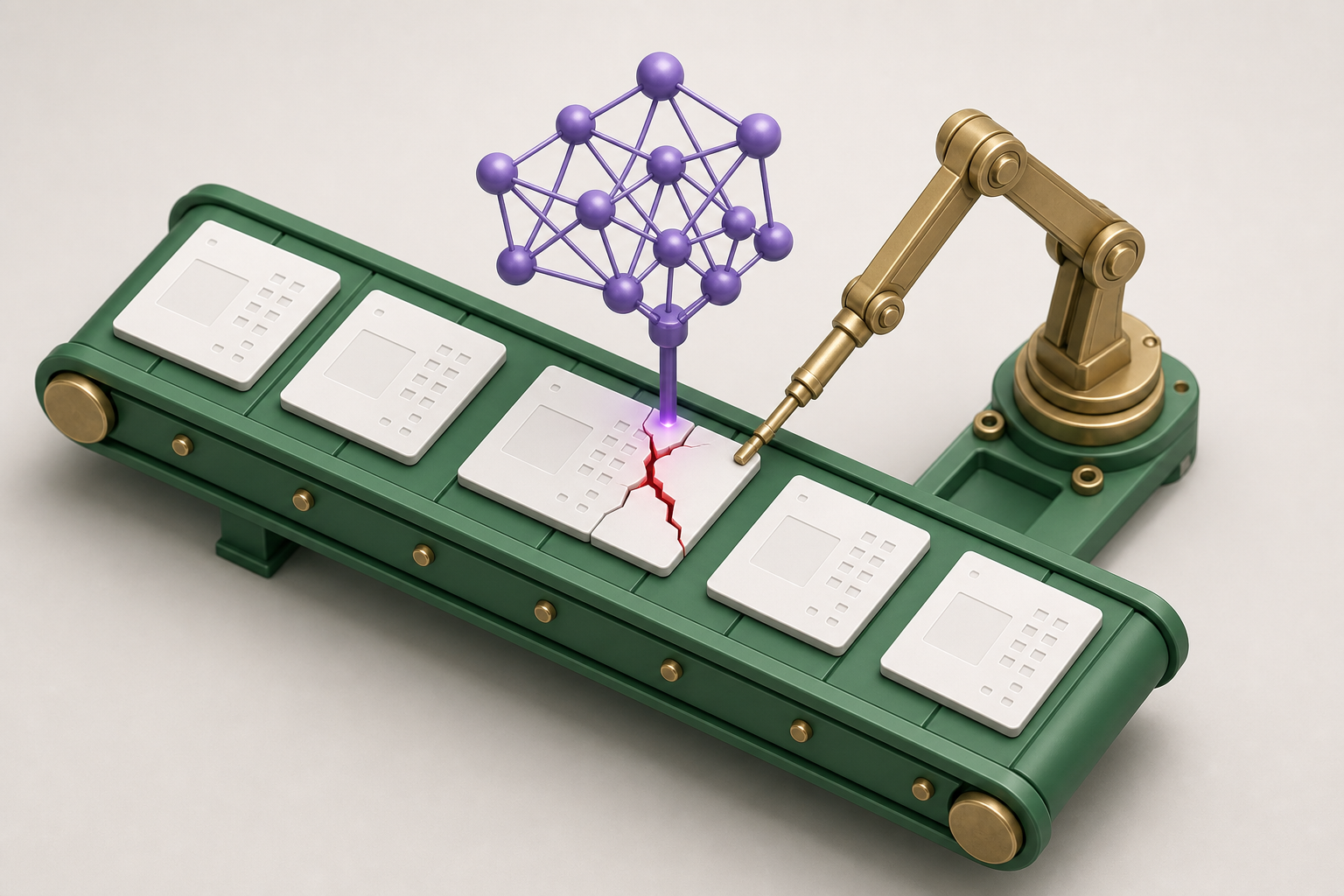
Flaky tests cost engineering teams far more than failed builds: flaky tests cost is the recurring loss created when unreliable automated checks consume developer time, CI capacity, release confidence, and rework. A flaky test is an automated test that produces different results without a relevant code change. Test reliability is the degree to which a suite reports true product risk consistently, and test maintenance cost is the ongoing effort required to keep automated tests useful, trusted, and executable.
To calculate flaky tests cost, multiply flaky failure events by average triage time, loaded engineering rate, rerun cost, and release delay impact. Then reduce the tax by measuring flake rate per test, quarantining high-risk checks, fixing root causes by category, and preventing new flakes through deterministic data, stable waits, isolation, and observability.
Calculate flaky tests cost with a monthly reliability ledger
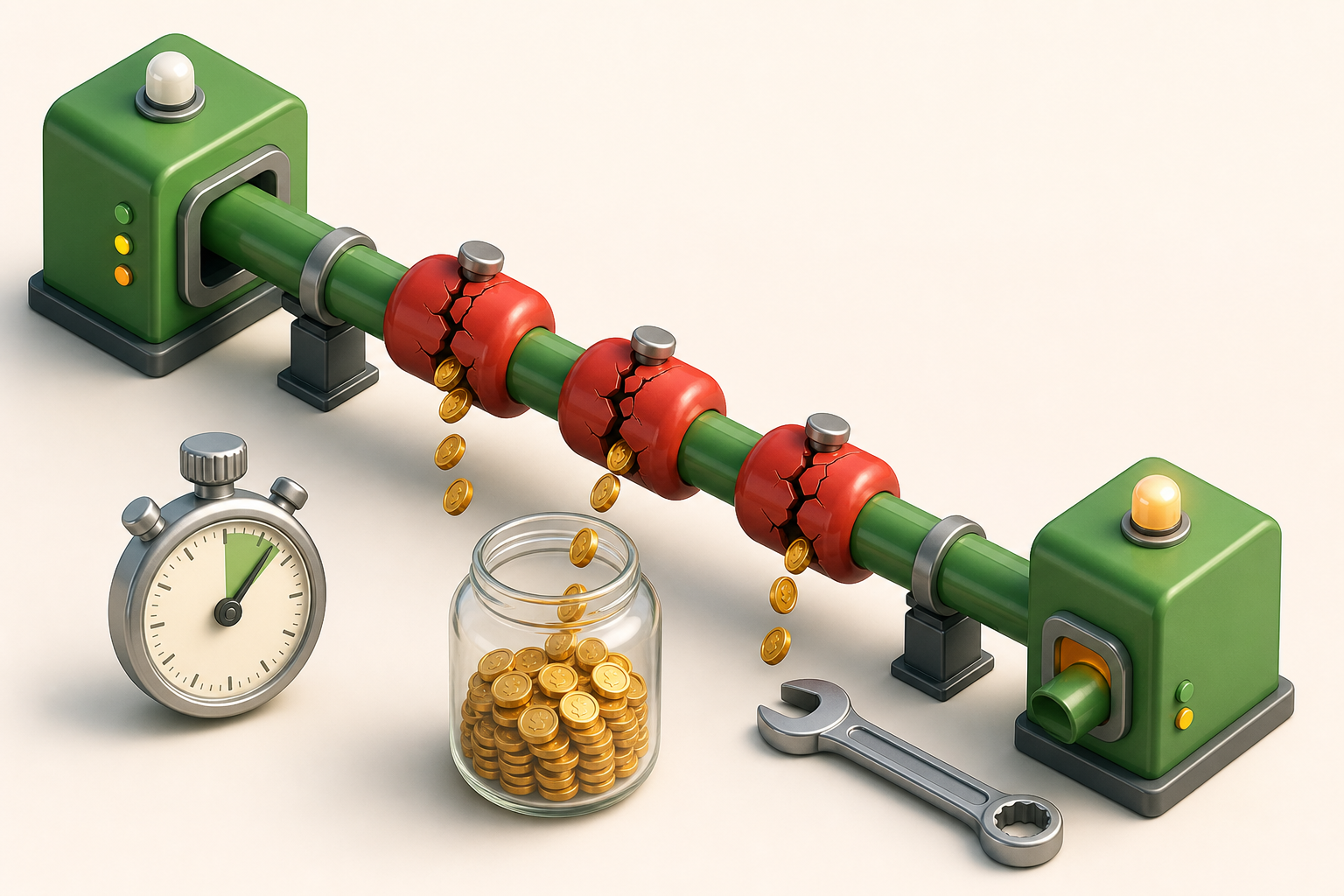
Flaky tests cost should be calculated as a monthly ledger, not as a vague frustration metric. The useful number is the total cost of triage, reruns, infrastructure waste, delayed releases, and recurring test maintenance cost caused by unreliable automation.
The simplest model starts with incidents. A flaky incident is one failed or suspicious test result that triggers human attention, an automated rerun, a pipeline delay, or a blocked merge. If one flaky test fails ten times across ten pull requests, count ten incidents because the cost repeats every time the team has to interpret the signal.
Monthly flaky tests cost = human triage cost + CI rerun cost + blocked developer cost + release delay cost + recurring maintenance cost.
Use loaded engineering rates rather than salary averages. A realistic loaded rate includes salary, benefits, employer taxes, tooling, office or remote support, and management overhead. For many product teams, a blended engineering rate between $90 and $180 per hour is a defensible planning range.
How much does one flaky failure cost?
One flaky failure usually costs 15 to 45 minutes of engineering attention when it interrupts an active pull request. The failure may look cheap if a rerun passes, but the engineer still context-switches, checks logs, distrusts the signal, and waits for feedback.
Consider a team with 24 engineers, 1,200 CI test runs per month, a 4 percent flaky failure rate, 25 minutes of average triage, and a loaded rate of $130 per hour. That creates 48 flaky incidents per month and $2,600 in direct triage cost before infrastructure and release drag are counted. If each incident also causes an average 12-minute pipeline delay for one developer, another $1,248 is lost.
Infrastructure can look small per event but large in aggregate. A suite that reruns 600 minutes of tests per week at $0.08 per CI minute burns roughly $192 per month in direct compute. The larger cost is usually not the bill; it is the confidence erosion that makes engineers rerun green pipelines, over-review harmless changes, or bypass checks during incidents.
| Cost component | Practical formula | Typical source |
|---|---|---|
| Human triage | Flaky incidents × average minutes investigated × loaded hourly rate | Pull request comments, CI history, incident notes |
| CI reruns | Rerun minutes × cost per CI minute | CI billing, runner utilization reports |
| Blocked development | Waiting minutes × affected engineers × loaded hourly rate | Pipeline duration, developer workflow surveys |
| Release delay | Delayed hours × release coordination cost or revenue risk estimate | Release calendar, change failure records |
| Test maintenance cost | Repair hours + review hours + ownership handoff time | Tickets, commits, flaky test backlog |
Separate direct waste from hidden release and trust costs
Direct waste is the visible cost of reruns and debugging, while hidden cost is the compounding loss of trust in automated feedback. Mature teams separate both because reliability work is often underfunded when only CI minutes are counted.
The hidden tax appears when engineers stop treating red builds as actionable. A pipeline with a 2 percent flake rate may still block dozens of merges in a high-throughput repository. Once developers expect false alarms, they spend extra time proving the test is wrong instead of proving the product is safe.
Release teams experience a different version of the same tax. A single flaky end-to-end test in a release gate can delay production deployment, trigger unnecessary war-room review, and push a change into a less favorable release window. If the team ships under compliance or customer support constraints, the cost is not just engineering time; it is coordination drag across product, operations, and support.
Benchmarks from engineering organizations commonly show that teams with disciplined flake management recover 20 to 40 percent of wasted CI feedback time within two quarters. Teams that keep quarantine under 1 percent of the suite often report faster merge cycles because developers no longer rerun pipelines defensively. The exact percentage varies, but the direction is consistent: test reliability compounds like performance work.
Why does test reliability affect delivery velocity?
Test reliability affects delivery velocity because automation is only useful when teams can act on its results without negotiation. If every failure requires a debate, the pipeline becomes an advisory system rather than a release control.
Velocity loss is most visible in pull request queues. One unreliable check can serialize work because dependent changes wait for the same gate. In monorepos and shared services, a flaky integration test can degrade throughput for teams that did not modify the affected area.
Confidence also changes engineering behavior. Developers write smaller tests when failures are trusted, and they investigate failures earlier because the signal is credible. When trust is low, teams defer investigation, increase manual verification, and add broad retries that hide defects alongside flakes.
Identify flaky tests before they inflate test maintenance cost
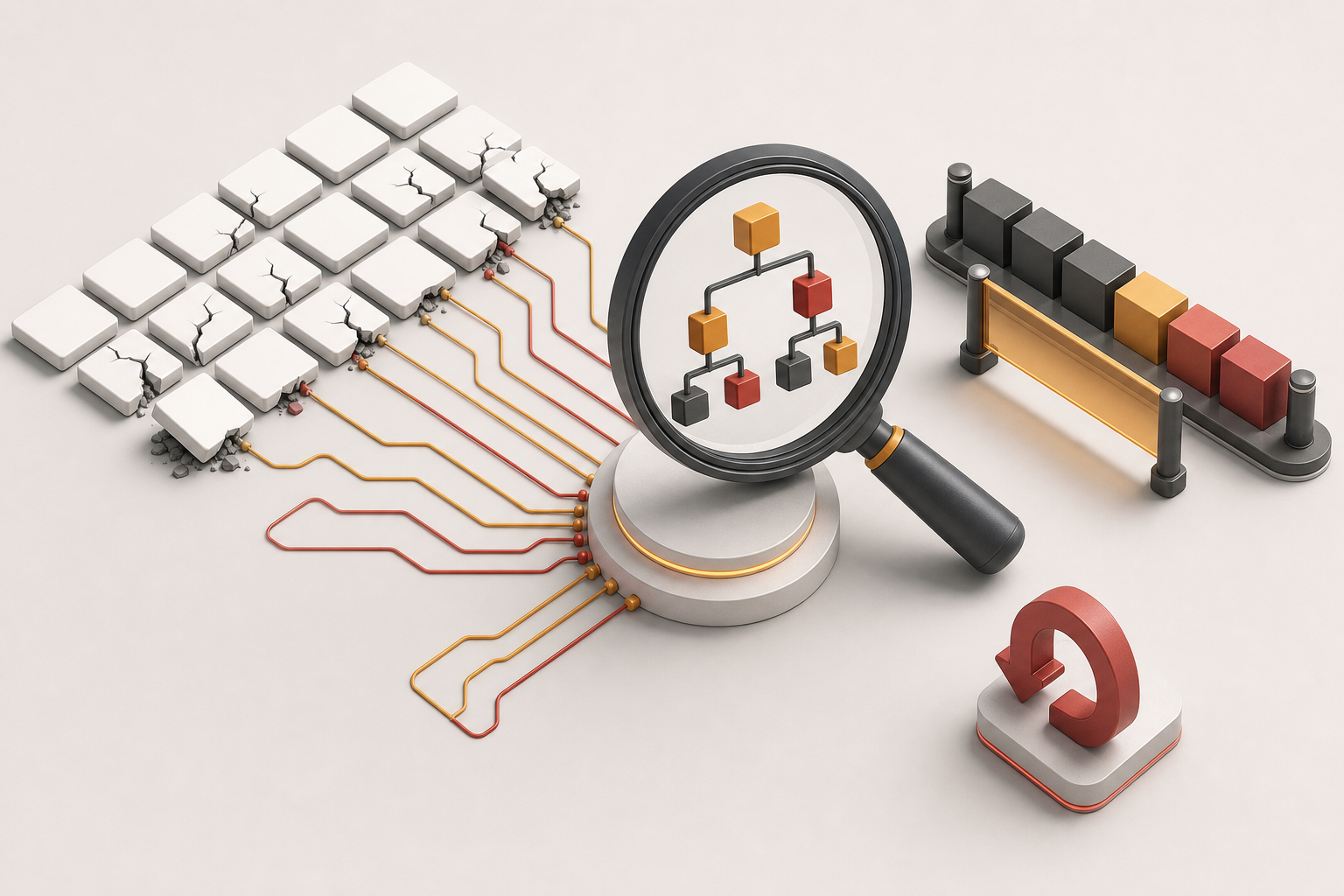
Flaky tests should be detected statistically before they become folklore in team chat. The best signal is not a single failed run; it is inconsistent pass and fail behavior across the same code revision, environment, or test input.
Start by storing test results as structured events. Each event should include test identifier, file path, framework, commit SHA, branch, environment, browser or device, duration, retry count, failure type, and owner. Without event history, teams argue from memory and fix the loudest test rather than the costliest one.
Classify flaky behavior by repeatability. A nondeterministic test fails and passes on the same code revision. An order-dependent test passes alone but fails in a suite. A resource-sensitive test fails under parallel load, clock drift, slow network, or browser contention. These categories point to different fixes, so merging them into one flaky label slows remediation.
Which metrics reveal flaky test reliability risk?
The most useful metrics are flake rate, failure recurrence, retry pass rate, time-to-diagnosis, and owner response time. Together they show whether a test is occasionally noisy, structurally unreliable, or actively damaging delivery.
Flake rate is the percentage of executions where a test fails without a confirmed product defect. Retry pass rate is the percentage of failures that pass on retry, but it should not be treated as proof of harmlessness. A high retry pass rate can indicate timing instability, shared state, or an assertion that races the UI.
Track cost-weighted flakiness, not just count. A flaky unit test that fails once per quarter is less urgent than an end-to-end checkout test that fails during every release candidate. Rank by incidents multiplied by triage time and business criticality.
const fs = require('fs');
const results = JSON.parse(fs.readFileSync('test-results.json', 'utf8'));
const byTest = new Map();

for (const run of results.tests) {
  const key = run.file + '::' + run.title;
  const record = byTest.get(key) || {
    test: key,
    runs: 0,
    passes: 0,
    fails: 0,
    retryPasses: 0,
    minutesLost: 0
  };

  record.runs += 1;
  record.passes += run.status === 'passed' ? 1 : 0;
  record.fails += run.status === 'failed' ? 1 : 0;
  record.retryPasses += run.retryPassed ? 1 : 0;
  record.minutesLost += run.triageMinutes || 0;
  byTest.set(key, record);
}

const suspects = Array.from(byTest.values())
  .filter(function (test) {
    return test.fails > 0 && test.passes > 0;
  })
  .map(function (test) {
    test.flakeRate = Number((test.fails / test.runs).toFixed(4));
    test.costScore = Number((test.minutesLost * (1 + test.flakeRate)).toFixed(2));
    return test;
  })
  .sort(function (a, b) {
    return b.costScore - a.costScore;
  });

console.log(JSON.stringify(suspects.slice(0, 20), null, 2));
This script is intentionally simple: it converts historical test results into a ranked suspect list. In production, connect the same idea to your CI provider, test management system, or data warehouse. The important move is shifting from anecdotal flake hunting to cost-ranked reliability work.
Use prevention, quarantine, and deletion as distinct reliability controls
Flaky test prevention is the practice of designing tests, environments, and pipelines so nondeterministic failures are unlikely to occur. Prevention, quarantine, retries, and deletion are different controls, and using them interchangeably is how teams create long-lived test debt.
Prevention belongs in the test design phase. Use deterministic test data, isolated fixtures, explicit state setup, controlled clocks, contract-level checks for dependencies, and selectors that reflect user intent rather than layout noise. For UI automation, prefer event-aware assertions over fixed sleeps because sleeps increase runtime while still failing under unusual load.
Quarantine is a risk-management tool, not a retirement home. A quarantined test is temporarily removed from release gating while still running in a separate lane with visible ownership and a repair deadline. If quarantine has no expiration, it becomes an unreviewed reduction in coverage.
Deletion is valid when a test provides low signal, duplicates better coverage, or encodes behavior nobody owns. Senior teams delete more tests than junior teams expect because a smaller trusted suite often protects delivery better than a large suite full of false alarms. The goal is not maximum automation volume; it is maximum reliable decision value.
| Approach | Best use | Risk if misused | Reliability impact |
|---|---|---|---|
| Retry strategy | Short-lived infrastructure instability or network jitter | Masks real defects and normalizes noise | Improves pass continuity but may reduce diagnostic clarity |
| Quarantine | High-value test with confirmed nondeterminism and active owner | Creates invisible coverage gaps if no deadline exists | Protects release flow while preserving repair visibility |
| Root-cause fix | Timing, data, isolation, selector, or environment defect | Can be slow without cost-based prioritization | Raises durable test reliability |
| Test deletion | Low-value duplicate or obsolete check | Removes useful protection if impact is not reviewed | Reduces maintenance load and noise |
| Framework migration | Systemic instability from outdated tooling or poor browser control | Expensive rewrite without design changes | Can improve reliability when paired with better architecture |
When should you quarantine instead of retrying?
You should quarantine instead of retrying when a flaky test blocks merges or releases and the root cause cannot be fixed within the current delivery window. Quarantine preserves delivery flow while making the reliability debt explicit.
Retries are acceptable for transient infrastructure events, but they should be capped, measured, and reported. If a test passes on retry more than a small percentage of the time, treat that as a reliability defect. Silent retries reduce flaky tests cost on paper while increasing long-term test maintenance cost.
A strong quarantine policy includes an owner, reason, first-seen date, affected coverage area, repair target, and escalation rule. For example, a test quarantined for more than 14 days should trigger either a fix, redesign, replacement, or deletion decision. The policy should be enforced by the same engineering governance used for production incidents.
Fix root causes by category instead of chasing symptoms
Root-cause categories help teams fix flaky tests faster because most flakes repeat familiar patterns. Treat every flaky failure as evidence about timing, state, infrastructure, data, concurrency, or assertion design.
Timing flakes occur when assertions run before the system reaches the required state. The fix is not a longer sleep; it is a more precise wait for a durable event, API response, DOM state, queue drain, or observable business condition. Frameworks such as Playwright and Cypress provide auto-waiting primitives, but they cannot rescue tests that assert on unstable intermediate states.
State flakes appear when tests share accounts, databases, caches, queues, feature flags, or browser sessions. The corrective pattern is isolation by default: unique data per test, cleanup that tolerates partial failures, and fixtures that create state through supported APIs. Parallel-testing amplifies state leaks, so flakes often emerge only after the team speeds up the suite.
Environment flakes come from inconsistent runner capacity, browser versions, containers, services, clocks, certificates, or network conditions. Pin versions where possible and monitor resource saturation. A test that fails only on overloaded runners is still a test reliability problem, even if the product code is innocent.
Assertion flakes happen when tests verify implementation details rather than user-observable outcomes. Fragile selectors, pixel-sensitive visual assertions, and broad text matches all create false failures. Replace them with role-based selectors, contract assertions, and tolerance rules that reflect product risk.
How does parallel-testing expose hidden flakiness?
Parallel-testing exposes hidden flakiness by increasing contention for shared state, ports, accounts, queues, and external dependencies. A suite that looks stable in serial execution can become unreliable when tests compete for the same resources.
Do not respond by disabling parallelism permanently. Parallelism is valuable because faster feedback reduces batch size and merge risk. Instead, use the failures to identify missing isolation boundaries, then shard by safe resource ownership or generate unique test data per worker.
For browser automation, give each worker its own authenticated context and data namespace. For API and integration tests, isolate tenants, message topics, file paths, and database records. If true isolation is impossible, explicitly mark the test as serial and charge its runtime to the owning team.
Avoid common mistakes that make flaky test prevention fail
Most flaky test prevention programs fail because they optimize for fewer red builds rather than higher signal quality. The objective is not to make dashboards greener; it is to make every red result worth immediate attention.
The first mistake is hiding flakes with broad retries. Retry counts should be visible in pull requests and release reports. A green build that required three retries is not equivalent to a clean green build.
The second mistake is assigning flaky tests to a central QA team without product ownership. QA can build detection, tooling, and policy, but the service or feature team usually owns the unstable state, selector, contract, or dependency. Ownership should follow the code path that the test protects.
The third mistake is treating all end-to-end tests as equally valuable. Some flows deserve expensive browser coverage because they protect revenue, compliance, or critical user journeys. Others should move down the pyramid into component, contract, or API checks where deterministic control is easier.
The fourth mistake is measuring only the current flake list. Flakiness is a flow problem, not just an inventory problem. Track new flakes introduced per week, mean time to repair, reopened flaky tests, and the percentage of quarantined tests older than the allowed threshold.
Make test reliability an engineering KPI with clear ownership
Test reliability should be managed as an engineering KPI because it directly controls the credibility of automated delivery. The most effective programs combine dashboards, service ownership, review gates, and reliability budgets.
Set targets by test layer. A unit test suite should approach extremely high determinism, while full-stack browser tests may have a slightly higher tolerated flake rate because they touch more moving parts. The key is to make the threshold explicit and lower it as the suite matures.
A useful operating model includes weekly review of top cost drivers, automatic flaky test detection, quarantine aging, and ownership escalation. Add a reliability check to test code review: deterministic data, no fixed sleeps, stable selectors, isolated state, and meaningful assertions. These controls reduce test maintenance cost because defects are prevented before they enter the suite.
Teams with mature reliability governance often see 25 to 35 percent lower test maintenance effort after sustained cleanup because fewer engineers are pulled into repeat investigations. Feedback loops also improve: pipelines with trusted failures need fewer reruns, fewer manual overrides, and fewer release exceptions. Link the KPI to delivery outcomes, not vanity counts.
For broader automation design decisions, see the SQAExperts guide to test automation framework strategy. Framework choice matters, but reliability is ultimately an engineering system: architecture, data, environments, ownership, and disciplined response.
Can a suite ever be completely non-flaky?
A complex suite can rarely be guaranteed completely non-flaky, but it can be reliable enough that false failures are exceptional and investigated quickly. The practical goal is controlled flakiness with transparent cost, ownership, and prevention.
External services, distributed systems, browsers, mobile devices, and asynchronous workflows will always introduce some uncertainty. High-performing teams reduce uncertainty through isolation, contracts, observability, and stable release gates. They also avoid pretending that a flaky test is harmless just because it eventually passes.
Define an error budget for test reliability the same way production teams define availability budgets. If the suite exceeds its flake budget, pause expansion and invest in repair. Adding more tests to an unreliable system increases surface area without increasing trust.
Key Takeaways
- Flaky tests cost should include triage time, CI reruns, blocked development, release delay, and recurring test maintenance cost.
- Test reliability is a delivery capability because engineers act faster when red builds consistently indicate real product risk.
- Cost-weighted flake ranking is more useful than counting flaky tests because high-impact gates deserve priority.
- Retries can reduce short-term disruption, but silent retries hide defects and increase long-term flaky test prevention work.
- Quarantine should always include an owner, reason, repair deadline, and escalation path to prevent permanent coverage gaps.
- Most durable fixes come from addressing root causes in timing, state isolation, environment stability, data control, and assertion design.
- A smaller trusted suite often delivers more value than a larger suite that engineers no longer believe.