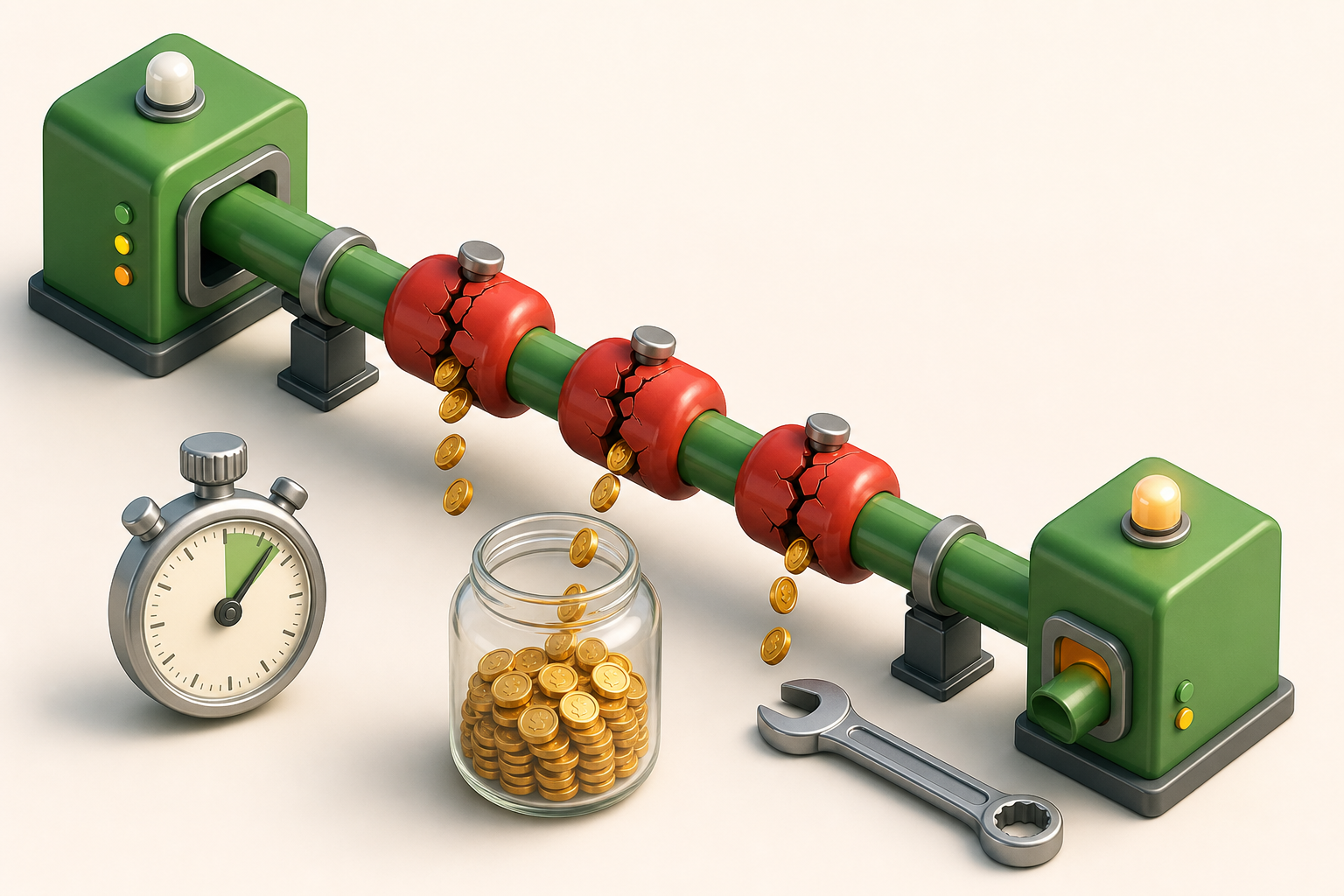
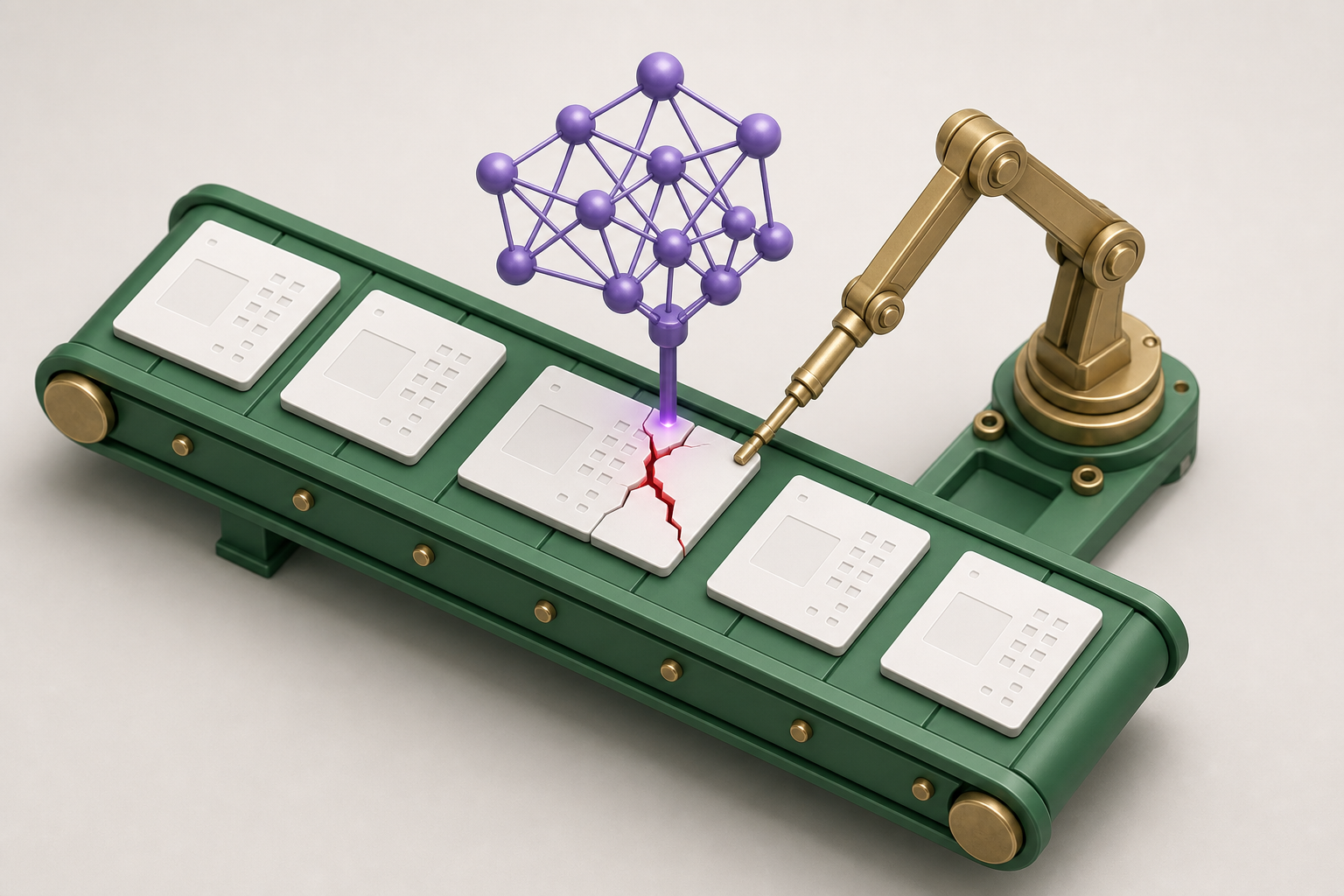
Test maintenance is the continuous work of keeping automated tests accurate, reliable, and valuable as the product, infrastructure, and data change. AI-powered predictive test maintenance uses flaky test prediction, machine learning, and runtime signals to identify instability before it blocks delivery. For mature teams, the goal is not merely fewer red builds; it is measurable test stability with faster feedback and lower investigation cost.
AI-powered predictive test maintenance eliminates flaky tests by learning from historical failures, code changes, runtime patterns, and environment signals to predict which tests are likely to become unstable. It then prioritises repairs, quarantines high-risk tests, and recommends targeted fixes before failures pollute the CI signal. The best results come when predictions are paired with ownership rules, observability, and disciplined automation design.
Why flaky tests survive traditional test maintenance
Flaky tests persist because conventional test maintenance is reactive, local, and usually triggered after trust has already been damaged. A flaky test is an automated test that produces inconsistent pass or fail results without a corresponding product change.
Most teams still manage flakiness through reruns, quarantine lists, and tribal knowledge. These tactics reduce immediate noise but rarely explain why the test became unstable, whether similar tests are degrading, or which failure will become expensive next week.
Flaky test prediction is the practice of estimating the probability that a test will fail inconsistently in a future execution. Machine learning is a computational approach that learns patterns from historical data instead of relying only on manually coded rules. Test stability is the degree to which a test produces repeatable, trustworthy results under expected execution conditions.
The practical cost is larger than the visible red build. Engineering organisations with large UI suites often report that 10 to 25 percent of failed pipeline runs are later classified as non-product failures, while teams with predictive triage commonly reduce false failure investigation time by 30 to 50 percent after two to three release cycles.
How does flakiness damage release confidence?
Flakiness damages release confidence by making a failing pipeline ambiguous: teams cannot quickly tell whether the product is broken, the test is stale, or the environment is unreliable. Once that ambiguity becomes normal, engineers start ignoring failures, rerunning jobs by habit, or bypassing continuous integration quality gates.
The bigger risk is signal decay. A single flaky end-to-end test can consume more attention than several deterministic unit failures because it forces engineers to inspect logs, retries, screenshots, network traces, and recent commits without a clear hypothesis.
Why are reruns and quarantines not enough?
Reruns and quarantines are containment mechanisms, not maintenance strategies. They can protect delivery flow temporarily, but they also hide trend data unless every retry, quarantine reason, and final disposition is recorded.
A retry that passes is still a data point. Predictive systems treat that event as evidence of instability, especially when correlated with browser version, test duration variance, selector churn, test data freshness, or recent changes in a shared dependency.
How AI-powered predictive test maintenance works in practice
Predictive test maintenance works by converting test execution history and engineering context into risk scores, then using those scores to guide prevention and repair. The model is only useful when it influences concrete actions such as selective execution, ownership alerts, quarantine expiry, or code-level remediation.
An effective system collects signals from CI pipelines, test frameworks, version control, issue trackers, application telemetry, and test management metadata. It then builds a profile for each test: pass rate, retry behaviour, duration volatility, failure signature, touched components, data dependencies, and similarity to previously flaky tests.
The most useful output is not a generic score. It is an explanation that a team can act on, such as unstable locator, environment timeout, order dependency, recent component churn, or test data collision.
| Approach | How it handles flaky tests | Strength | Limitation |
|---|---|---|---|
| Manual triage | Engineers inspect failures after a build breaks | High contextual judgement | Slow, inconsistent, and hard to scale |
| Static rules | Flags tests based on thresholds such as retry count or duration | Transparent and easy to implement | Misses subtle patterns and cross-signal correlations |
| Self-healing locators | Repairs element selection when UI attributes change | Useful for UI automation drift | Does not solve data, timing, or infrastructure instability |
| Predictive machine learning | Scores future flakiness risk using historical and contextual signals | Prioritises maintenance before trust collapses | Requires clean event data and governance |
What signals should a flaky test prediction model use?
A flaky test prediction model should use execution history, code change metadata, runtime environment details, and failure signatures. The strongest signals usually combine behaviour over time with context from the latest code and infrastructure changes.
High-value features include retry pass rate, duration standard deviation, time since last edit, number of touched files in the tested component, browser or device variance, dependency error frequency, and screenshot similarity across failures. For API and integration tests, HTTP status volatility, contract drift, service latency, and test data reuse are often more predictive than assertion text.
Teams should also capture negative examples. If only failed tests are labelled, the model learns what failure looks like but not what healthy stability looks like across different test types.
When should predictions trigger automated action?
Predictions should trigger automated action when the cost of inaction exceeds the risk of a false positive. In practice, that means low-impact actions can happen at moderate confidence, while disruptive actions require stronger evidence and human confirmation.
For example, a risk score above 0.60 might add a warning annotation to a pull request, while a score above 0.80 might require targeted reruns or notify the test owner. Automatic quarantine should be reserved for repeated high-confidence instability with expiry dates, linked defects, and visibility in the team dashboard.
A reference architecture for predictive test stability
A robust predictive maintenance architecture separates data collection, feature generation, model scoring, and workflow automation. This separation prevents the system from becoming another opaque CI plugin that nobody trusts.
The ingestion layer captures events from frameworks such as Selenium, Playwright, Cypress, JUnit, pytest, or TestNG. The feature layer normalises those events into a stable schema, including test identity, branch, commit, environment, duration, status, retry number, failure category, and owner.
The scoring layer can start with explainable models such as logistic regression, gradient boosted trees, or random forests before moving to more complex approaches. Many organisations get strong results with simpler models because flakiness is often driven by observable engineering patterns rather than deep semantic complexity.
The workflow layer connects predictions to CI behaviour, ticket creation, dashboards, and test impact analysis. The best implementations keep humans in control of decisions that affect release policy while automating evidence gathering and prioritisation.
predictive_test_maintenance:
  data_sources:
    ci: github-actions
    framework: playwright
    defects: jira
    repository: git
  flaky_prediction:
    model: gradient_boosted_trees
    minimum_history_runs: 30
    features:
      - retry_pass_rate
      - duration_variance
      - failure_signature_hash
      - changed_component_count
      - browser_version
      - test_data_age_hours
      - owner_team
    thresholds:
      warn: 0.55
      rerun_required: 0.70
      quarantine_candidate: 0.85
  actions:
    create_ticket: true
    annotate_pull_request: true
    require_owner_review: true
    quarantine_expiry_days: 14
This configuration is intentionally conservative. It avoids immediate deletion or permanent quarantine, because predictive maintenance should create better evidence and faster repair, not silently remove coverage.
Where machine learning improves test maintenance decisions
Machine learning improves test maintenance by ranking risk, detecting patterns humans miss, and adapting as the product and pipeline change. It is most valuable when the test estate is large enough that manual prioritisation becomes unreliable.
Rule-based systems are still useful for obvious instability, such as three failures in five runs. Machine learning adds value when the same failure pattern appears only under specific combinations of branch type, browser version, deployment region, test data age, or recent component churn.
For example, a checkout test may pass 97 percent of the time overall but fail 18 percent of the time after payment adapter changes and only on parallel runs. A human reviewer may not see that pattern quickly; a model can surface it as a high-risk interaction.
- Classification models can predict whether a test is likely to be flaky in the next run or release window.
- Anomaly detection can flag unusual duration, retry, or failure signature changes before pass rates collapse.
- Clustering can group related flaky tests by root cause, such as selector drift, test data collision, or shared environment latency.
- Natural language processing can connect failure logs, assertion messages, and defect titles to recurring maintenance themes.
- Recommender systems can suggest likely owners, similar historical fixes, or safer execution strategies.
In production environments, explainability matters more than model sophistication. A 0.82 flakiness score without evidence creates debate; a 0.82 score with duration variance, locator churn, and three similar historical failures creates action.
How to implement predictive test maintenance without adding noise
Successful implementation starts with a narrow, high-friction test segment and expands only after the predictions improve decision quality. Teams should target the suites where unstable failures delay releases, not the suites that are merely easy to instrument.
Start with one pipeline, one framework, and one definition of flakiness. A practical definition is any test that both passes and fails against the same application version, environment class, and test data contract within a defined observation window.
Next, create a canonical test identity. Renamed test files, dynamic test titles, and generated parameter names can corrupt historical analysis unless each test has a stable identifier across branches and refactors.
- Instrument every test run with status, duration, retry count, commit SHA, branch, environment, framework version, and failure signature.
- Label historical failures into product defect, test defect, environment defect, data defect, and unknown categories.
- Build a baseline dashboard showing flakiness rate, rerun dependency, mean time to classify, and mean time to repair.
- Train a simple model or rules-plus-model hybrid and compare predictions against future execution outcomes.
- Route warnings to owners with evidence, not generic alerts, and measure whether warnings reduce later failed builds.
- Automate only reversible actions first, such as PR annotations, targeted reruns, and ticket enrichment.
A strong baseline is usually visible within four to eight weeks for teams running hundreds of tests daily. In large UI suites, teams often see 20 to 35 percent fewer unnecessary reruns once high-risk tests are isolated and repaired using prediction-backed prioritisation.
How should teams measure predictive maintenance ROI?
Teams should measure predictive maintenance ROI by tracking reduced investigation time, fewer false red builds, faster feedback loops, and improved release confidence. Raw model accuracy is not enough because a technically accurate prediction may still be operationally useless.
Useful metrics include flaky failure rate, rerun rate, quarantine ageing, escaped regression rate, mean time to classify, mean time to repair, and percentage of predictions that resulted in a confirmed maintenance action. Track these by suite and team, because aggregate numbers can hide a single unstable integration environment or one neglected product area.
Common pitfalls that make AI flaky test initiatives fail
AI flaky test initiatives fail when teams treat prediction as a replacement for engineering discipline. Predictive maintenance exposes instability faster, but it cannot compensate for poor test design, weak ownership, or uncontrolled environments.
The first pitfall is bad labels. If teams mark every unexplained failure as flaky, the model learns confusion rather than instability. Unknown should remain a valid category until investigation produces evidence.
The second pitfall is over-automation. Automatically quarantining tests based on early model output can create coverage gaps and political resistance, especially when teams believe the system is hiding real defects.
The third pitfall is ignoring test architecture. Tests with shared mutable state, fixed sleeps, hidden order dependencies, and uncontrolled external services will continue to fail until the underlying test automation framework design improves.
- Do not train on inconsistent test names, because unstable identity breaks historical learning.
- Do not optimise only for fewer red builds, because that can incentivise hiding coverage instead of repairing it.
- Do not rely solely on UI screenshots, because many flaky causes originate in data, services, or infrastructure.
- Do not send every warning to a shared channel, because unowned alerts become background noise.
- Do not let quarantined tests age indefinitely, because stale quarantines become untested product risk.
When predictive maintenance breaks down and what to do instead
Predictive maintenance breaks down when the data is too sparse, the system under test changes too abruptly, or the organisation cannot act on predictions. In those cases, teams should prioritise deterministic foundations before expanding machine learning.
Small projects with low execution volume may not have enough history for reliable models. A rules-based approach using retry count, duration variance, and owner review can be more effective until the data set matures.
Highly volatile products can also confuse predictions. If selectors, routes, APIs, and workflows change weekly, the model may simply identify churn rather than actionable instability; the better intervention is stronger contract testing, component-level coverage, and page object model best practices.
Infrastructure instability is another boundary. If environments are frequently unavailable or test data is overwritten by parallel jobs, the model will correctly predict failure but cannot fix the operating model. Stabilise environments, isolate data, and make dependencies observable before expecting predictive scores to create durable improvement.
Can predictive test maintenance replace human triage?
Predictive test maintenance cannot fully replace human triage because root-cause decisions often require product, architecture, and release context. It can reduce the triage queue by ranking failures, grouping duplicates, and attaching evidence before an engineer investigates.
The target operating model is assisted triage. Humans decide whether to repair, quarantine, rewrite, or delete a test; the AI system supplies probability, history, similar incidents, and likely ownership.
Best practices for durable test stability at scale
Durable test stability comes from combining prediction with ownership, design standards, and feedback-loop governance. AI should make the maintenance system more disciplined, not more mysterious.
Assign every automated test an owner, a component, and an expected execution layer. Without ownership, predictions become interesting analytics rather than operational work.
Prefer deterministic waits, isolated data factories, contract-aware mocks, and clear assertions over broad end-to-end flows that depend on many systems. Predictive maintenance is most powerful when it reinforces good engineering patterns already present in the suite.
Use risk scores to tune execution strategy. High-stability smoke tests should protect release gates, medium-risk tests can run in parallel validation lanes, and high-risk tests should trigger maintenance workflows before they are allowed to dominate the main pipeline.
Review the model itself on a schedule. Feature drift, framework upgrades, browser changes, and CI migration can change what predicts flakiness, so the maintenance model needs the same lifecycle thinking as production ML systems.
Key Takeaways
- Predictive test maintenance reduces flaky test impact by forecasting instability before it corrupts CI feedback.
- Flaky test prediction works best when it combines execution history, code changes, runtime environment data, and failure signatures.
- Machine learning improves test maintenance decisions by ranking risk and surfacing cross-signal patterns that manual triage often misses.
- Test stability requires ownership, deterministic test design, observable environments, and disciplined quarantine policies.
- AI should automate evidence gathering and low-risk workflow actions before it automates release-blocking decisions.
- Teams should measure ROI through fewer false red builds, lower investigation time, faster repair, and healthier release confidence.
- Predictive systems fail when labels are weak, test identities are unstable, or teams use quarantine as a substitute for repair.