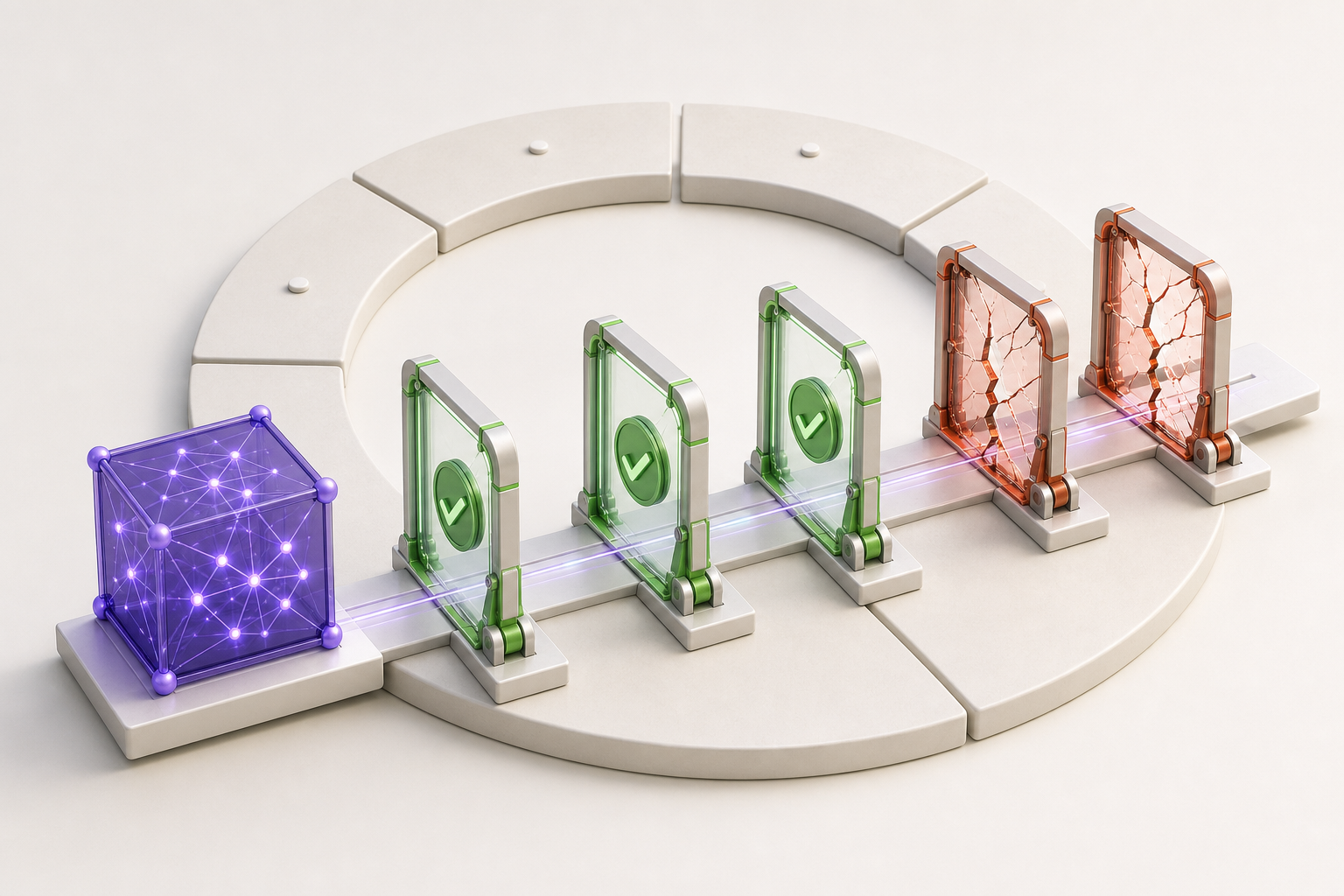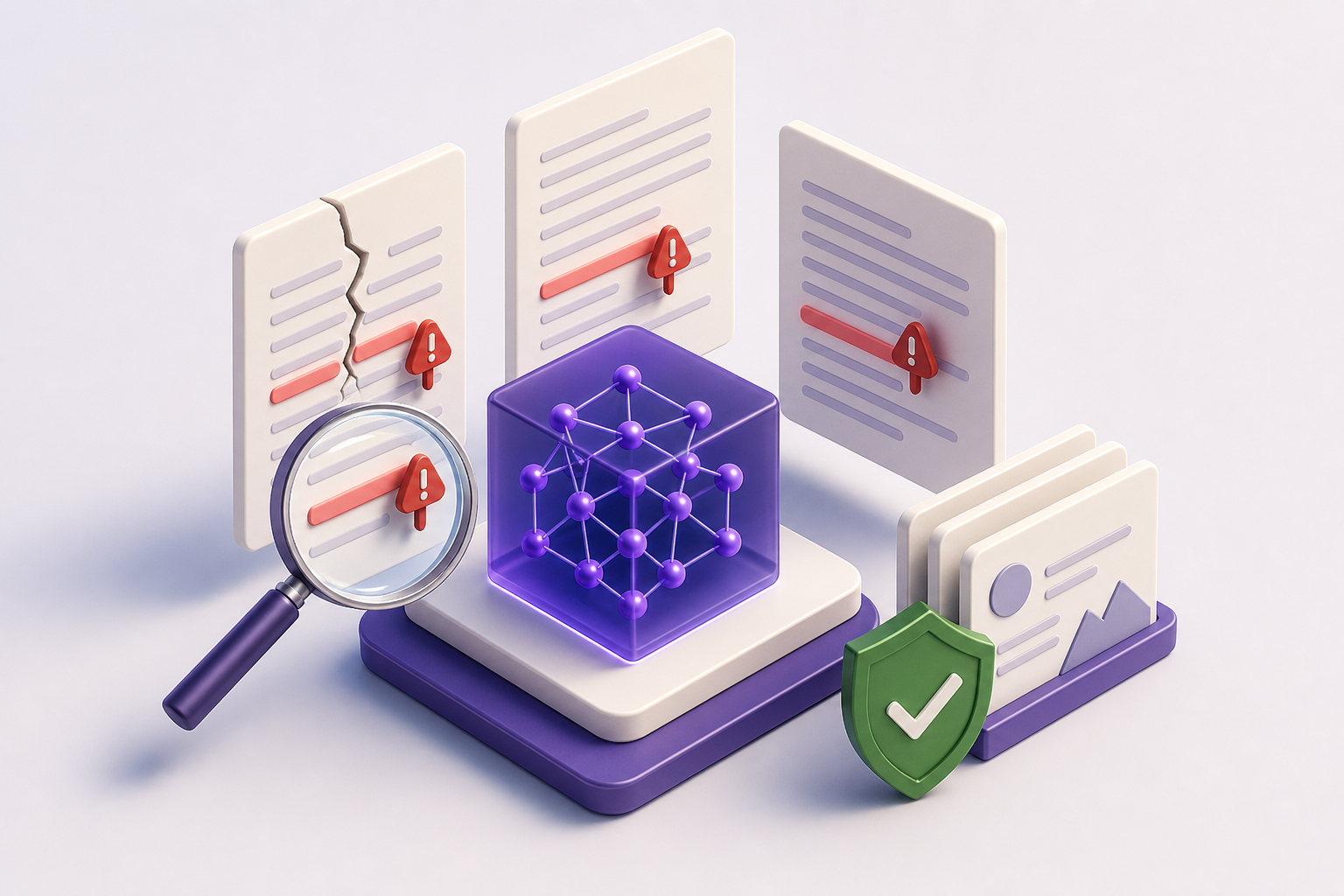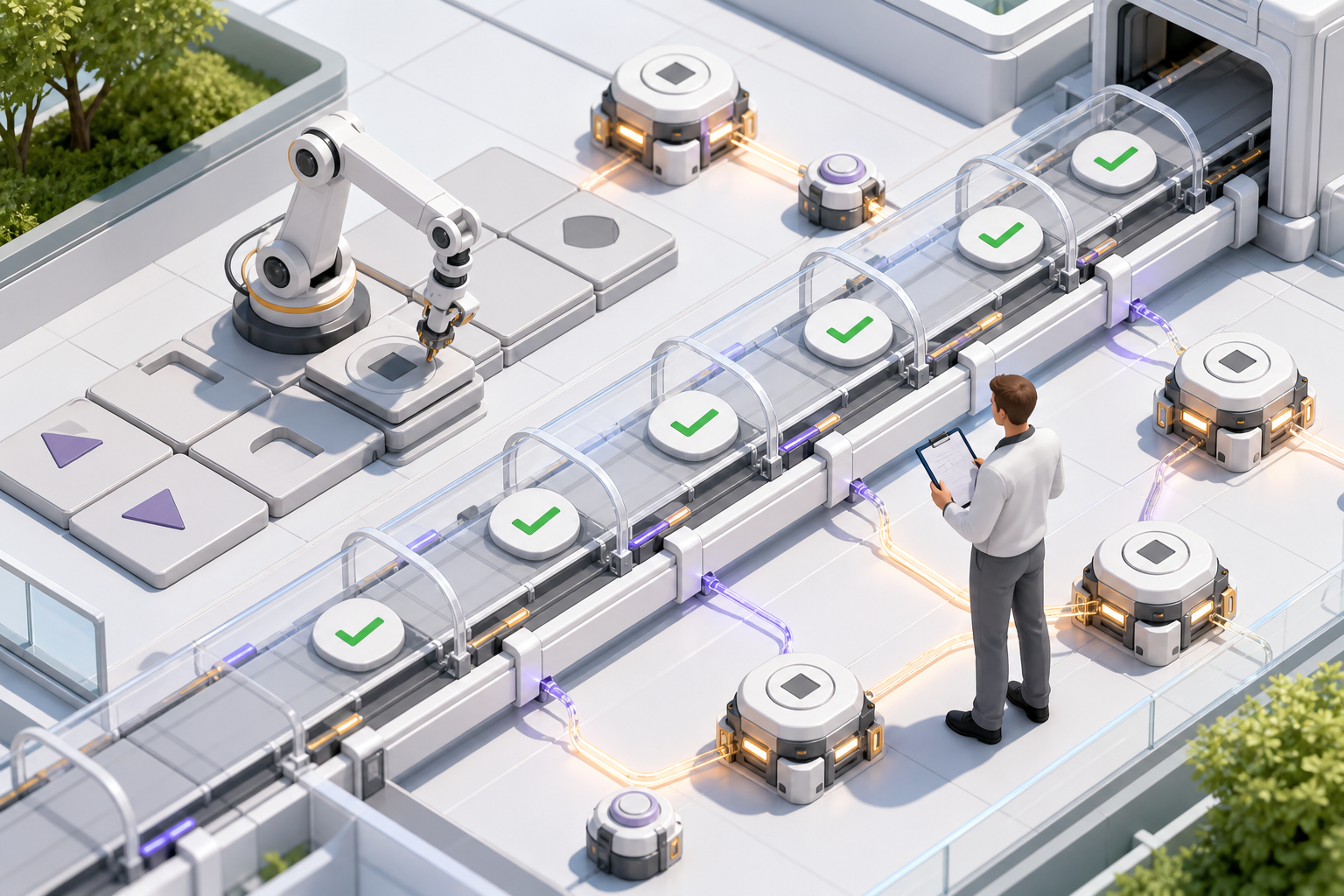

An ai qa engineer is a quality specialist who validates AI-enabled products, uses AI-assisted testing systems, and designs risk controls for models, prompts, data pipelines, and automated software delivery. The role is rising because software quality is no longer limited to deterministic code paths; it now includes probabilistic responses, model drift, retrieval quality, safety controls, and machine-generated test assets.
Yes, the AI QA engineer can become a $200K testing career in high-value markets, especially for professionals who combine test architecture, automation, LLM evaluation, security thinking, and product risk judgment. The premium is not for using AI tools casually; it is for proving AI systems are reliable, safe, compliant, and economically useful at scale.
Why the AI QA Engineer Role Is Emerging Now
The AI QA engineer role is emerging because AI features behave differently from traditional software and require new validation methods. Teams need testers who can evaluate model behavior, system integration, data quality, and user harm rather than only checking expected outputs.
LLM testing is the practice of evaluating large language model applications for accuracy, consistency, safety, latency, cost, prompt robustness, retrieval quality, and business fitness. It is not the same as checking whether a chatbot returns a nice sentence; it requires measurable evaluation sets, adversarial prompts, regression gates, and production monitoring.
AI testing careers are quality engineering career paths focused on validating AI-powered products, using intelligent test tooling, or both. These paths are expanding inside SaaS, fintech, healthcare, legal technology, cybersecurity, e-commerce, and enterprise automation because AI has become a shipped product capability rather than a research experiment.
Future QA jobs are roles where testers own risk models, automation systems, observability signals, compliance evidence, and AI-assisted workflows across the software lifecycle. The strongest future QA jobs will reward people who can explain failure modes to engineering, product, legal, and executive stakeholders without reducing quality to a dashboard percentage.
The market signal is clear: teams that add structured AI evaluation to CI pipelines report 25% to 45% faster feedback on AI feature regressions, while teams using AI-assisted test generation often reduce initial test authoring time by 30% to 60%. Those gains are meaningful only when senior QA professionals guard against false confidence, shallow assertions, and test suites that look large but catch little.
What an AI QA Engineer Actually Does Day to Day
An AI QA engineer blends test strategy, automation, data analysis, model evaluation, and release governance. The daily work is less about replacing testers with AI and more about making AI systems testable, observable, and accountable.
For an LLM product, the work may include building golden datasets, writing evaluation criteria, reviewing prompt changes, testing retrieval-augmented generation, and checking whether safety policies hold under adversarial use. Retrieval-augmented generation is an AI architecture that retrieves external knowledge before generating an answer, which makes testing dependent on document quality, ranking behavior, permissions, and citation accuracy.
For AI-assisted QA tooling, the work may include selecting where model-generated tests are acceptable, validating generated assertions, integrating tools with Playwright or Cypress, and measuring whether defect detection improves. A senior AI QA engineer treats AI outputs as candidates, not truth.
Common deliverables include evaluation suites, prompt regression tests, model performance dashboards, synthetic data policies, defect taxonomies for AI behavior, and release criteria for model updates. In regulated environments, the role may also produce audit evidence showing how model changes were tested before deployment.
How does LLM testing differ from traditional functional testing?
LLM testing differs from traditional functional testing because many correct outcomes are probabilistic, contextual, and graded rather than binary. A login flow can pass or fail against a fixed assertion, but an AI support assistant may need scoring for factuality, tone, policy compliance, completeness, refusal quality, and hallucination risk.
The test oracle becomes the hardest part. Instead of asserting one exact string, teams often use rubric scoring, semantic similarity, human review sampling, deterministic fixture checks, and model-as-judge evaluations with calibration against expert judgments.
Good LLM testing also treats latency and cost as quality attributes. A model response that is accurate but takes 18 seconds or burns excessive tokens may fail a production quality gate even if the content is acceptable.
When should QA own AI evaluation rather than data science?
QA should own AI evaluation when the question is whether a shipped user experience is safe, reliable, and fit for release. Data science often owns model training metrics, while QA owns product risk, regression behavior, integration confidence, and release evidence.
The best model team may optimize benchmark performance, but QA must test what happens when messy users, stale documents, access controls, browser states, API failures, and malicious prompts collide. That boundary is where many AI defects escape.
The Skills That Separate $200K AI Testing Careers from Tool Operators
High-paying AI testing careers reward engineers who can design quality systems around uncertainty. The compensation premium comes from combining classic QA depth with AI evaluation, automation architecture, security awareness, and business risk translation.
The first skill is test architecture. Senior AI QA engineers know how to build layered suites: deterministic unit and API checks, scenario-based end-to-end tests, prompt regression packs, offline evaluation datasets, red-team suites, and production monitors.
The second skill is evaluation design. An evaluation is a repeatable process for measuring whether an AI system meets defined quality criteria, and weak evaluations are the fastest route to expensive AI failures. Strong practitioners define rubrics, stratify datasets, separate smoke checks from deep reviews, and track score movement across releases.
The third skill is automation engineering. Playwright, Cypress, Selenium, pytest, REST clients, contract tests, CI orchestration, and observability tooling remain valuable because AI products still run inside ordinary software systems.
The fourth skill is prompt and context risk analysis. Prompt injection is an attack or failure mode where user-supplied text manipulates an AI system into ignoring intended instructions, leaking data, or performing unsafe actions. An AI QA engineer must test for direct injection, indirect injection through retrieved documents, jailbreak patterns, and tool misuse.
The fifth skill is communication. A $200K testing professional does not only say that the model hallucinated; they quantify the business impact, identify affected user journeys, recommend release gates, and define the minimum evidence required to ship safely.
| Capability | Traditional QA Engineer | AI QA Engineer | Compensation Signal |
|---|---|---|---|
| Test design | Defines expected outcomes and edge cases for deterministic workflows | Defines rubrics, evaluation datasets, adversarial cases, and probabilistic acceptance bands | High when tied to release governance |
| Automation | Automates UI, API, contract, and regression checks | Automates conventional checks plus prompt, RAG, model, latency, and cost evaluations | High when integrated into CI and observability |
| Risk coverage | Focuses on functional, usability, compatibility, and performance defects | Adds hallucination, bias, safety, privacy leakage, prompt injection, and model drift | Very high in regulated or enterprise AI products |
| Tooling | Uses test management, automation, and defect tracking platforms | Uses automation frameworks, LLM eval tools, vector search diagnostics, and model monitoring | Moderate unless paired with judgment |
| Stakeholder value | Reports product readiness and defect trends | Explains AI release risk in product, legal, security, and financial terms | Highest at staff and principal levels |
Where the $200K Salary Claim Is Realistic and Where It Is Hype
The $200K AI QA engineer path is realistic in senior, staff, lead, or specialist roles where AI quality directly affects revenue, legal exposure, or enterprise trust. It is hype when the role means only prompting a test generator or adding AI buzzwords to a manual testing résumé.
In high-cost markets, total compensation for senior automation, SDET, and quality architecture roles already reaches the $150K to $220K range. AI specialization can push the upper band when the engineer owns model evaluation infrastructure, AI safety testing, compliance evidence, or customer-facing reliability commitments.
Remote compensation is more uneven. Companies may pay a premium for scarce LLM testing expertise, but they still benchmark against engineering level, product criticality, and proof of impact rather than job title novelty.
The clearest salary accelerators are domain stakes and measurable outcomes. A QA leader who reduces hallucination-related escalations by 40%, cuts AI regression triage from days to hours, or prevents unsafe tool execution in a financial workflow has leverage that a generalist tool user does not.
Can manual testers transition into AI QA engineering?
Manual testers can transition into AI QA engineering if they convert domain judgment into structured evaluation assets and learn enough automation to make those assets repeatable. The fastest route is not to abandon exploratory thinking, but to encode it into scenarios, rubrics, datasets, and release checks.
Manual QA professionals often have an advantage in ambiguity, user empathy, and adversarial exploration. The gap is usually technical fluency: APIs, version control, CI, scripting, data formats, and basic model behavior.
A practical transition portfolio should include an LLM evaluation suite, a prompt injection test set, a RAG quality checklist, and an automated workflow that runs at least part of the suite in CI. Hiring managers need evidence that judgment can scale beyond individual exploratory sessions.
The AI QA Engineer Toolkit for Modern LLM Testing
The AI QA engineer toolkit includes standard test automation, LLM evaluation frameworks, observability systems, synthetic data controls, and security test techniques. The winning stack is the one that makes quality signals repeatable, explainable, and cheap enough to run often.
Playwright is a browser automation framework that tests web applications across browsers using reliable locators, network controls, and tracing. It remains useful for AI products because the model is usually embedded inside a web journey, admin workflow, API surface, or customer support experience.
LLM evaluation frameworks are tools that run prompts against models and score outputs using assertions, rubrics, or judge models. Teams commonly combine deterministic checks for policy phrases and citations with semantic scoring for answer quality.
Model monitoring is the production practice of tracking model quality, cost, latency, error rates, user feedback, and data drift after release. It matters because offline test suites rarely capture every prompt pattern, document update, or malicious input that appears in production.
Synthetic data is artificially generated test data that simulates real patterns without directly exposing sensitive user records. It helps AI QA teams cover rare cases, privacy-sensitive workflows, multilingual inputs, and adversarial scenarios, but it must be validated against production-like distributions.
name: ai-quality-gate
on:
  pull_request:
    paths:
      - 'prompts/**'
      - 'rag/**'
      - 'evals/**'
      - 'src/ai/**'
jobs:
  llm-regression:
    runs-on: ubuntu-latest
    steps:
      - uses: actions/checkout@v4
      - uses: actions/setup-node@v4
        with:
          node-version: '22'
      - run: npm ci
      - name: Run deterministic API and UI checks
        run: npm run test:ai-smoke
      - name: Run LLM evaluation suite
        env:
          EVAL_MODEL: gpt-4.1-mini
          MAX_AVG_LATENCY_MS: '2500'
          MIN_FACTUALITY_SCORE: '0.86'
          MAX_UNSAFE_RESPONSE_RATE: '0.01'
        run: npm run eval:llm -- --dataset evals/customer-support-golden.json
      - name: Fail release on quality regression
        run: npm run eval:compare -- --baseline main --max-regression 0.03
This kind of gate is not perfect, but it changes the release conversation. Instead of arguing about whether a prompt feels better, the team can inspect score deltas, failing examples, latency changes, and risk categories before merging.
What Teams Commonly Get Wrong with AI QA Roles
Teams commonly fail with AI QA because they treat the role as a tool adoption project instead of a quality engineering discipline. The result is flashy automation, weak evidence, and hidden risk.
The first mistake is over-trusting AI-generated tests. Generated tests often mirror happy paths, assert superficial UI state, and miss domain-specific invariants unless a skilled tester edits them aggressively.
The second mistake is using model-as-judge scoring without calibration. A judge model can be useful, but if it is not compared against human expert review, it may reward verbosity, miss subtle policy violations, or drift when the underlying model changes.
The third mistake is testing prompts in isolation. A prompt that works in a notebook may fail once retrieval, tool calling, rate limits, permissions, and real user phrasing enter the system.
The fourth mistake is ignoring non-functional quality. AI features often fail through latency spikes, token cost overruns, context window truncation, stale embeddings, inaccessible citations, or poor fallback behavior rather than obviously wrong answers.
The fifth mistake is giving QA responsibility without authority. If QA can report hallucination risk but cannot influence release criteria, data readiness, prompt review, or model rollback policy, the organization has created accountability without control.
Why do AI test suites give false confidence?
AI test suites give false confidence when they measure easy outputs instead of meaningful user and business risk. A large prompt dataset can still be weak if it lacks adversarial cases, domain edge cases, multilingual phrasing, permission boundaries, and production-derived examples.
False confidence also comes from unstable scoring. If the same test run produces materially different results, the team needs tighter controls such as fixed model versions, temperature settings, deterministic checks, confidence intervals, or human review for high-risk scenarios.
How to Build a Career Plan Toward AI QA Engineering
A strong career plan for AI QA engineering should build from automation depth into AI evaluation, security testing, and release governance. The goal is to become the person who can design trustworthy quality signals for AI products, not simply the person who knows the newest tool.
Start by strengthening API and automation foundations. If you cannot isolate a service defect, inspect network behavior, manage test data, or run tests in CI, LLM testing work will become fragile and difficult to scale.
Next, build an evaluation portfolio. Choose a realistic AI workflow such as customer support, document search, claims processing, legal summarization, or code review, then create a golden dataset with expected qualities and failure categories.
Add adversarial thinking. Include prompt injection, unsafe requests, ambiguous user intent, malformed documents, conflicting retrieved sources, privacy-sensitive content, and tool execution boundaries.
Then measure outcomes in business language. Track factuality, refusal correctness, citation accuracy, average latency, cost per resolved request, unsafe response rate, escalation rate, and regression frequency.
Finally, practice executive communication. A senior AI QA engineer should explain why a model update is acceptable, risky, or blocked using evidence that product leaders can act on.
What portfolio proves readiness for future QA jobs in AI?
A strong AI QA portfolio proves that you can evaluate an AI feature across functional, behavioral, safety, and operational dimensions. It should show test architecture, not just screenshots of tool outputs.
Include a small but realistic LLM application, an evaluation dataset, automated regression runs, scoring rubrics, defect examples, risk classifications, and a short release recommendation. If possible, add production-style monitoring examples that show how you would detect drift after deployment.
The Future of QA Jobs Is Hybrid, Not Fully Automated
The future of QA jobs is hybrid because AI will automate parts of test creation, triage, and analysis, but it will not remove the need for human risk judgment. The work shifts from executing checks to designing systems that decide which checks matter.
AI tools will increasingly draft test cases, generate synthetic data, summarize defects, cluster failures, and propose automation code. In mature teams, this can reduce repetitive QA effort by 20% to 35% and give senior engineers more time for risk modeling and exploratory analysis.
However, AI cannot own accountability. It cannot negotiate acceptable risk with legal, challenge a product assumption based on customer impact, or decide that a technically accurate response is harmful in context.
The best QA professionals will become quality strategists for socio-technical systems. They will understand software behavior, model behavior, human behavior, and organizational incentives.
That is why the AI QA engineer title matters less than the capability behind it. The market will reward testers who make AI delivery safer, faster, and more economically predictable.
Key Takeaways
- An AI QA engineer earns premium value by validating probabilistic AI behavior, not by casually using AI tools to write more test cases.
- LLM testing requires rubrics, golden datasets, adversarial prompts, regression gates, and production monitoring because exact-output assertions are often insufficient.
- The $200K career path is most realistic for senior professionals who connect AI quality evidence to revenue, compliance, safety, and enterprise trust.
- Traditional automation skills still matter because AI features live inside APIs, browsers, workflows, data systems, and CI pipelines.
- Teams get AI QA wrong when they over-trust generated tests, skip judge-model calibration, or test prompts outside real product context.
- Manual testers can transition by turning exploratory judgment into repeatable evaluation assets and learning enough scripting and CI to scale them.
- Future QA jobs will be hybrid roles where human testers design risk models, quality gates, and accountability systems around AI-assisted delivery.