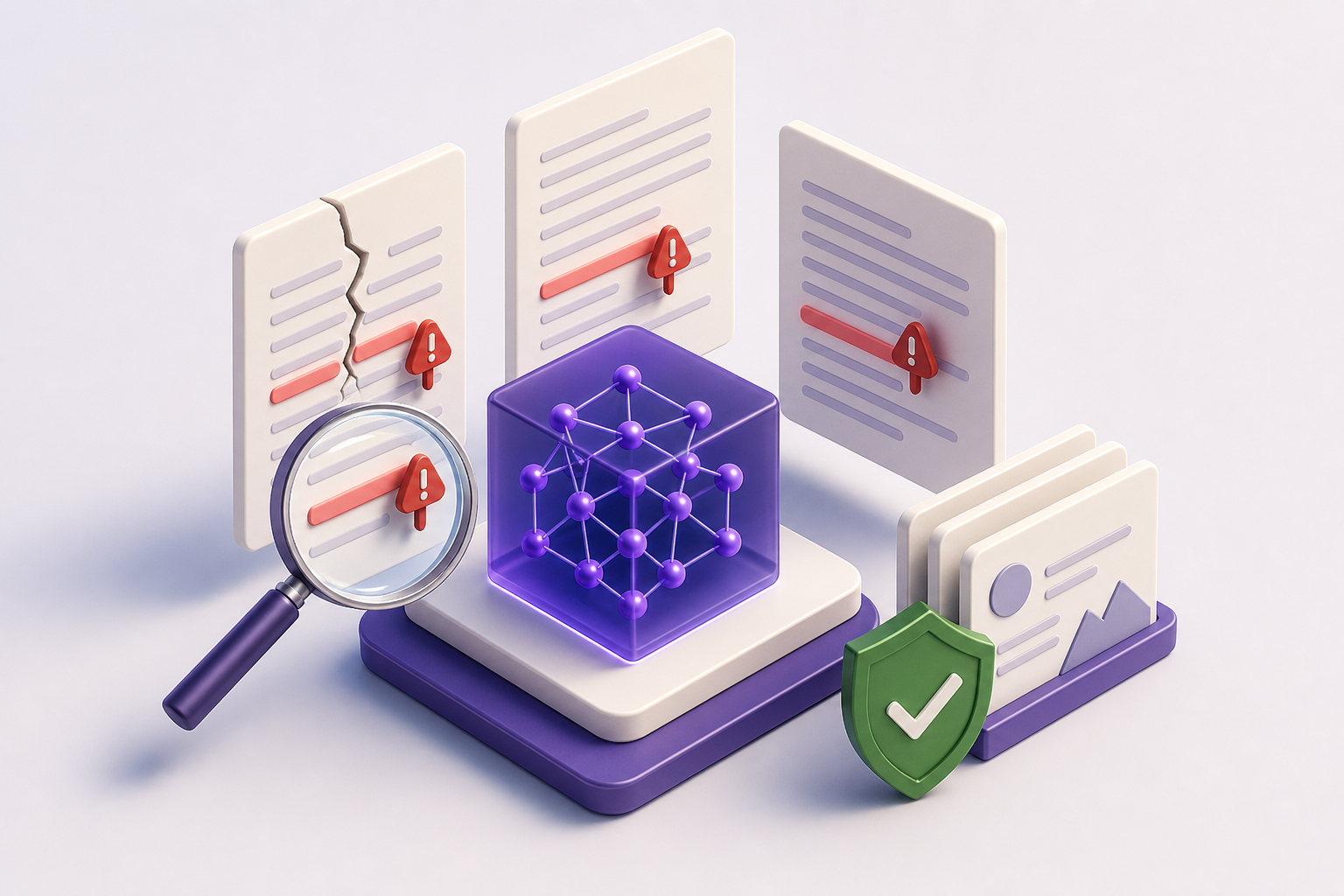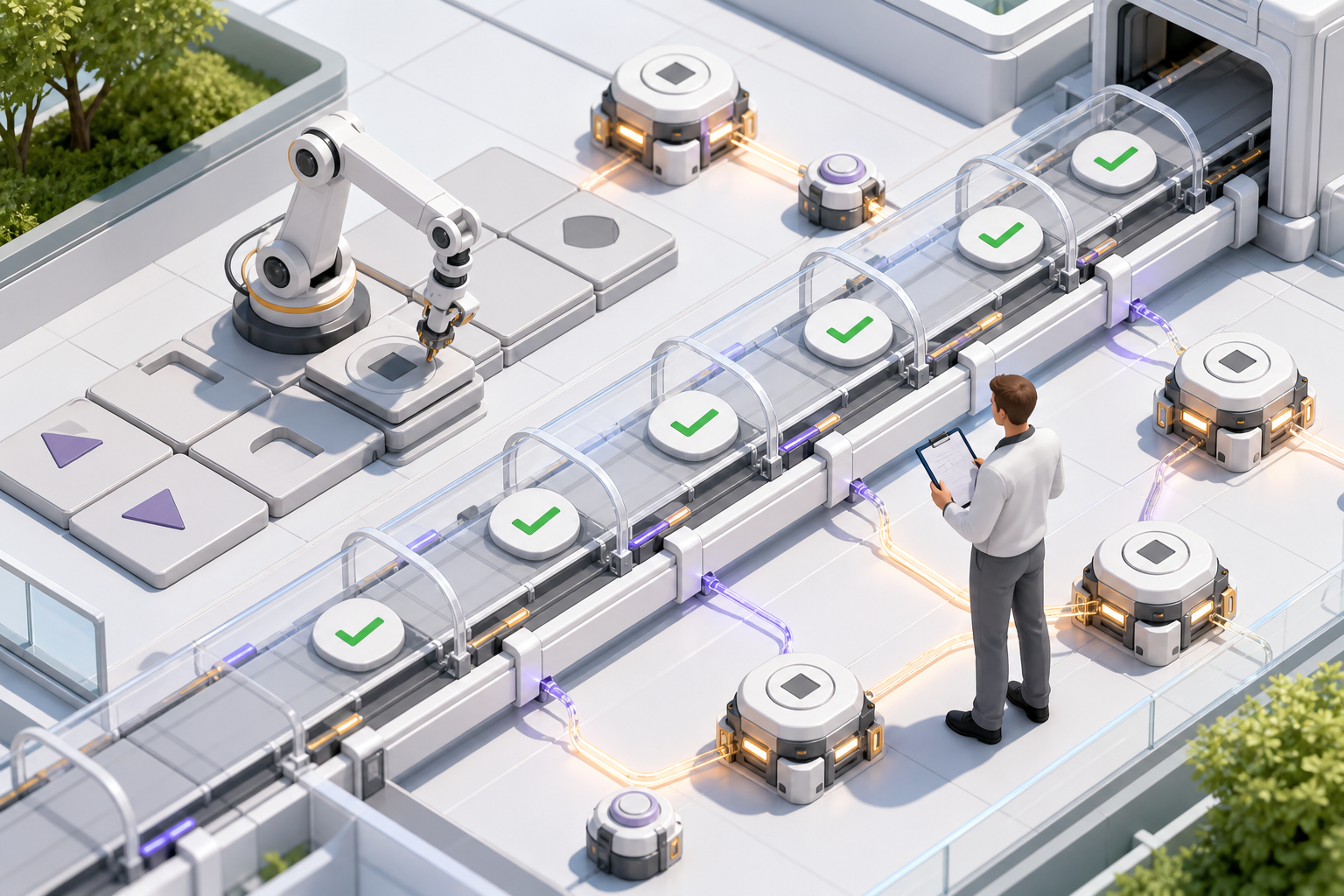
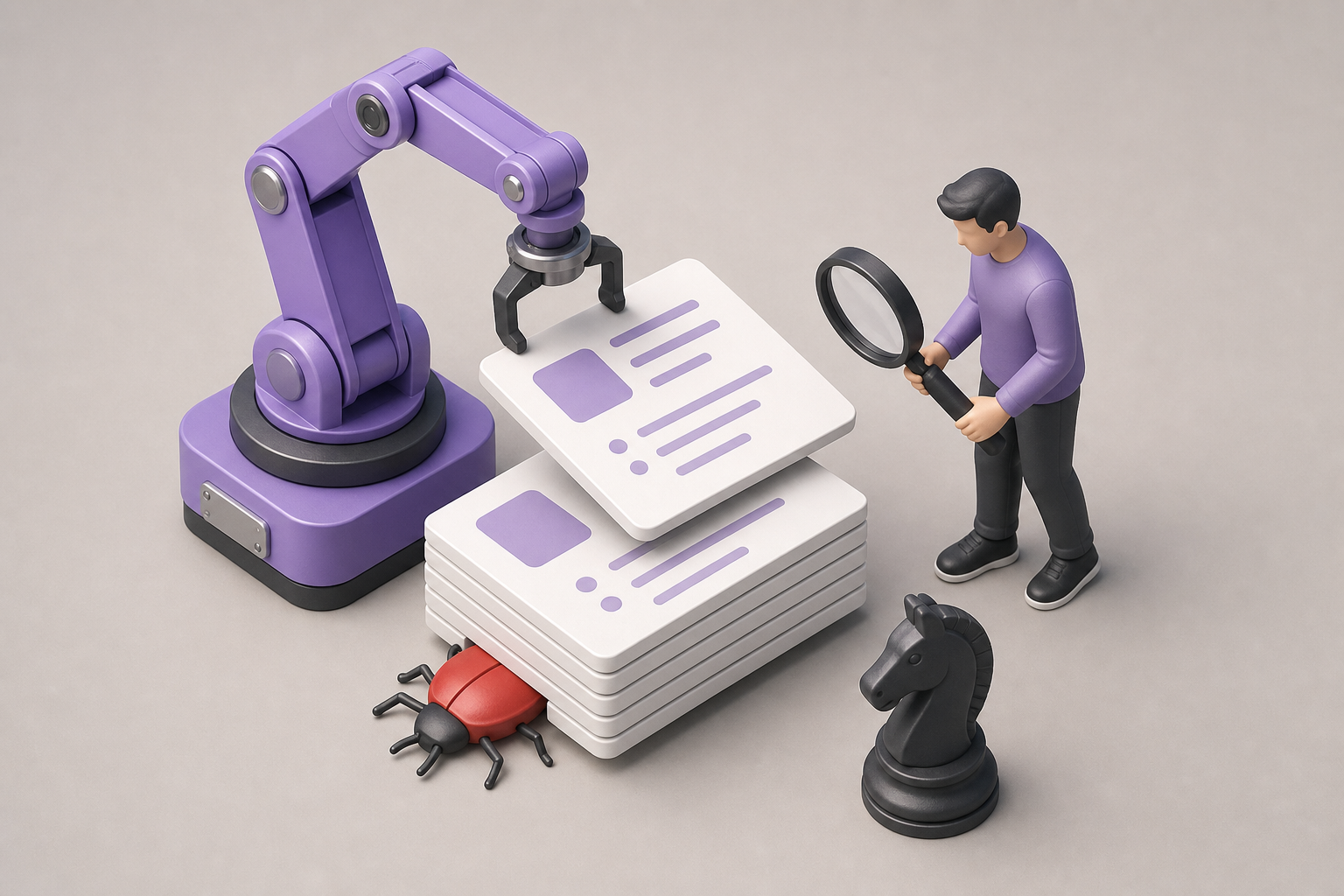
AI generated tests are test cases, scripts, or scenarios produced by a machine learning model from requirements, code, user stories, telemetry, or existing test assets. They can reduce the blank page problem in QA, but they do not automatically understand product risk, business intent, or the subtle ways users break software. The strategic question is not whether AI can write tests; it is whether software testing AI can reason like a skilled tester under uncertainty.
AI can write useful test cases, but it does not truly think like a tester. It predicts plausible checks from patterns, while a tester investigates risk, intent, context, and failure impact. The best results come when testers use AI testing tools as accelerators, then review, challenge, and reshape the output with human judgment.
AI generated tests accelerate drafting, but they do not replace tester judgment
AI generated tests are most valuable when they compress repetitive test design work, not when teams treat them as an autonomous quality authority. A tester still decides what matters, what is missing, and whether a generated check would catch a meaningful failure.
Test case generation is the process of deriving executable or documented tests from a source such as requirements, code paths, API contracts, production logs, or models of system behavior. Modern AI test case generation can produce Gherkin scenarios, Playwright flows, Cypress specs, API checks, boundary value ideas, and negative cases in seconds.
AI testing tools are platforms or assistants that use machine learning, large language models, heuristics, or computer vision to support software testing activities. Software testing AI is the broader use of artificial intelligence across test design, automation, maintenance, prioritisation, data generation, defect analysis, and quality intelligence.
The productivity gain is real but uneven. Mature teams commonly report 30% to 50% faster first draft creation for regression and API checks, while exploratory and domain critical testing sees smaller gains because the hard work is not syntax generation.
What AI test case generation does well in real delivery pipelines
AI test case generation works best when the expected behavior is explicit, structured, and repeatable. It is especially effective at expanding obvious permutations faster than a human wants to type them.
For CRUD workflows, API endpoints, form validations, and happy path regression, AI generated tests often provide a useful starting point. A model can scan a user story and propose validation rules, error states, role permissions, and edge inputs that align with common testing patterns.
AI also helps legacy teams bootstrap coverage. When a codebase has weak documentation, an AI assistant can infer likely behavior from route handlers, unit tests, database schemas, and UI labels, then propose characterization tests for current behavior.
The best use case is not asking AI to invent your strategy. It is feeding it a constrained testing problem, relevant context, and a clear definition of acceptable output.
How does AI reduce the blank page problem in test design?
AI reduces the blank page problem by generating candidate scenarios that testers can accept, reject, merge, or challenge. This matters because early test design is often slowed by incomplete requirements, fragmented context, and the mental overhead of converting product language into checks.
For example, a checkout story with coupons, loyalty points, tax rules, and guest checkout can produce dozens of combinations. AI can draft a coverage matrix that includes expired coupons, multiple discount stacking, currency rounding, address changes, and payment retries.
A skilled tester then trims the matrix to the combinations that carry risk. Without that trimming, teams get a large suite that looks impressive but adds noise, execution cost, and false confidence.
When should you trust AI generated tests enough to automate them?
You should trust AI generated tests enough to automate them only after a human review confirms the oracle, data setup, assertions, and business relevance. A generated script that clicks through a page is not a test unless it can reliably detect the failure you care about.
The review should ask four questions. Does the test assert a meaningful outcome, does it use stable selectors or contracts, does it isolate data safely, and does it fail for the right reason?
Teams that skip this review often see fast automation growth followed by maintenance debt. In internal delivery metrics, unreviewed AI generated UI tests can produce 15% to 25% higher flake rates than tests designed with explicit data and oracle strategy.
Where AI testing tools fall short of real tester thinking
AI testing tools do not possess product accountability, stakeholder empathy, or independent intent. They infer likely tests from supplied context, while testers reason about what would hurt the user, the business, and the release.
A tester notices that a technically valid password reset flow may still create a security risk when combined with account recovery and support tooling. AI may generate correct checks for each feature in isolation and miss the cross feature abuse path.
Tester thinking is adversarial, contextual, and economic. It asks where defects are likely, which failures matter, what evidence is enough, and where testing should stop because the next hour has lower value elsewhere.
Large language models are also vulnerable to confident incompleteness. They may produce clean looking tests that ignore implied requirements, regulatory rules, accessibility expectations, or operational constraints absent from the prompt.
Why can an AI written test pass while quality still fails?
An AI written test can pass while quality fails because the test may validate the wrong behavior or a shallow version of the right behavior. Passing automation only proves that specific assertions held under specific conditions.
Consider a subscription upgrade flow. AI may check that the plan label changes after payment, but a tester may ask whether proration is correct, invoice emails are triggered once, entitlements update across services, audit logs are retained, and support staff see the same state.
This is the core gap between generating checks and testing a system. Checks confirm known expectations; testing investigates uncertainty.
Comparing AI generated tests with human designed tests
AI generated tests and human designed tests are complementary rather than interchangeable. AI is stronger at speed and breadth, while humans remain stronger at risk framing, ethics, ambiguity, and business consequences.
The right comparison is not human versus machine as a winner takes all contest. It is which tasks deserve automation assistance and which require expert sensemaking.
| Testing dimension | AI generated tests | Human designed tests | Best combined approach |
|---|---|---|---|
| Speed of first draft | Very fast for structured requirements and common patterns | Slower but more deliberate | Use AI for first pass scenarios, then human review for intent |
| Risk analysis | Limited to context supplied and learned patterns | Strong when testers understand product, users, and failure impact | Give AI explicit risk categories and ask it to expose gaps |
| Assertions and oracles | Often generic unless expected outcomes are precise | Can define meaningful business and technical oracles | Require humans to approve every oracle before automation |
| Edge case discovery | Good at familiar boundaries and input variants | Better at domain specific surprises and abuse paths | Use AI to expand candidates, then prioritize with risk based testing |
| Maintenance burden | Can increase noise if generated scripts are accepted blindly | Lower when design uses stable contracts and test data strategy | Enforce coding standards, selector rules, and flake budgets |
| Exploratory testing | Can suggest charters and heuristics | Superior at observation, adaptation, and investigative learning | Use AI as a note taking and idea generation partner |
In practice, teams often gain the most value from AI in the middle of the testing funnel. It is excellent for turning known requirements into candidate checks, but weaker at deciding which unknowns deserve investigation.
How experienced testers make AI test case generation more reliable
Experienced testers improve AI test case generation by constraining the input, defining the output standard, and reviewing the result against risk. The prompt matters, but the surrounding process matters more.
A useful AI workflow starts with context packaging. Include acceptance criteria, architecture notes, known incidents, data rules, user roles, observability signals, and explicit exclusions.
Then define the test design lens. Ask for boundary value analysis, state transition coverage, pairwise combinations, abuse cases, accessibility checks, or contract tests depending on the feature.
Finally, require traceability. Each generated test should map to a requirement, risk, defect history, or user journey, otherwise it becomes suite inflation.
What prompt structure produces better software testing AI output?
A better prompt structure tells software testing AI the product context, risk model, test technique, output format, and review criteria. Vague prompts produce generic tests because the model has no reason to prefer one risk over another.
A strong prompt does not ask for more tests. It asks for tests that target specific failure modes, include clear oracles, and identify assumptions the model made.
For example, ask for ten risk ranked API contract tests for a payment refund endpoint, not a list of refund test cases. The difference pushes the model toward judgment criteria rather than volume.
{
  "generationScope": "checkout regression",
  "featureContext": "guest checkout with coupons, tax calculation, card payment, and order confirmation",
  "testTechnique": ["boundary value analysis", "state transition testing", "risk based testing"],
  "requiredFieldsPerTest": ["risk", "preconditions", "steps", "oracle", "testData", "automationCandidate"],
  "rejectIf": ["no explicit assertion", "duplicate scenario", "depends on uncontrolled production data"],
  "outputFormat": "json array"
}
This kind of structure improves review efficiency because it forces each candidate to carry the evidence a tester needs. It also makes weak output easier to detect because missing oracles and assumptions become visible.
Common mistakes teams make with AI testing tools
Teams get AI testing tools wrong when they optimise for test volume instead of decision quality. More generated tests can reduce quality if they obscure signals, duplicate coverage, or slow feedback loops.
The first mistake is accepting plausible output without checking the oracle. A model can produce a fluent test that asserts a status code, a visible message, or a database value without proving the user outcome is correct.
The second mistake is ignoring test data. AI generated tests frequently assume clean accounts, available inventory, fixed dates, and deterministic third party responses unless the team states otherwise.
The third mistake is turning every generated scenario into UI automation. Many checks belong at the API, component, contract, or unit level, where execution is faster and failure diagnosis is clearer.
The fourth mistake is failing to measure the suite after AI adoption. Track escaped defects, duplicate tests, average failure triage time, flake rate, review rejection rate, and execution duration, not only the number of tests created.
How do AI generated tests create false confidence?
AI generated tests create false confidence when their quantity is mistaken for coverage depth. A suite with hundreds of generated cases may still miss the most important failure if no one modeled the risk.
False confidence also appears when generated tests mirror the acceptance criteria too closely. If a requirement omits a critical exception, the AI may omit it as well.
The antidote is independent test thinking. Use defect taxonomies, production incidents, threat modeling, observability data, and user support trends to challenge both the requirements and the generated tests.
Where AI can support exploratory and risk based testing
AI can support exploratory and risk based testing by generating charters, heuristics, personas, and follow up questions. It cannot replace the live observation and adaptation that make exploratory testing valuable.
Risk based testing is an approach that prioritises testing effort according to likelihood and impact of failure. AI can help build an initial risk register by clustering recent defects, release notes, code churn, dependency changes, and customer complaints.
Exploratory testing is simultaneous learning, test design, and execution. AI can propose a charter such as investigate checkout recovery after payment timeout, but the tester still decides what to vary after each observation.
In high performing teams, AI becomes a thinking aid during debriefs. It can summarise session notes, identify uncovered risks, suggest follow up charters, and convert promising observations into regression candidates.
Can AI identify edge cases testers miss?
AI can identify some edge cases testers miss, especially familiar boundary conditions and combinations buried in long requirements. It is less reliable for domain specific edge cases that depend on business history, regulatory context, or operational constraints.
For instance, AI may suggest zero quantity, maximum quantity, expired coupon, and invalid card checks. A domain aware tester may add tax exemption handling for nonprofit customers, partial shipment refunds, or invoice rounding across currencies.
The best practice is to ask AI for edge cases by category, then ask what assumptions it used. Assumption review often reveals the real gaps.
How to evaluate whether an AI generated test is worth keeping
An AI generated test is worth keeping when it provides unique, reliable evidence about a meaningful risk at an appropriate test level. If it duplicates coverage, lacks a clear oracle, or fails unpredictably, it should be revised or removed.
Use a review rubric before merging generated tests into the suite. The rubric should include risk relevance, assertion quality, data control, determinism, maintainability, execution cost, and traceability.
Teams that apply a review rubric typically reject or rewrite 20% to 40% of AI generated candidates. That rejection rate is healthy because it means the team is curating quality rather than collecting artifacts.
A good generated test should be explainable in one sentence. If no one can say what failure it detects and why that failure matters, the test is not ready.
What the future of software testing AI will likely look like
The future of software testing AI is less about replacing testers and more about embedding quality intelligence into delivery systems. The strongest tools will combine code understanding, runtime telemetry, requirements knowledge, and historical defect patterns.
Expect AI testing tools to become better at recommending test levels, detecting redundant checks, repairing brittle locators, and prioritising tests based on code change risk. These capabilities can shorten feedback loops by 25% to 40% when integrated with CI data and disciplined suite governance.
However, the human role becomes more strategic, not less. Testers will spend less time drafting routine checks and more time defining risk models, validating oracles, investigating anomalies, and advising release decisions.
The differentiator will be quality leadership. Teams that treat AI as a junior assistant will compound expertise, while teams that treat it as an autopilot will compound blind spots.
Key Takeaways
- AI generated tests accelerate test case generation, but they do not replace tester judgment about risk, intent, and business impact.
- AI testing tools perform best when requirements are explicit, expected outcomes are clear, and humans review every oracle before automation.
- Software testing AI can expand scenario ideas quickly, but it can also create duplicate coverage, flaky scripts, and false confidence when used without governance.
- Experienced testers improve AI output by supplying context, choosing specific test techniques, and demanding traceability to risks or requirements.
- Generated tests should be kept only when they provide unique, deterministic evidence about a meaningful failure mode.
- Exploratory and risk based testing remain human led, with AI serving as a charter generator, note analyst, and coverage challenger.
- The future belongs to teams that pair AI speed with human skepticism, not teams that confuse generated volume with quality.