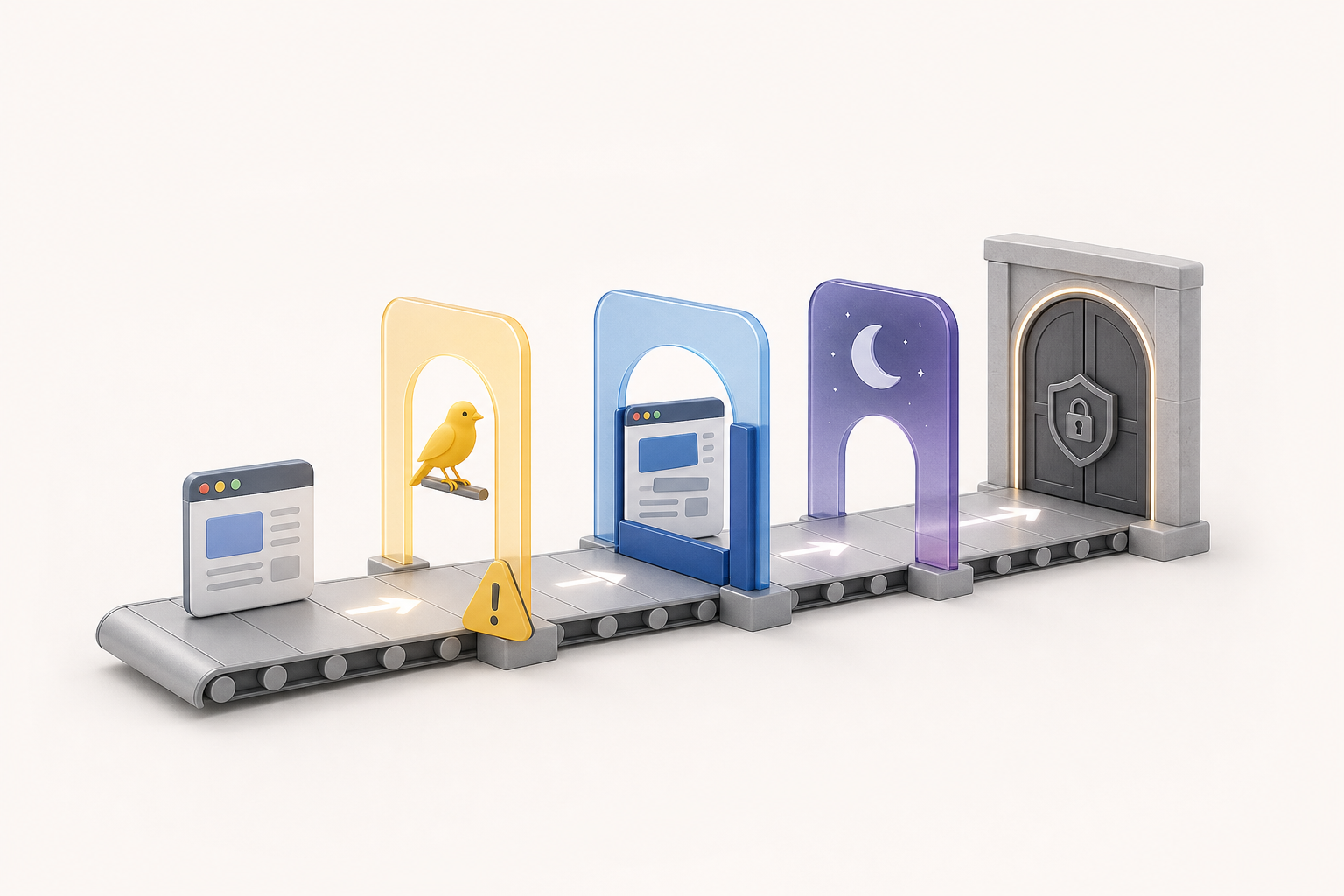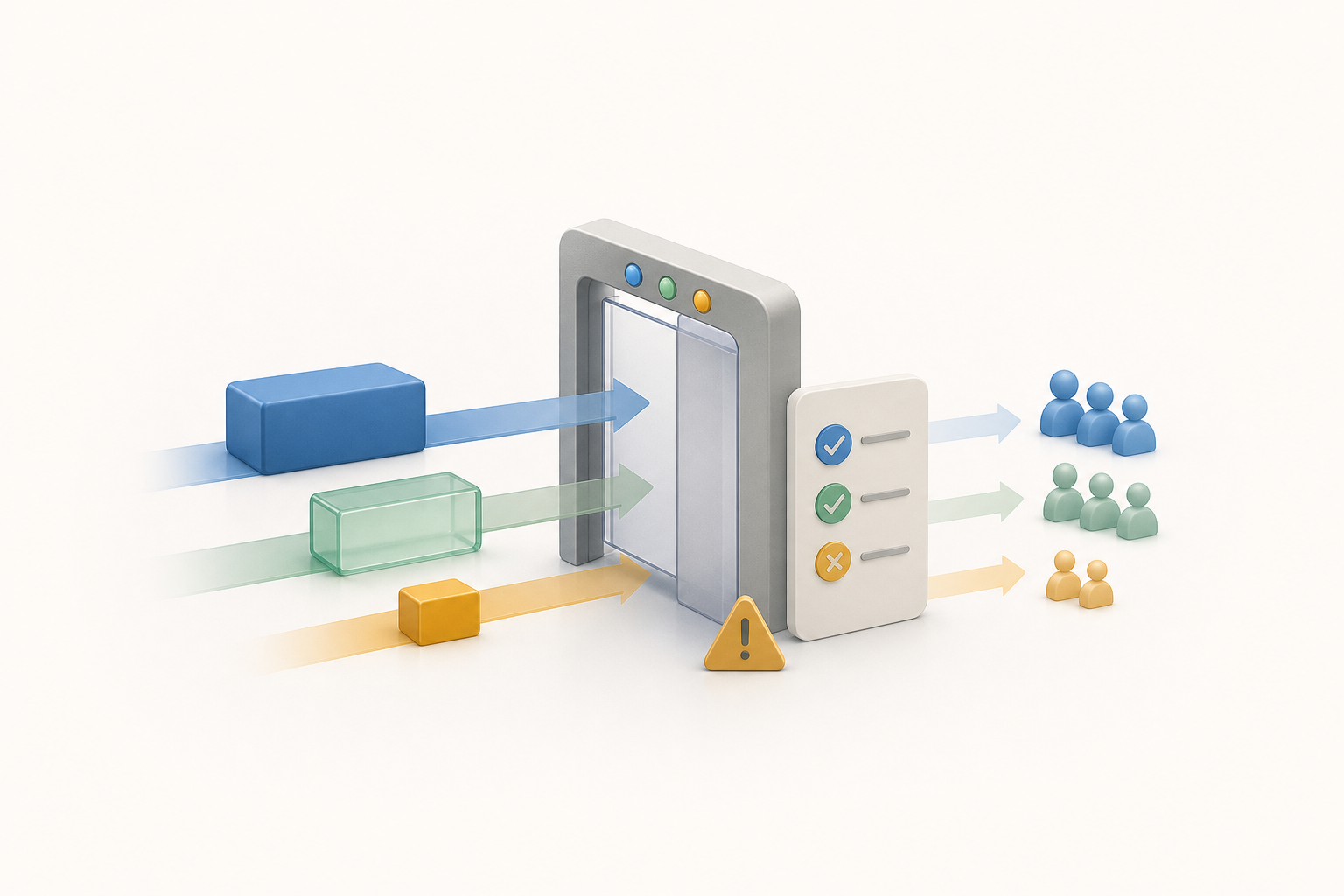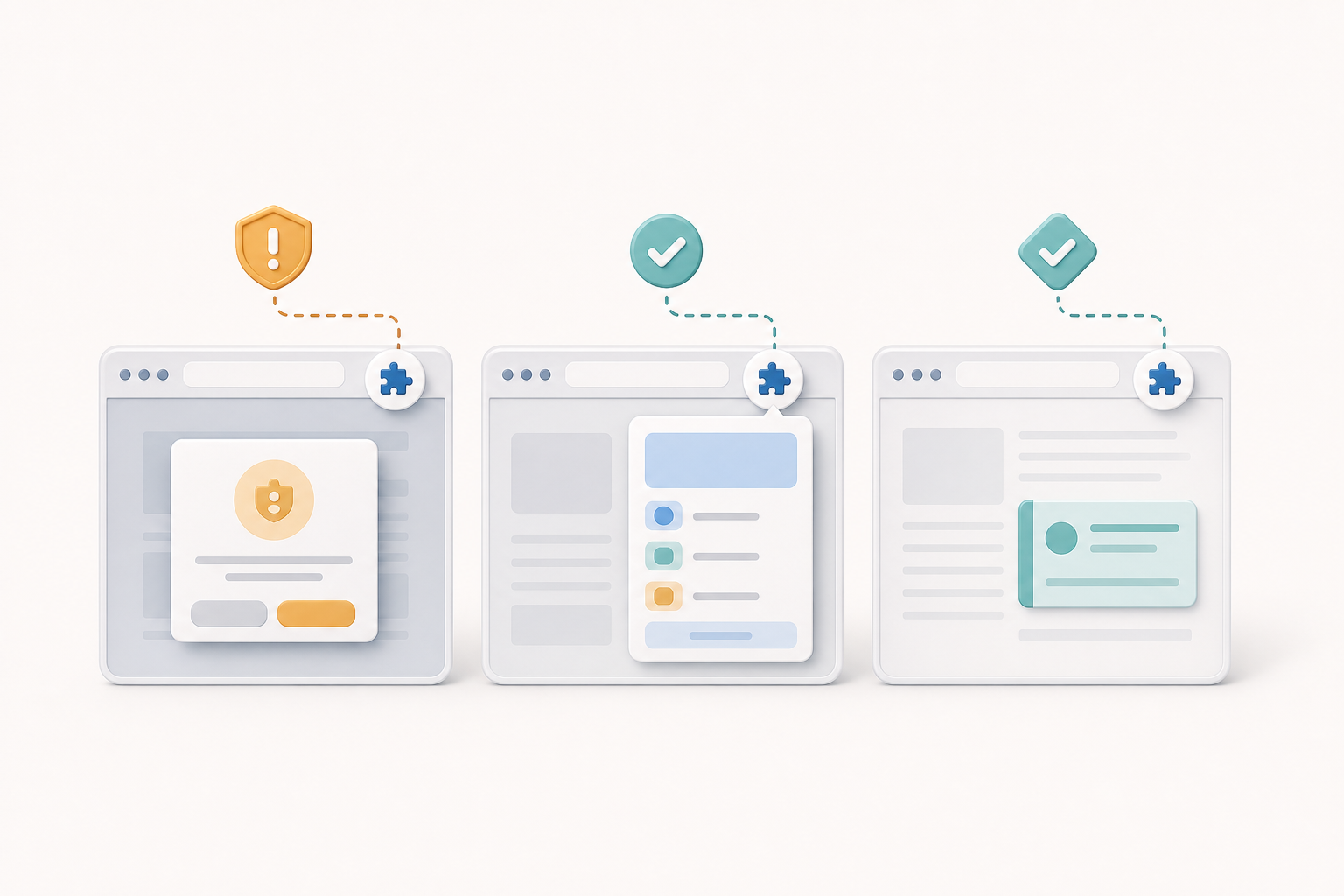
Browser release rollout QA works best when feature readiness is measured against the maturity of the browser channel, not only against the application sprint calendar. Nightly, canary, dev, beta, and stable channels expose different levels of risk, so QA gates should become stricter as a feature moves closer to general availability.
A practical nightly-to-release model treats browser channels as a confidence ladder. Validate volatility and API assumptions in nightly or canary, broaden compatibility checks in beta or dev, and require stable-channel evidence before full rollout. Feature flags, release gates, rollback triggers, and ownership rules keep the model actionable rather than theoretical.
Why Browser Channels Should Shape Feature Rollout Decisions
Modern browser delivery is continuous, which means a web feature can pass today and fail when an upcoming browser version reaches users. A browser channel is a distribution stage for a browser build, such as nightly, canary, beta, dev, or stable. Earlier channels expose upcoming engine behavior sooner; later channels represent what most users are likely to encounter.
The goal is not to test everything everywhere at the same intensity. The goal is to put the right evidence in the right place. Early channels are useful for discovering incompatibilities and standards-related surprises. Later channels are better for confirming user journeys, visual stability, performance acceptability, telemetry, and release confidence.
Playwright documents support for browser channels such as stable, beta, dev, and canary, and positions prerelease browser testing as a way to catch failures before they reach stable users through automated suites in its browser documentation. Mozilla describes Firefox’s progression through Nightly, Beta, and Release channels on MDN. Those channel ladders give QA leaders a practical structure for staged validation rather than a single last-minute compatibility pass.
For broader planning around browser update cadence, see our guide to browser update cadence and release readiness.
The Channel Maturity Ladder and Risk Profile
A useful rollout model starts by assigning a risk profile to each channel. The exact names vary by browser family and automation provider, but the underlying maturity pattern is consistent: earlier channels change more often and later channels carry more release confidence.
| Channel stage | Main QA purpose | Typical risk profile | Best-fit release decision |
|---|---|---|---|
| Nightly or canary | Detect upcoming browser behavior changes, API shifts, rendering regressions, and automation breaks. | High volatility; failures may be browser bugs, product bugs, or test fragility. | Allow internal flag use only; do not infer release readiness from pass/fail alone. |
| Dev | Confirm that fixes and browser changes are stabilizing across near-future builds. | Moderate volatility; useful signal for upcoming compatibility work. | Allow limited QA and engineering dogfood when core flows pass. |
| Beta | Validate near-release compatibility, visual behavior, accessibility-critical paths, and integration flows. | Lower volatility; failures deserve release-manager attention. | Permit controlled external rollout or staged flag exposure if gates pass. |
| Stable or release | Confirm production-readiness against supported user environments. | Lowest channel volatility; failures are customer-impacting until mitigated. | Approve general rollout only with passing gates, monitoring, and rollback readiness. |
This ladder prevents two common mistakes. The first is overreacting to every nightly failure as if it were a production outage. The second is ignoring prerelease failures until the affected browser version becomes stable, when remediation is more expensive and time pressure is higher.
What to Validate at Each Browser Stage
Channel maturity should change both test scope and decision weight. Early stages need diagnostic tests that produce clear defect reports. Later stages need representative tests that prove user value and release safety.
What should QA validate in nightly or canary?
Use nightly or canary for early warning, not final approval. Focus on areas most likely to be affected by browser engine changes: layout and rendering, media handling, permissions, storage behavior, Web APIs, authentication redirects, service workers, and test automation launch behavior. Playwright also publishes canary releases for testing unreleased features and fixes, as described in its canary release documentation, which is useful when your test framework needs to track browser changes earlier.
Good nightly or canary checks are small, deterministic, and diagnostic. A failed smoke test saying “checkout failed” is less useful than a focused test showing that a payment iframe no longer receives focus, or that a CSS container query behaves differently in a prerelease engine.
How should beta validation differ from stable validation?
Beta validation should resemble a release rehearsal. Run the most important cross-browser journeys, high-risk integrations, accessibility-sensitive flows, visual checks for critical screens, and any tests linked to recent product changes. If a feature fails in beta, treat it as a release planning issue because the behavior may soon reach stable users.
Stable validation should answer a narrower but more decisive question: can the feature be safely enabled for the intended user population today? This is where QA release gates should include production-like configuration, supported browser versions, observability checks, rollback confirmation, and sign-off from the teams that own the risk.
Mapping Feature Flags to Browser Readiness
A feature flag is a runtime switch that lets a team enable, disable, or vary a feature without redeploying the application. In a browser channel strategy, flags should not be simple on/off switches. They should express readiness states tied to browser evidence.
A practical mapping is to separate four states: hidden, internal, limited, and general. Hidden means the feature is present in code but not accessible. Internal means it is available to development, QA, and dogfood users. Limited means selected cohorts or customers can use it with monitoring. General means the feature is available to the full intended audience.
feature:
  key: new_checkout_rendering
  owner: payments-web
  risk_level: high

browser_channel_gates:
  nightly_or_canary:
    flag_state: internal
    required_evidence:
      - smoke_passes_on_chromium_canary
      - smoke_passes_on_firefox_nightly
      - no_untriaged_rendering_regression
  beta_or_dev:
    flag_state: limited
    required_evidence:
      - critical_checkout_journeys_pass
      - visual_diffs_reviewed
      - accessibility_blockers_closed
      - rollback_verified
  stable_or_release:
    flag_state: general
    required_evidence:
      - supported_browser_matrix_passes
      - production_monitoring_ready
      - release_manager_approval

rollback_triggers:
  - checkout_completion_drop_detected
  - browser_specific_error_spike
  - payment_iframe_interaction_failure
This example is illustrative, not a universal template. The value is in making the release decision explicit: a browser channel failure changes flag state, escalation path, or rollout percentage instead of becoming an ambiguous test report in a dashboard.
A Release Decision Rubric QA Can Actually Use
A rubric keeps browser release rollout QA consistent across teams. Without it, one squad may ship after a beta failure because stable still passes, while another may block a release for an isolated nightly regression that has no user path. The rubric should define severity, channel, feature exposure, ownership, and next action.
| Signal | Question to ask | Decision guidance |
|---|---|---|
| Failure occurs only in nightly or canary | Is the failed area tied to a supported feature path or upcoming browser behavior? | Create a compatibility investigation. Keep the feature internal unless risk is clearly unrelated. |
| Failure occurs in beta or dev | Could this browser version reach users before the next planned product release? | Pause external expansion, assign owner, and require retest before limited rollout. |
| Failure occurs in stable | Are users affected in a supported browser configuration? | Block general rollout or roll back the flag unless an approved exception exists. |
| Failure is visual only | Does it affect comprehension, trust, accessibility, or conversion-critical flow? | Triage by user impact, not by whether the assertion is screenshot-based. |
| Failure is automation-only | Can a human reproduce it, or did browser automation behavior change? | Quarantine carefully, but do not hide potential browser compatibility issues without investigation. |
The rubric should be reviewed with product and engineering, not owned by QA in isolation. QA leads can define evidence quality, but release managers need to own the business decision when evidence is incomplete. For teams formalizing gates across other layers, the same discipline applies to contract testing and release gates.
Escalation and Rollback Triggers
Escalation rules should be written before the first serious prerelease failure. If the rules are invented during a release crunch, teams tend to argue about priority instead of acting on risk.
- Escalate immediately when a stable-channel failure affects a supported browser and a critical user journey.
- Escalate within the release forum when a beta-channel failure affects a feature scheduled for broad rollout.
- Create a compatibility investigation when nightly or canary shows a plausible upcoming browser change.
- Roll back or reduce exposure when monitoring indicates browser-specific production degradation after enablement.
- Pause rollout expansion when evidence is incomplete for the browser families named in the support policy.
Rollback should also be rehearsed. A feature flag that technically exists but takes hours of approval to change is not a practical rollback mechanism. QA should verify who can disable the feature, how long propagation usually takes in the organization’s delivery system, and what customer-facing state appears after rollback.
Example Rollout Calendar
A calendar makes the model operational. The dates below are illustrative; the important pattern is that evidence is gathered before the final stable-channel decision, not after release candidates are already frozen.
| Timeframe | Browser channel focus | QA activity | Decision |
|---|---|---|---|
| Week 1 | Nightly or canary | Run smoke and diagnostic compatibility checks on flagged feature paths. | Open internal flag only if failures are understood or low impact. |
| Week 2 | Nightly, canary, and dev | Expand to integration flows, layout checks, and automation stability review. | Approve dogfood usage if no critical unresolved browser-specific risks remain. |
| Week 3 | Beta | Run release rehearsal: critical journeys, visual review, accessibility blockers, rollback drill. | Approve limited rollout only with owners assigned for known issues. |
| Week 4 | Stable or release | Confirm supported browser matrix, monitoring, flag configuration, and customer support readiness. | Approve general rollout, hold, or release with a documented exception. |
This cadence is especially useful when product teams want to ship a feature while browser vendors are actively changing the underlying platform area. Instead of a single yes/no compatibility result, stakeholders see a progression of evidence and risk reduction.
Common Pitfalls That Undermine the Model
Treating all channels as equal. A nightly failure and a stable failure should not trigger the same response. The former is an early signal; the latter is customer risk.
Testing too broadly too early. Large end-to-end suites on volatile channels can create noise. Start with focused diagnostics, then broaden as the browser channel matures.
Separating flags from evidence. If feature flags are controlled only by product milestones, browser compatibility evidence has no practical effect. Tie flag states to channel gates.
Ignoring ownership. A prerelease browser failure needs a named owner, even if the final decision is to wait. Unowned failures become recurring surprises.
Confusing test pass with release approval. Passing tests are evidence, not governance. A release decision also needs monitoring, rollback, support scope, and stakeholder acceptance.
Key Takeaways
- Browser channels form a practical maturity ladder for staged feature rollout decisions.
- Nightly and canary testing should prioritize early warning, diagnostics, and compatibility investigation.
- Beta validation should behave like a release rehearsal for near-future browser behavior.
- Stable-channel gates should decide whether a feature is safe for the intended user population.
- Feature flags become more valuable when their states are tied to browser-channel evidence.
- Escalation and rollback triggers should be defined before high-pressure release decisions occur.
- A clear rubric helps QA, engineering, product, and release management act on the same evidence.