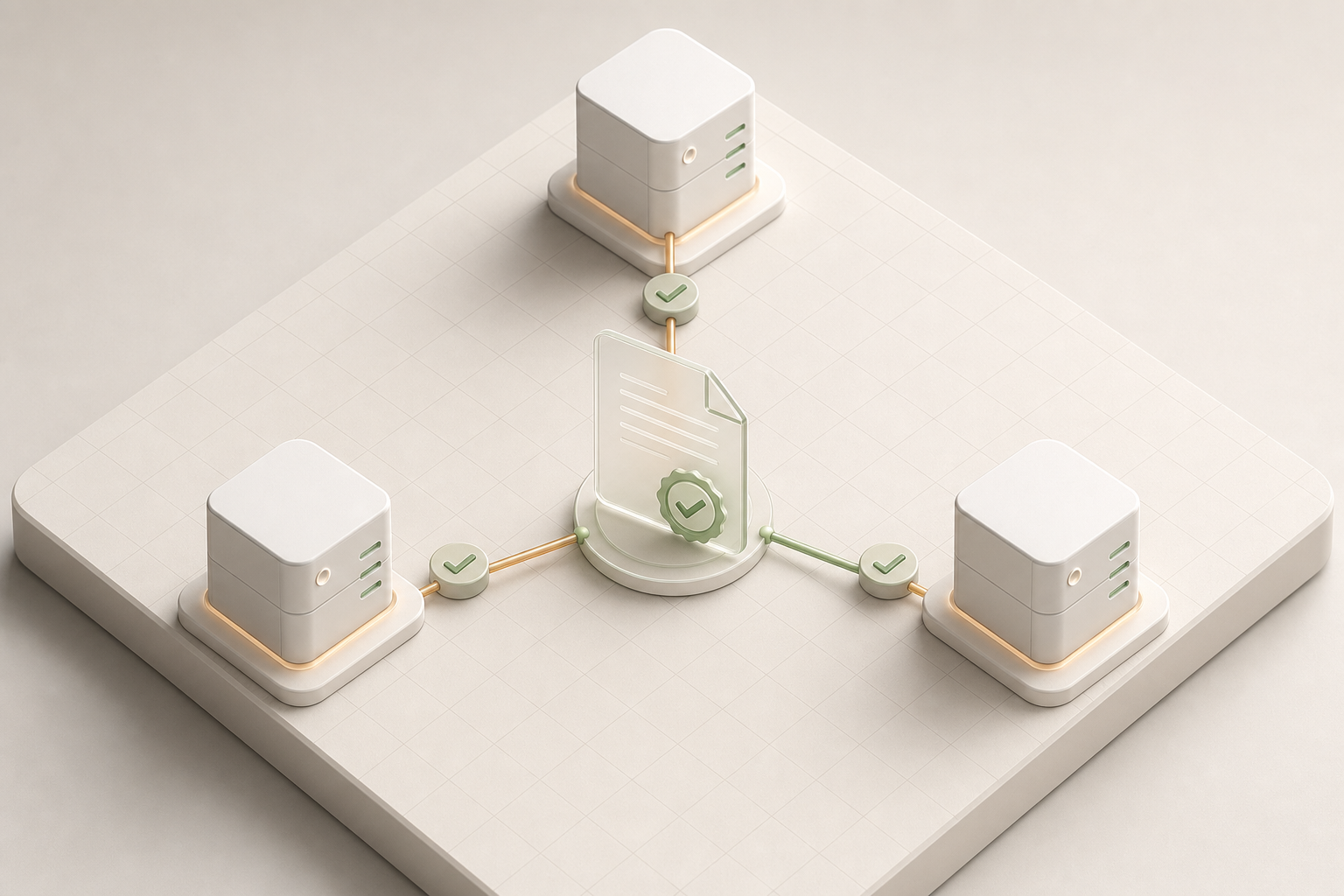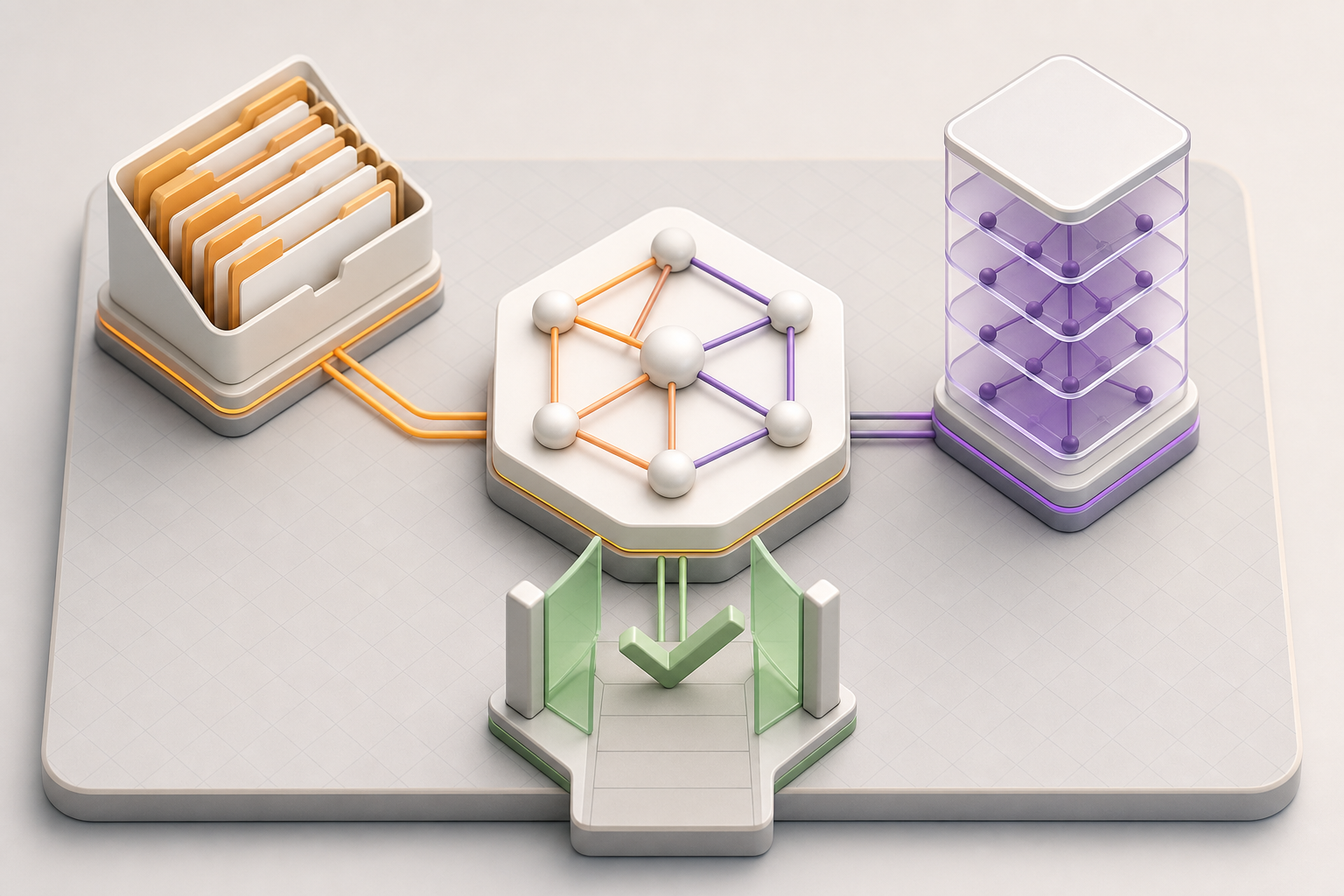
GraphQL contract testing is the practice of verifying that a GraphQL schema, resolver behavior, and consumer operations remain compatible across releases. A GraphQL schema is the typed contract that describes what clients can query or mutate, a model reinforced by the official GraphQL documentation on schemas and types. Schema drift is the unplanned divergence between the schema consumers depend on and the schema producers actually deploy.
Use GraphQL contract testing to compare proposed schema changes against approved consumer operations before deployment. Release gates are automated CI/CD decisions that block a release when a schema change breaks existing queries, mutations, or governance rules. The strongest approach combines schema validation, operation checks, resolver-level assertions, and explicit ownership rules.
Why GraphQL creates a different class of API regression risk
GraphQL regression risk is different because the schema exposes a flexible graph rather than a fixed set of resource endpoints. The official GraphQL learning guide describes GraphQL as a query language for APIs where clients ask for exactly the data they need, which shifts part of compatibility risk from endpoint routing to field-level contracts.
In REST, a breaking change often appears as a missing endpoint, changed status code, or altered response field. In GraphQL, the endpoint may remain stable while a nested field, enum value, nullability rule, directive, or input type silently invalidates a consumer operation.
GraphQL API QA is the quality discipline for verifying schema compatibility, resolver behavior, query safety, authorization boundaries, and client impact across the GraphQL layer. It cannot rely only on HTTP-level smoke tests because many GraphQL failures occur inside a successful 200 response or during query planning before resolver execution.
The practical risk is not that GraphQL is inherently fragile. The risk is that its schema-first power can create a false sense of safety when teams treat introspection output as documentation instead of as an enforceable contract.
How does GraphQL flexibility increase contract surface area?
GraphQL flexibility increases contract surface area because every field, argument, enum, interface, union member, input object, and nullability marker can become a consumer dependency. A client may depend on a combination of fields that no producer team explicitly thinks of as a separate API product.
This matters for QA because the most important contract is often not the full schema; it is the subset of schema paths that real consumers use. Contract testing must therefore validate both the schema definition and representative operations captured from applications, persisted queries, or consumer-owned test suites.
What to lock down in GraphQL contract testing
GraphQL contract testing should lock down the schema shape, operation compatibility, semantic behavior, and governance policies that consumers rely on. A schema-only diff is useful, but it is insufficient when resolver behavior changes without a visible schema change.
Schema validation is the automated process of checking a schema or operation against GraphQL type rules, compatibility rules, and team-defined policy rules. In a release pipeline, schema validation should answer three questions: is the schema valid, is it compatible with known consumers, and does it follow organizational API governance rules?
At minimum, lock down object types, field names, argument names, argument defaults, enum values, input object fields, custom scalar expectations, interface implementations, union membership, directives, deprecations, and nullability. Nullability deserves special attention because changing a nullable field to non-null can break server execution if resolvers return null, while changing non-null to nullable can break client assumptions.
Contract assertions should also cover resolver semantics where the schema cannot express the requirement. Examples include whether a mutation is idempotent for a specific business key, whether an authorization failure returns a typed error, or whether a paginated connection preserves stable cursors.
| Contract layer | What it detects | Best gate location | Common blind spot |
|---|---|---|---|
| Schema diff | Removed fields, changed types, changed nullability, enum changes | Pull request and build pipeline | Cannot prove resolver semantics |
| Consumer operation validation | Queries and mutations that no longer compile against the candidate schema | Pull request, build pipeline, pre-deploy | Requires current operation inventory |
| Resolver contract tests | Behavior changes under representative inputs | Service test stage and pre-release | Can become brittle if tied to volatile data |
| Governance policy checks | Naming, deprecation, ownership, pagination, authentication conventions | Pull request and platform gate | Policy exceptions need a clear owner |
| Runtime drift monitoring | Deployed schema differs from registered approved schema | Post-deploy and scheduled verification | Finds issues after deployment unless paired with gates |
Which schema elements create the most painful breaking changes?
Field removal, type changes, enum value removal, argument requirement changes, and nullability changes usually create the most painful breaking changes because they invalidate compiled operations or client expectations. These changes should fail a release gate unless the affected consumers have approved migration or there is evidence that no registered operation uses the element.
Input types are especially risky because producers sometimes treat them as internal server concerns. A new required input field can break every existing mutation caller even when the mutation name and return type are unchanged.
How schema drift becomes a release management problem
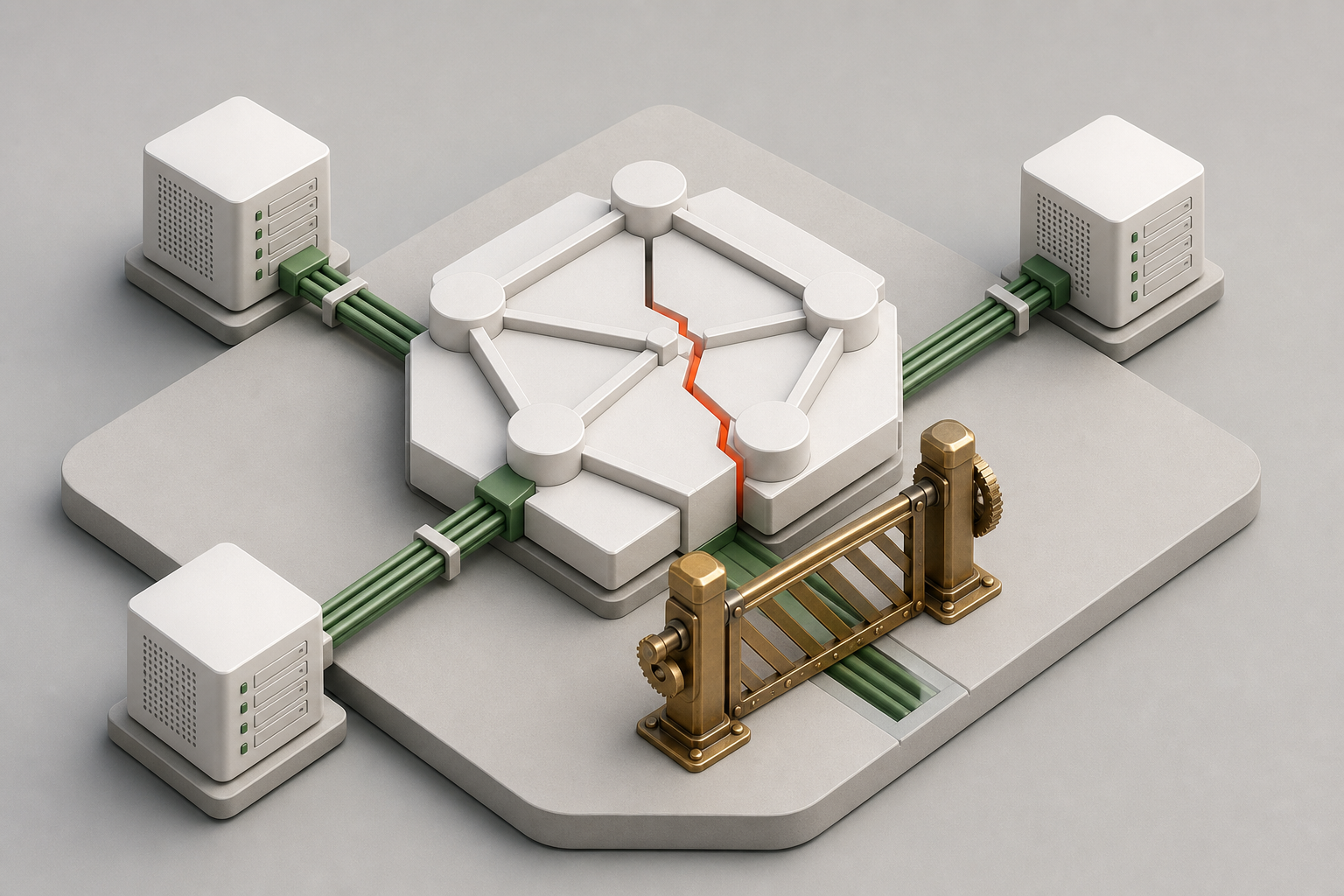
Schema drift becomes a release management problem when the deployed schema, repository schema, registry schema, and consumer expectations no longer match. The longer drift remains invisible, the more release decisions depend on assumption rather than evidence.
Drift can enter through hotfixes, manual federation changes, unreviewed resolver deployments, generated schema differences, feature flags, or environment-specific configuration. It can also appear when one team updates the schema registry but another deploys a service version built from an older branch.
A mature GraphQL API QA process treats every schema as an artifact with provenance. The pipeline should know which commit produced the schema, which consumer operations were checked against it, which policy version was applied, and which environment received it.
Do not frame schema drift only as a developer hygiene issue. It is a release governance issue because the people approving releases need a reliable answer to whether consumers will continue to function after deployment.
When should schema drift fail the pipeline?
Schema drift should fail the pipeline when the candidate schema differs from the approved baseline in a way that is breaking, unexplained, or unowned. Non-breaking additions can usually proceed, but they should still be registered so downstream tooling sees the new contract.
A practical policy is to fail on any removed field, removed type, changed field return type, new required argument, removed enum value, or changed input requirement unless an explicit exception references the affected consumers. This is not bureaucracy; it is the evidence trail needed to make release gates credible.
Release gates that enforce schema validation and API governance
Release gates should convert GraphQL contract evidence into a clear allow, block, or require-review decision. API governance is the set of rules, ownership practices, and enforcement mechanisms that keep APIs consistent, secure, evolvable, and consumer-safe across teams.
A strong gate policy separates hard failures from advisory findings. Hard failures include invalid schemas, breaking changes against registered operations, unknown schema provenance, unauthorized ownership changes, and governance violations tied to security or compatibility.
Advisory findings can include missing descriptions, inconsistent naming, missing deprecation metadata, or recommended pagination patterns. These should be visible in pull requests, but not every style issue should block an urgent production fix.
The important design choice is to make the gate deterministic. If engineers cannot predict which rule failed and what evidence would satisfy it, they will route around the process or request blanket exceptions.
schema:
  source: ./schema.graphql
  registry: https://contracts.example.internal/graphql
  service: customer-profile
checks:
  fail_on:
    - schema_parse_error
    - field_removed
    - type_removed
    - field_type_changed
    - required_argument_added
    - enum_value_removed
    - registered_operation_invalid
    - owner_missing_for_changed_type
  warn_on:
    - description_missing
    - deprecated_field_without_removal_date
    - pagination_pattern_nonstandard
consumer_operations:
  sources:
    - ./contracts/mobile-app/*.graphql
    - ./contracts/web-portal/*.graphql
    - persisted-query-registry:production
approval:
  exception_requires:
    - api_owner
    - consumer_owner
    - migration_ticket
commands:
  - npm run graphql:schema:export
  - npm run graphql:contract:check
  - npm run graphql:governance:lint
This configuration is a hypothetical example, not a benchmark or a product recommendation. The point is the gate design: validate the candidate schema, compare it with the approved baseline, compile real consumer operations, and require named approval for exceptions.
How strict should a GraphQL release gate be?
A GraphQL release gate should be strict for irreversible consumer breakage and flexible for low-risk hygiene issues. Blocking every minor style violation creates gate fatigue, while allowing unreviewed breaking changes makes the gate performative.
Use severity levels that match release risk. Compatibility, security, and ownership failures should block; documentation and convention issues can warn unless they accumulate or affect a public API standard.
Contract rules for queries, mutations, and breaking changes
Queries, mutations, and subscriptions need different contract rules because consumers depend on them in different ways. A single schema diff category can carry different risk depending on whether it affects a read path, write path, or event stream.
For queries, validate that registered operations compile against the candidate schema and that key resolver paths preserve expected shape, sorting, pagination, and authorization behavior. If a query returns partial data with errors, define which errors are contractually acceptable and which indicate a regression.
For mutations, test input compatibility, side effects, idempotency expectations, validation error shape, and transaction boundaries. A mutation contract should say more than the return type; it should capture what changes, what is rejected, and how clients detect success or failure.
For subscriptions, validate payload type stability, event filtering semantics, connection behavior, and backward compatibility for long-lived clients. Subscription contracts often fail through timing and authorization changes rather than obvious schema diffs.
- Safe addition: adding an optional field to an object type is usually compatible when it does not change resolver behavior for existing fields.
- Risky addition: adding a required argument to an existing field breaks callers that do not send the argument.
- Breaking removal: removing a field or enum value can invalidate registered operations immediately.
- Semantic break: changing sorting, filtering, authorization, or null behavior can break consumers even when the schema diff is clean.
- Governance break: changing ownership, naming, authentication directives, or deprecation metadata can violate API governance even before consumers fail.
Can schema diffing alone prove that a GraphQL API is safe?
Schema diffing alone cannot prove that a GraphQL API is safe because it detects structural compatibility, not all behavioral compatibility. A resolver can change business semantics, authorization, sorting, or error behavior without changing the schema at all.
Schema diffing is still essential because it catches a high-value class of breakage early and cheaply. Treat it as the first gate, then add operation validation and targeted resolver contract tests for paths with real consumer risk.
Ownership model between API teams and consumer teams
GraphQL contract testing works best when API producers own schema integrity and consumer teams own the operations they depend on. The platform or QA enablement team should own the shared rules, registry, and release gate mechanics.
Producer teams should publish candidate schemas, annotate ownership for types and fields, maintain deprecation metadata, and respond to gate failures. Consumer teams should publish representative queries and mutations, keep operation inventories current, and approve migrations that affect them.
The QA role is not to become a manual traffic cop for every schema change. Senior QA engineers should design the evidence model, calibrate the severity rules, test the gate itself, and make sure exceptions remain auditable.
For federated GraphQL, ownership must be even more explicit. A subgraph team can make a local change that composes successfully but alters the supergraph contract used by clients, so the gate must validate both subgraph and composed graph impact.
Who approves a breaking GraphQL schema change?
A breaking GraphQL schema change should be approved by the API owner, the affected consumer owner, and the release owner responsible for production risk. If a consumer cannot be identified, the change should default to blocked or require a documented risk acceptance path.
Approval should not be an informal chat message. It should reference the schema element, consumer impact, migration plan, expected removal date, and rollback option.
Where GraphQL API QA commonly breaks down
GraphQL API QA commonly breaks down when teams validate the schema but ignore real consumer operations, resolver semantics, and environment drift. The result is a pipeline that appears rigorous while still allowing production contract failures.
The first pitfall is treating generated documentation as contract enforcement. Documentation helps consumers understand the API, but it does not stop a deployment that removes a field used by a mobile app version still in the market.
The second pitfall is relying on happy-path integration tests. A few broad end-to-end tests rarely cover the combinations of fragments, aliases, variables, enum values, nested input objects, and authorization contexts that real clients use.
The third pitfall is failing to version policy. If governance rules change without versioning, old services may fail new gates for reasons unrelated to their release risk, creating noise and resentment.
The fourth pitfall is ignoring negative contracts. Consumers often depend on predictable validation errors, authorization denials, or null behavior; these should be asserted when they are part of the user experience or client control flow.
- Do not assume introspection in one environment represents production unless the deployment path proves it.
- Do not let every team define breaking change rules differently for the same shared graph.
- Do not approve deprecations without a removal policy, consumer notification path, and operation usage evidence.
- Do not hide gate failures inside long CI logs; publish concise, field-level reasons and owners.
- Do not confuse no known consumers with no consumers when operation collection is incomplete.
Rollout checklist for practical GraphQL contract testing
A practical rollout should start with visibility, then add enforcement gradually where the evidence is strongest. Teams get better adoption when release gates first explain risk and then block only well-understood breakage.
Begin by centralizing schema publication from every environment and associating each schema with a commit, service version, and deployment target. Without this, teams cannot distinguish a real breaking change from an artifact generated by a different build step.
Next, collect consumer operations from persisted query registries, application repositories, contract folders, and traffic-derived inventories where appropriate. The goal is not to capture every theoretical query; it is to represent the operations that matter for release safety.
Then define the first gate policy with a small set of high-confidence hard failures. Field removal, type removal, field type changes, new required arguments, and invalid registered operations are strong starting points.
- Publish every candidate schema to a shared registry before deployment.
- Compare the candidate schema with the approved production baseline.
- Validate registered consumer operations against the candidate schema.
- Run resolver contract tests for critical query and mutation paths.
- Apply governance rules for ownership, deprecation, naming, pagination, and security directives.
- Classify findings as block, require review, or warn.
- Record approvals, exceptions, and migration evidence with the release artifact.
- Verify the deployed schema after release to detect runtime drift.
A release gate becomes trustworthy when it is both strict and explainable. The best signal for maturity is not the number of checks, but whether engineers can understand failures quickly and whether release owners can rely on the evidence.
Key Takeaways
- GraphQL contract testing protects consumers by validating schema structure, real operations, resolver behavior, and governance rules before release.
- Schema drift is a release-management risk because deployed schemas, registered schemas, and consumer expectations can diverge without obvious HTTP failures.
- Schema validation should fail on high-confidence breaking changes such as removed fields, changed return types, new required arguments, and invalid registered operations.
- Release gates work best when they produce deterministic decisions: block critical compatibility issues, require review for owned exceptions, and warn on lower-risk hygiene findings.
- Consumer operation inventories are essential because the real contract is the schema subset that active clients actually use.
- GraphQL API QA breaks down when teams test only the schema and ignore resolver semantics, negative behavior, federation impact, and environment-specific drift.
- API governance for GraphQL needs explicit ownership, versioned policies, auditable exceptions, and post-deploy drift verification.