GraphQL is a query language and runtime for APIs that lets clients request exactly the data they need, and graphql API testing in 2026 demands more than checking a happy-path response. Postman is an API collaboration and automation platform, Apollo Studio is a GraphQL delivery and observability platform, and API testing is the practice of verifying API behavior, contracts, security, and reliability before users depend on them.
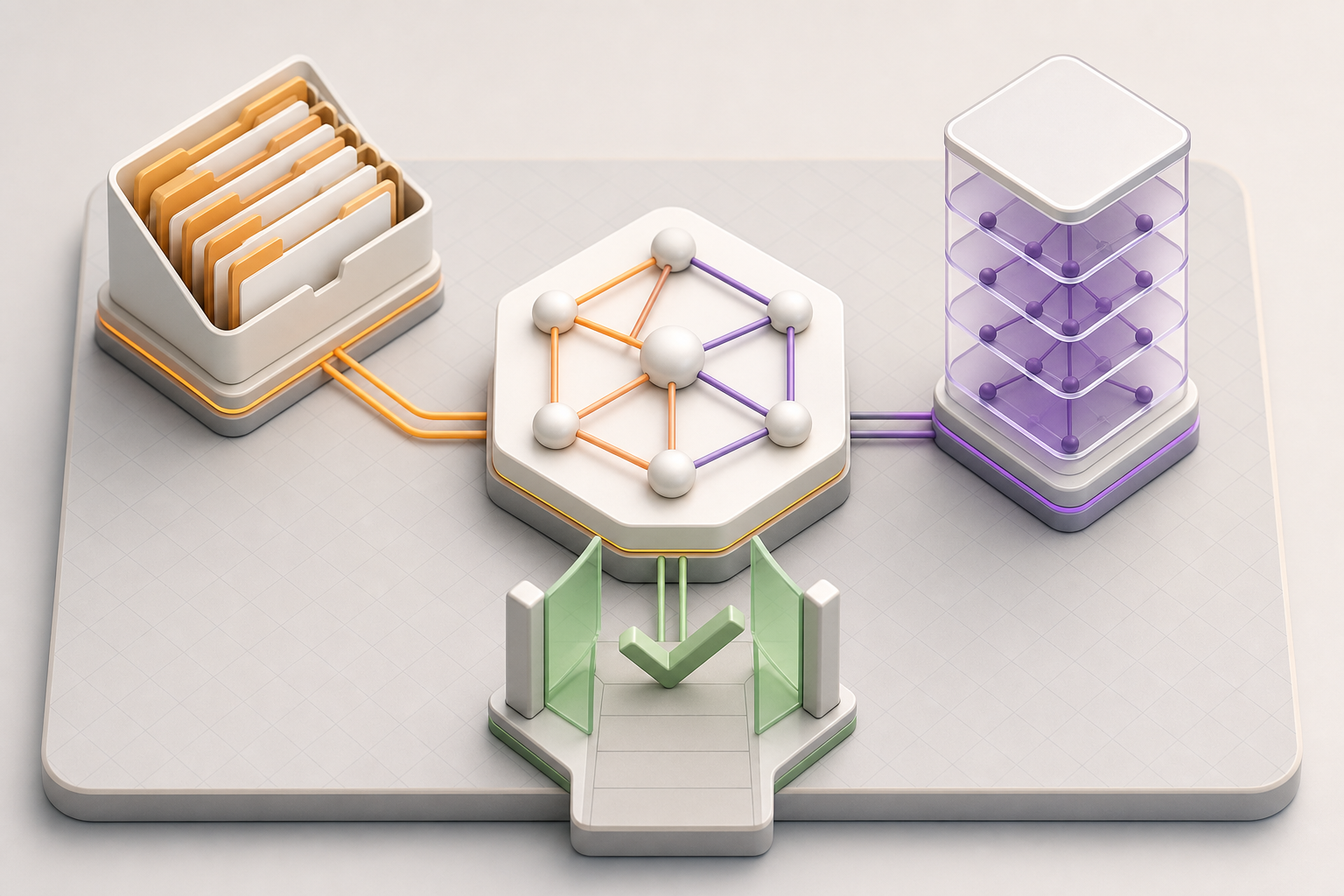
Use Postman to automate GraphQL requests, variables, assertions, environments, and CI runs. Use Apollo Studio to validate schema changes, enforce operation contracts, observe field-level usage, and protect federated graphs. The strongest 2026 approach combines both: Postman verifies executable behavior while Apollo Studio prevents unsafe schema and operation changes before they reach production.
Why GraphQL API Testing in 2026 Requires Contract, Runtime, and Observability Coverage
GraphQL API testing is effective only when it validates the schema contract, the executed operation, and production usage signals together. A passing response body is not enough if the schema introduces a breaking change, a resolver causes an N+1 query, or a deprecated field is still used by a mobile client.
A schema is the typed contract that defines GraphQL object types, fields, arguments, directives, queries, mutations, and subscriptions. A resolver is the server-side function that fetches or computes the value for a field. An operation is the client request, usually a query, mutation, or subscription, sent to the GraphQL endpoint.
GraphQL compresses many use cases into one endpoint, so endpoint-level coverage metrics are misleading. A team may show 95% endpoint availability while missing critical field combinations, authorization gaps, nullability violations, or pagination defects.
In mature teams, the quality signal shifts from endpoint pass rate to contract stability, operation safety, resolver reliability, and consumer impact. Teams that combine schema checks with executable collections often report 30% to 45% faster feedback loops because QA, platform, and frontend teams stop rediscovering the same contract failures in different environments.
Postman vs Apollo Studio for GraphQL API Testing Workflows
Postman and Apollo Studio solve different parts of the GraphQL quality problem, so the best strategy is not choosing one tool exclusively. Postman is stronger for request execution and automation, while Apollo Studio is stronger for schema governance, operation analytics, and graph-aware release control.
| Testing need | Postman strength | Apollo Studio strength | Best practice |
|---|---|---|---|
| Functional operation validation | Runs queries and mutations with variables, headers, environments, and assertions | Shows operation traces and error patterns after execution | Automate critical operations in Postman and use Apollo Studio to correlate failures with resolver traces |
| Schema change safety | Can query introspection and compare expected fields with scripts | Performs schema checks against registered operations and known clients | Gate merges with Apollo schema checks before Postman regression suites run |
| Contract testing | Validates response shapes, nullability, error messages, and business rules | Detects breaking schema changes and operation incompatibility | Combine consumer-driven contract testing with schema registry checks |
| CI automation | Runs with Newman or Postman CLI in pipelines | Runs graph checks and publishes variants through Rover CLI | Use both as separate quality gates with clear failure ownership |
| Federated graph validation | Can test composed gateway operations | Validates subgraph composition, field ownership, and supergraph changes | Let Apollo protect composition and use Postman for end-to-end gateway behavior |
| Performance investigation | Measures response time and supports data-driven request runs | Surfaces resolver timing, field latency, and operation frequency | Use Postman for repeatable smoke timing and Apollo Studio for root-cause analysis |
An introspection query is a GraphQL query that asks the server for its schema metadata. Introspection is useful for tooling and exploratory testing, but it should be controlled in production because it can expose the API surface to attackers.
Designing High-Value GraphQL Test Cases Before Automation
High-value GraphQL test cases target field combinations, variables, authorization boundaries, and schema guarantees rather than only individual endpoints. The strongest test design starts with risk mapping across operations, not with copying examples from the GraphQL playground.
Start with a graph inventory that ranks operations by revenue impact, user frequency, data sensitivity, and dependency complexity. For many SaaS teams, 20% of GraphQL operations carry 70% to 85% of production traffic, so exhaustive equal-weight coverage wastes pipeline time.
Prioritize tests for nullability, nested object depth, pagination cursors, authorization scopes, enum changes, error extensions, idempotency, and cache-sensitive fields. Add negative cases for invalid variables, missing required arguments, malformed IDs, expired tokens, forbidden role access, and partial backend outages.
Use risk-based testing to decide what runs on each quality gate. Pull-request checks should stay fast, nightly suites can explore broader combinations, and pre-release suites should validate cross-client compatibility.
How does schema-first testing reduce GraphQL regressions?
Schema-first testing reduces regressions by validating the API contract before implementation details leak into clients. It catches removed fields, changed enum values, stricter arguments, and nullability changes before consumers experience runtime failures.
Schema validation is the process of checking that a schema conforms to expected structure, compatibility rules, and organizational standards. In GraphQL, schema validation should include both technical correctness and consumer compatibility.
In practice, a schema-first QA workflow reviews proposed schema diffs before resolver code is considered complete. QA should ask whether new fields are nullable for safe rollout, whether deprecations include migration windows, and whether field names match domain language used across clients.
When should you test resolvers separately from operations?
You should test resolvers separately when a field contains complex business rules, expensive data access, external service calls, or security-sensitive filtering. Operation-level tests prove integration behavior, but resolver-level tests isolate defects faster.
A resolver can pass in a simple query and fail when nested under a different parent object or called with a different authorization context. Separate resolver tests are especially valuable for computed prices, entitlement checks, recommendations, inventory availability, and personally identifiable information filtering.
Do not replace operation testing with resolver testing. GraphQL failures frequently appear at the interaction boundary, such as variable coercion, directive handling, batching, caching, or field selection conflicts.
Building Advanced Postman Collections for GraphQL Operations
Postman GraphQL collections should model real client behavior with reusable variables, deterministic assertions, and environment-aware authentication. A collection that only sends static queries becomes stale quickly and fails to protect production workflows.
A collection is a structured group of API requests, scripts, variables, and documentation in Postman. For GraphQL, each request should capture the query or mutation, variables, headers, expected status, GraphQL errors, and business-level assertions.
Use collection variables for operation names, environment variables for endpoint URLs and tokens, and data files for user roles or product IDs. Keep query text readable and version-controlled so schema diffs are visible during code review.
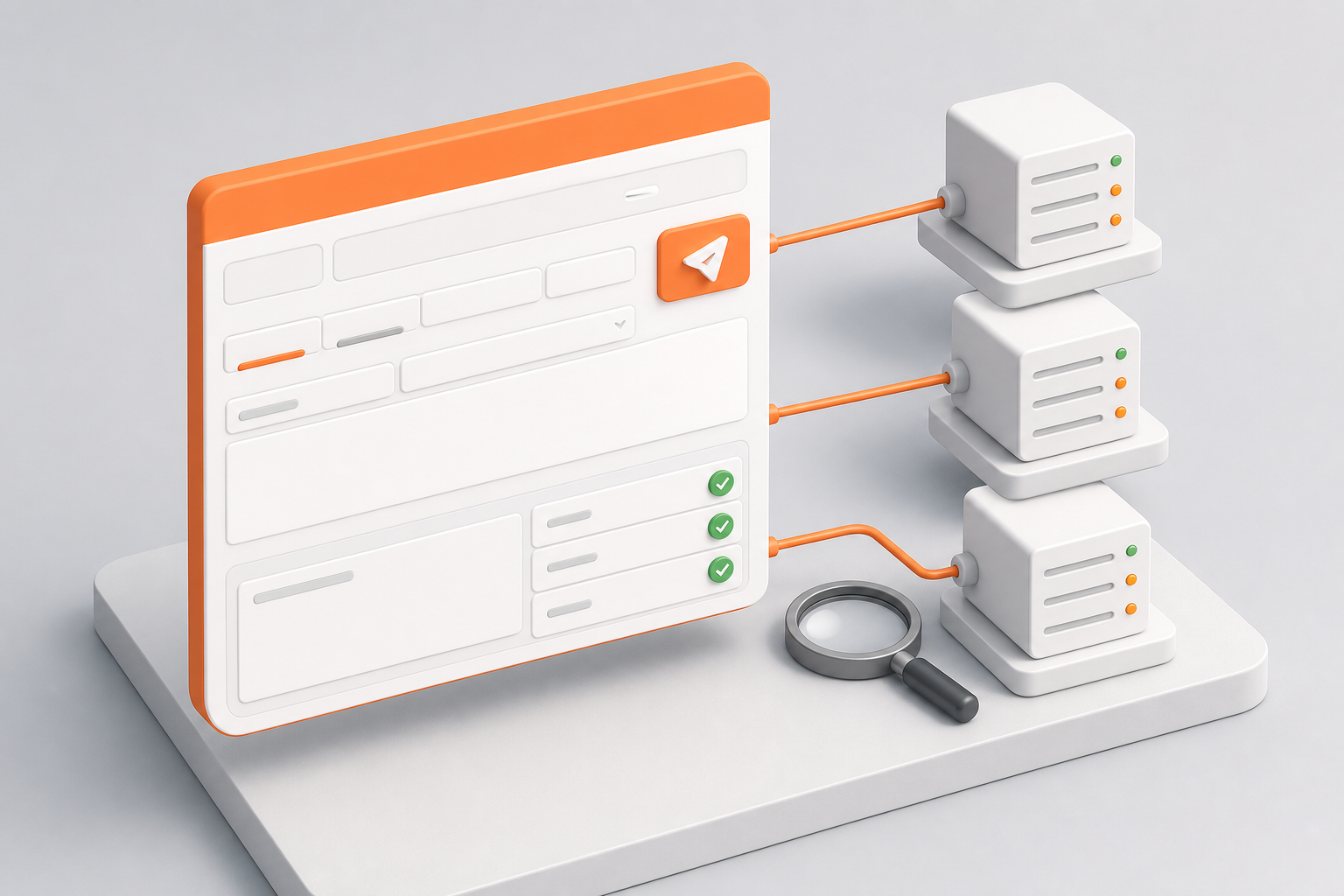
GraphQL can return HTTP 200 with an errors array, so tests must inspect both transport and GraphQL-level results. A robust Postman assertion checks status, errors, data shape, nullability expectations, and domain-specific values.
const json = pm.response.json();

pm.test("HTTP transport succeeds", function () {
  pm.response.to.have.status(200);
});

pm.test("GraphQL response has no unexpected errors", function () {
  pm.expect(json.errors, JSON.stringify(json.errors)).to.be.undefined;
});

pm.test("viewer account contract is stable", function () {
  pm.expect(json.data.viewer.id).to.match(/^usr_/);
  pm.expect(json.data.viewer.email).to.include("@");
  pm.expect(json.data.viewer.plan).to.be.oneOf(["FREE", "PRO", "ENTERPRISE"]);
});

pm.test("pagination contract returns safe cursor fields", function () {
  const connection = json.data.viewer.projects;
  pm.expect(connection.edges).to.be.an("array");
  pm.expect(connection.pageInfo.hasNextPage).to.be.a("boolean");
  pm.expect(connection.pageInfo.endCursor === null || typeof connection.pageInfo.endCursor === "string").to.equal(true);
});
Newman is the command-line runner for Postman collections. Postman CLI is Postman's newer command-line interface for running collections and integrating with Postman cloud workspaces.
postman collection run "GraphQL Critical Operations" \
  --environment "staging" \
  --iteration-data test-data/graphql-roles.json \
  --reporters cli,junit \
  --timeout-request 10000
For large suites, split collections by business capability rather than by HTTP endpoint because GraphQL has one endpoint for many behaviors. For example, keep identity, billing, search, checkout, and admin operations in separate collections with different pipeline schedules.
How should Postman handle authentication and role-based GraphQL tests?
Postman should handle authentication through environment-scoped token setup and role-specific test data, not manually pasted bearer tokens. Automated pre-request scripts can refresh tokens, select the correct tenant, and prevent false failures caused by expired sessions.
Role-based access control testing is the practice of verifying that users can access only the operations and fields permitted by their role. GraphQL makes this harder because a user may be allowed to query an object but not specific fields within that object.
Validate both denied operations and redacted fields. A viewer may receive an order ID and status, while an admin receives payment metadata, refund history, and internal notes.
Using Apollo Studio for Schema Checks, Operation Registry, and Production Signals
Apollo Studio adds graph-aware governance that Postman cannot fully replicate through request automation alone. It understands schema history, registered client operations, field usage, graph variants, and federated composition.
A graph variant is a named version of a graph, such as development, staging, production, or a branch-specific preview. A schema registry is a centralized service that stores schemas, tracks changes, and evaluates compatibility across versions and clients.
Apollo schema checks compare a proposed schema against known operations and composition rules. This prevents a field removal from passing simply because the current Postman suite did not include the exact mobile operation still used in production.
An operation registry is a managed list of approved GraphQL operations, often associated with client names and versions. Persisted queries are pre-registered operations referenced by an identifier, which reduces attack surface and improves cacheability.
Use Apollo Studio metrics to review field latency, error rate, request volume, and client awareness. A field with low test coverage but high production usage should be promoted into the Postman critical path suite.
rover graph check ecommerce-api@staging \
  --schema ./schema.graphql \
  --client-name web-checkout \
  --client-version 2026.05.19
Rover is Apollo's command-line interface for publishing schemas, running checks, and working with graphs. In CI, Rover should fail fast on breaking schema changes before slower integration and regression jobs start.
How does Apollo Studio improve federated GraphQL quality?
Apollo Studio improves federated GraphQL quality by validating whether subgraph changes compose safely into the supergraph. Federation is a GraphQL architecture where multiple subgraphs contribute fields and types to one unified API graph.
A subgraph is an independently owned GraphQL service that provides part of the overall domain. A supergraph is the composed graph exposed to clients through a router or gateway.
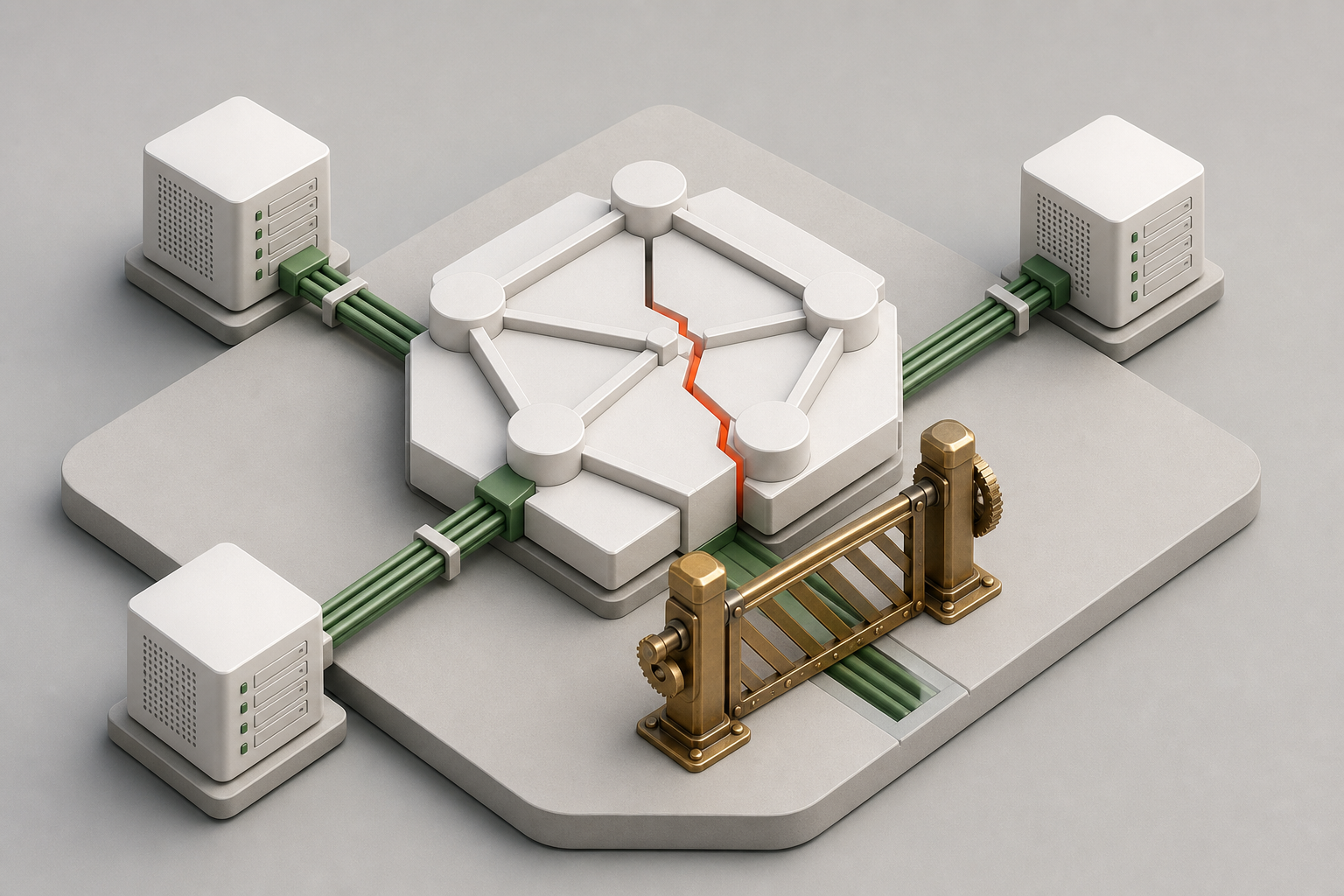
Federation failures often hide until teams integrate independently deployed services. Apollo composition checks catch ownership conflicts, missing keys, incompatible field definitions, and directive misuse before a subgraph breaks the gateway.
CI/CD Quality Gates for Postman and Apollo Studio
A strong CI/CD strategy separates fast contract checks from slower executable regression tests. This keeps developer feedback short while still protecting production with deeper validation before release.
CI/CD is the practice of continuously integrating, testing, and delivering software changes through automated pipelines. In GraphQL, pipeline stages should reflect the order in which failures become expensive.
- Run static GraphQL linting and schema validation on every pull request.
- Run Apollo Studio schema checks against registered operations and graph variants.
- Run Postman smoke collections for the most critical operations.
- Run role-based and negative GraphQL collections in staging after deployment.
- Run scheduled performance, pagination, and data-shape suites outside the pull-request path.
Most teams should target pull-request GraphQL feedback under 10 minutes. Longer suites are valuable, but if they block every small schema edit, developers will bypass or ignore them.
Use quality gate ownership to reduce ambiguity. Schema check failures belong to API owners, Postman assertion failures belong to the owning feature team, and environment instability belongs to platform or test infrastructure owners.
Track leading indicators such as schema check failure rate, escaped GraphQL defects, flaky collection percentage, mean resolver latency, and percentage of production operations covered by automated tests. Mature teams often keep GraphQL collection flakiness below 3% by stabilizing test data and isolating external dependencies.
Common GraphQL API Testing Pitfalls That Break Mature Teams
The most common GraphQL testing failures come from treating GraphQL like REST, trusting HTTP status codes, and ignoring schema usage data. These mistakes create impressive test dashboards that miss real consumer risk.
First, teams over-test generated CRUD operations and under-test high-value operation compositions. GraphQL risk often lives in nested field selections, authorization boundaries, pagination edges, and resolver interaction, not in the query name itself.
Second, teams forget that partial success is normal in GraphQL. A response can contain both data and errors, so assertions must decide which errors are expected, which are fatal, and which indicate degraded downstream services.
Third, teams rely on introspection snapshots without checking registered operations. A schema can look valid and still break a real client because a field was deprecated too aggressively or an enum value changed semantics.
Fourth, shared staging data corrupts test reliability. GraphQL tests that depend on mutable user accounts, inventory, balances, or feature flags will become flaky unless data setup is isolated, resettable, or explicitly versioned.
Fifth, teams ignore cost and depth limits until production incidents occur. Complex nested queries can create resolver storms, cache misses, and database pressure even when every field behaves correctly in isolation.
Security, Performance, and Federation Checks QA Teams Should Not Skip
Advanced GraphQL API testing must include abuse resistance, latency behavior, and federated composition safety. Functional correctness does not prove the graph is safe under malicious queries, high-cardinality variables, or independently deployed subgraphs.
Security testing is the practice of verifying that systems resist unauthorized access, data leakage, and abuse. For GraphQL, include field-level authorization, introspection exposure, query depth, query complexity, batching abuse, persisted query enforcement, and sensitive error messages.
Performance testing is the practice of measuring responsiveness, throughput, and stability under expected and stressful conditions. For GraphQL, average response time is less useful than p95 latency by operation, resolver timing, downstream call count, and database query volume.
API security testing should include attempts to request hidden fields, cross-tenant IDs, unauthorized nested objects, and excessive aliases. A malicious query with many aliases can multiply resolver execution while appearing as a single API request.
Performance testing should include realistic selection sets from production operation analytics, not synthetic mega-queries only. Benchmarks from high-performing teams commonly show that optimizing the top 15 operations reduces perceived GraphQL latency more than broad resolver micro-optimization.
For federated systems, test subgraph ownership and fallback behavior. A pricing subgraph outage should not expose inconsistent checkout totals, and an identity subgraph change should not silently remove authorization context from downstream resolvers.
Operational Metrics That Prove GraphQL Testing Is Working
GraphQL testing is working when it reduces escaped defects, shortens feedback loops, and improves schema change confidence. Vanity metrics such as request count or endpoint coverage do not prove consumer safety.
Use a balanced scorecard across prevention, detection, and production learning. Prevention metrics include schema check pass rate, breaking-change rejection count, and deprecation policy compliance.
Detection metrics include Postman collection pass rate, assertion failure categories, negative test coverage, and flaky test percentage. Production learning metrics include untested high-volume operations, fields with rising error rates, p95 latency regressions, and client versions using deprecated fields.
A practical target is to cover 80% of production GraphQL traffic with automated critical-path operation tests while keeping the pull-request suite lean. The remaining long-tail operations should be monitored through Apollo Studio and promoted when risk or usage increases.
Key Takeaways
- GraphQL API testing in 2026 requires schema contract checks, executable operation tests, and production usage analytics working together.
- Postman is best for automating realistic GraphQL requests, variables, assertions, environments, and CI execution.
- Apollo Studio is best for schema checks, operation registry governance, federated graph composition, and field-level observability.
- HTTP 200 does not mean a GraphQL operation passed; always assert the errors array, data shape, nullability, and business rules.
- Federated GraphQL systems need composition checks before deployment and gateway-level tests after deployment.
- The highest-value tests usually cover authorization, pagination, nested field selections, nullability, persisted operations, and high-traffic client workflows.
- Measure success by fewer escaped defects, faster feedback, lower flakiness, and more production operations protected by automation.