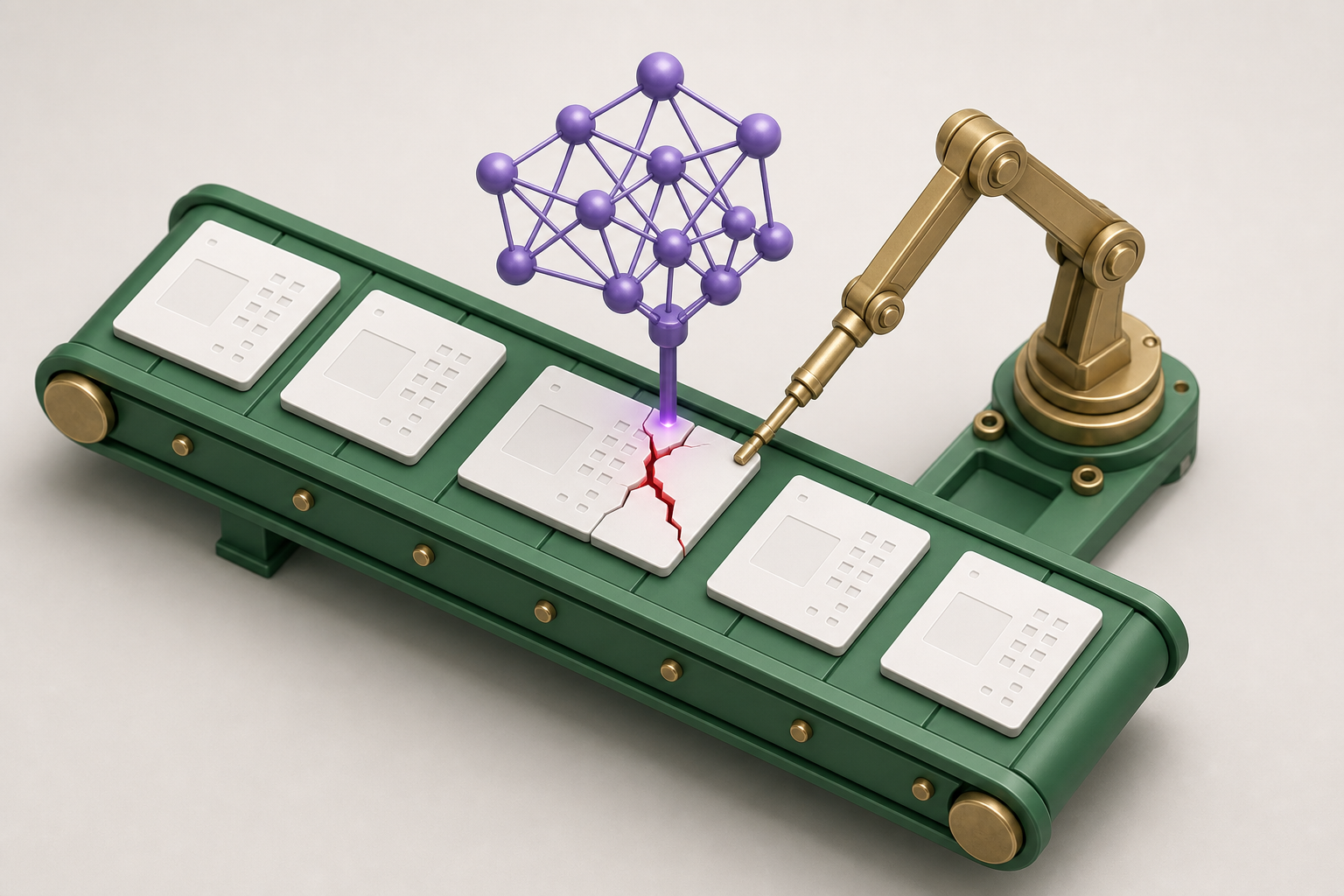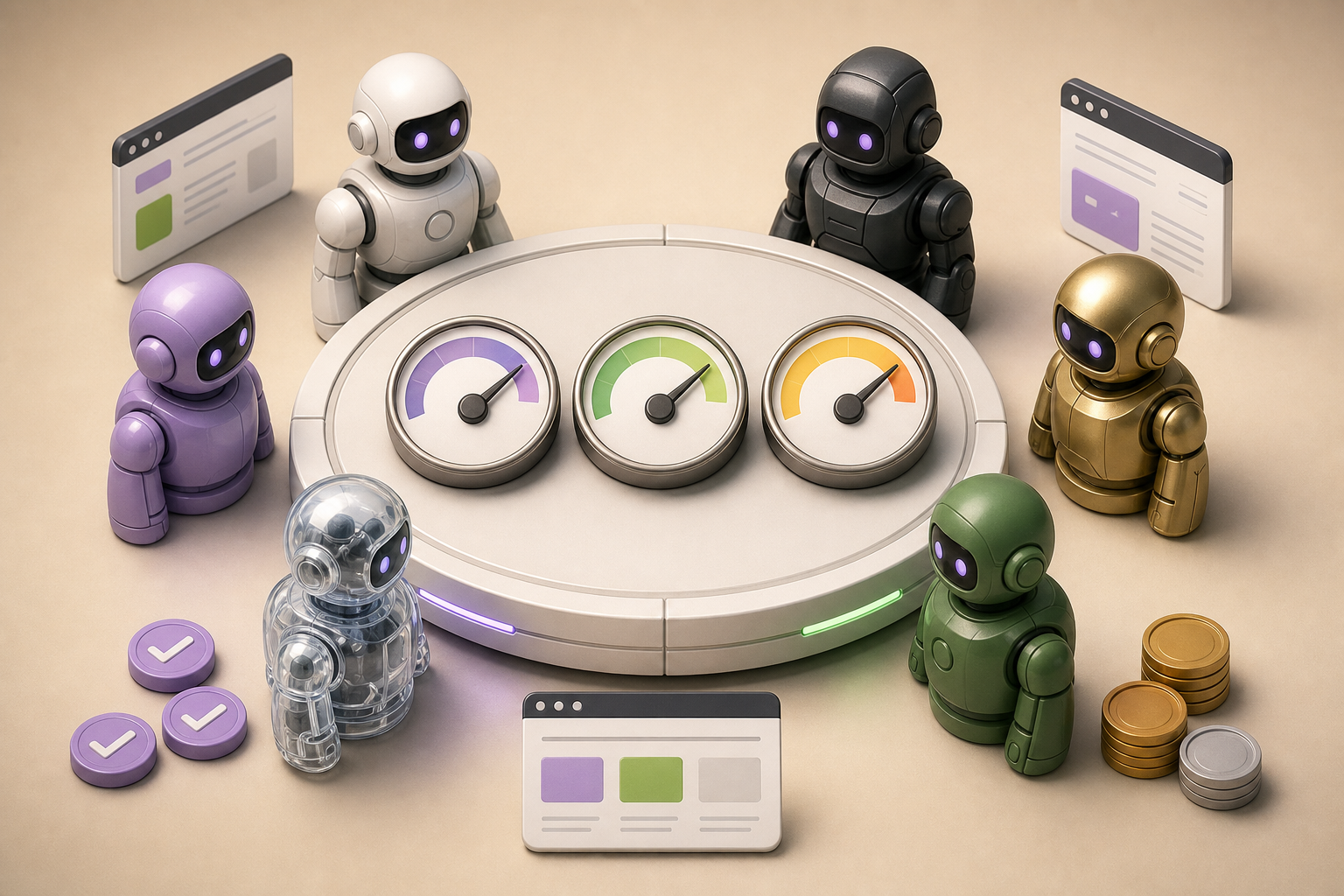

Autonomous testing tools are software platforms that use AI to generate, run, maintain, and prioritise tests with less human scripting than traditional automation. AI test automation is the use of machine learning, heuristics, computer vision, or large language models to improve automated testing decisions. In 2026, these tools are valuable accelerators, but they are not independent QA organisations.
Autonomous testing tools in 2026 can create tests from user journeys, repair many broken locators, identify visual regressions, and prioritise risky areas. They still struggle with ambiguous product intent, complex test data, deep domain rules, and accountability for release decisions. The strongest teams use autonomous testing as a force multiplier while QA owns risk, strategy, and evidence.
What autonomous testing tools can reliably do in 2026
Autonomous testing is the partial delegation of test creation, execution, maintenance, and analysis to software agents that make decisions from application behaviour and historical quality signals. In 2026, the reliable scope is broad enough to change QA workflows, but narrow enough that human governance remains essential.
The most mature capabilities sit around UI automation maintenance, visual validation, exploratory journey discovery, and failure clustering. Teams adopting these capabilities typically report 25% to 45% faster regression feedback loops when their applications already have stable environments and clean CI data.
Self-healing tests are automated tests that update selectors, locators, or interaction paths when the application changes in predictable ways. They reduce maintenance toil, especially for React, Angular, and design-system-heavy products where IDs and DOM hierarchy shift frequently.
Large language model test generation is the use of language models to draft test scenarios, assertions, synthetic data, or automation code from requirements, tickets, user stories, or observed sessions. It is useful for expanding scenario breadth, but it must be reviewed against business rules and risk priorities.
How do autonomous testing tools differ from traditional automation frameworks?
Autonomous testing tools differ by making test decisions, while traditional frameworks mostly execute decisions encoded by engineers. Selenium, Cypress, and Playwright can be excellent execution engines, but they do not inherently decide which journeys matter, which selector changed, or which failure pattern is most likely a product defect.
The boundary is becoming blurred. Playwright plus model-assisted code generation, visual AI, test impact analysis, and failure analytics can look semi-autonomous even without a commercial autonomous platform.
| Capability | Traditional test automation | Autonomous testing tools in 2026 | QA risk |
|---|---|---|---|
| Test creation | Engineers script scenarios from requirements | Tools draft tests from flows, prompts, tickets, and recordings | Generated tests may mirror happy paths and miss negative intent |
| Locator maintenance | Manual selector updates after UI changes | Self-healing tests select alternate stable attributes or visual anchors | Healing can mask real UX or accessibility regressions |
| Failure triage | Humans inspect logs, screenshots, and videos | AI clusters failures by probable root cause and affected build | False grouping can hide a high-impact edge case |
| Coverage analysis | Coverage is inferred from suites, code, or traceability | Tools compare journeys, changes, analytics, and historical defects | Coverage can overvalue frequently used paths and undervalue compliance paths |
| Release recommendation | QA and engineering assess evidence | Systems produce risk scores or confidence indicators | Accountability cannot be delegated to a score |
Leading autonomous testing tools and where they fit
The current market is split between AI-native platforms, automation frameworks with AI extensions, and specialised intelligence layers. The best choice depends less on marketing claims and more on your application architecture, release cadence, compliance burden, and tolerance for opaque decisions.
Mabl, Testim, Functionize, and ACCELQ focus on reducing scripting and maintenance through model-based flows, self-healing locators, and cloud execution. Applitools focuses deeply on visual AI, while tools built around Playwright and Cypress increasingly add AI-assisted authoring, flake detection, and impact selection.
Enterprise teams often combine categories. A common 2026 pattern is Playwright for deterministic critical paths, visual AI for design-system regression, and an autonomous platform for broad smoke coverage and exploratory journey expansion.
| Tool or approach | Strongest use case | Notable limitation | Best-fit QA maturity |
|---|---|---|---|
| Mabl | Low-code web regression with self-healing and journey coverage | Complex custom controls may still need engineered assertions | Teams scaling automation across multiple squads |
| Testim | AI-assisted UI stability for fast-changing front ends | Requires disciplined locator strategy to avoid over-healing | Product teams with frequent UI releases |
| Functionize | Natural-language style test authoring and adaptive execution | Opaque decisions can challenge regulated audit needs | Teams prioritising speed over full code ownership |
| Applitools | Visual AI validation across responsive layouts | Does not replace functional or domain-level assertions | Teams with design-system and cross-browser risk |
| Playwright with AI extensions | Code-first deterministic automation with assisted generation | Autonomy depends on surrounding tooling and governance | Engineering-led QA organisations |
| CI analytics and test impact tools | Prioritising tests based on changed code and failure history | Can under-test rarely changed but high-risk functionality | Teams with large suites and reliable build metadata |
When should you choose a platform instead of enhancing Playwright or Cypress?
You should choose a platform when maintenance volume, non-coder participation, or cross-browser infrastructure costs are bigger constraints than framework control. A code-first stack is usually better when your product requires deep API setup, custom fixtures, contract checks, or strict review of every assertion.
The hidden variable is operating model. If QA cannot review generated assets, tune healing rules, and reject weak suggestions, a platform may increase noise faster than it increases confidence.
Where self-healing tests help and where they become dangerous
Self-healing tests help most when UI structure changes without changing user intent. They become dangerous when the tool silently accepts a different behaviour, different control, or weaker assertion as equivalent.
Healthy self-healing is constrained, observable, and reversible. The tool should show what changed, why it selected the new target, what confidence score it assigned, and whether the healed run should block or warn.
Teams commonly see 40% to 60% reductions in locator-related maintenance after adopting self-healing on stable product areas. The gain is smaller on volatile prototypes, heavily personalised interfaces, or applications with inconsistent accessibility attributes.
How does self-healing affect defect detection?
Self-healing improves defect detection when it prevents false failures from harmless DOM changes. It weakens defect detection when it converts a meaningful UI break into a passing test without human review.
A practical policy is to allow automatic healing for non-critical smoke paths but require approval for payment, identity, entitlement, healthcare, financial, and workflow-completion paths. High-risk tests should fail loudly when the user-facing contract changes.
name: autonomous-regression-gate
on:
  pull_request:
    branches:
      - main
jobs:
  risk-based-tests:
    runs-on: ubuntu-latest
    steps:
      - uses: actions/checkout@v4
      - name: Install dependencies
        run: npm ci
      - name: Run deterministic critical paths
        run: npx playwright test --grep @critical --reporter=json
      - name: Run autonomous exploratory suite in advisory mode
        run: npx qa-agent run --source recent-user-journeys --max-tests 30 --mode advisory
      - name: Fail only on approved high-confidence defects
        run: npx qa-agent gate --min-confidence 0.90 --require-human-approved-heals true
This pattern keeps the autonomous layer valuable without giving it uncontrolled release authority. The deterministic suite protects known critical behaviours, while the advisory suite expands discovery and feeds reviewed candidates into the backlog.
Limitations of autonomous testing that vendors understate
Autonomous testing tools still fail hardest where product meaning is not visible in the interface. The tool can observe a button, request, or page state, but it cannot reliably infer policy, commercial risk, regulatory nuance, or customer harm without curated context.
The first limitation is oracle quality. A test oracle is the mechanism that decides whether behaviour is correct, and AI-generated checks often default to weak oracles such as page loaded, element visible, or no console error.
The second limitation is test data realism. Autonomous agents can invent emails, names, and amounts, but enterprise flows depend on account state, permissions, entitlements, inventory, credit limits, regional rules, and lifecycle history.
The third limitation is environment determinism. If staging is unstable, feature flags are undocumented, and test accounts collide, AI will amplify the mess by generating more ambiguous failures.
The fourth limitation is explainability. Regulated teams need to know why a test exists, what requirement it covers, who approved it, and why a failure was dismissed; black-box autonomy can struggle to produce audit-grade evidence.
Can autonomous testing replace exploratory testing?
Autonomous testing cannot replace skilled exploratory testing because exploration is guided by intent, suspicion, domain knowledge, and ethical judgement. It can, however, prepare better exploration charters by surfacing changed areas, unusual paths, clustered failures, and low-coverage journeys.
The best exploratory testers use AI outputs as reconnaissance. They challenge the model’s assumptions, investigate anomalies, and ask whether the product can fail in ways the tool cannot observe.
What teams commonly get wrong with AI test automation
Teams get AI test automation wrong when they treat autonomy as a shortcut around test design. The result is a larger suite with weaker assertions, unclear ownership, and more noise in CI.
The most common pitfall is measuring success by test count. More generated tests can reduce confidence if they duplicate shallow journeys, compete for brittle data, or extend pipeline duration beyond the team’s feedback budget.
The second pitfall is letting self-healing run without review. A healed locator is a change to the test’s interpretation of the product, and it deserves the same scrutiny as a code change when business impact is high.
The third pitfall is ignoring accessibility and semantic markup. Autonomous tools perform better when applications expose stable roles, labels, test IDs, API contracts, and predictable state transitions.
The fourth pitfall is vendor lock-in through opaque assets. If scenarios, assertions, and failure history cannot be exported or reviewed in human-readable form, the team is renting confidence rather than building a durable quality system.
- Do not promote generated tests directly into release gates. Route them through review, risk tagging, and flake observation first.
- Do not use AI to hide instability. Fix environment, data, and observability issues before adding autonomous coverage at scale.
- Do not confuse visual similarity with correctness. A page can look right while pricing, permission, or fulfilment logic is wrong.
- Do not let every squad tune the tool differently. Shared healing thresholds and naming rules make results comparable across teams.
How QA roles change when autonomous testing matures
QA roles become more strategic as autonomous testing absorbs repetitive scripting and first-pass triage. The QA function shifts from writing every interaction to governing risk models, validating AI-generated evidence, and designing systems that reveal important failures quickly.
Senior QA engineers increasingly act as quality architects. They define which behaviours require deterministic tests, which areas can tolerate advisory AI checks, and which signals feed release readiness.
Test automation engineers become toolchain engineers. Their work includes fixture design, service virtualisation, semantic locator standards, CI optimisation, observability, and review pipelines for generated tests.
Exploratory testers become model challengers. They examine what the autonomous system did not test, where it over-trusted historical behaviour, and how a real user could experience harm despite a green dashboard.
QA managers become evidence stewards. They must explain risk in language that engineering, product, security, legal, and customer success teams can act on.
| QA responsibility | Before autonomous testing | With mature autonomous testing |
|---|---|---|
| Regression maintenance | Manual selector repair and reruns | Review healing decisions and enforce locator policy |
| Test design | Author most scenarios from scratch | Curate generated scenarios against risk and requirements |
| Failure triage | Inspect failures one by one | Validate AI clusters and escalate high-risk anomalies |
| Coverage strategy | Map suites to features and stories | Combine code changes, usage analytics, defects, and compliance risk |
| Release advice | Summarise pass and fail status | Explain residual risk, confidence level, and evidence quality |
Why does domain knowledge matter more when tests are generated?
Domain knowledge matters more because generated tests tend to reproduce visible workflows rather than validate hidden obligations. A mortgage approval flow, prescription refill, loyalty discount, or tax calculation may pass UI checks while violating policy.
QA experts must encode domain expectations as robust assertions, data rules, contract checks, and negative scenarios. Autonomy helps with breadth; domain expertise provides truth.
A practical adoption model for autonomous testing tools
The safest adoption model is incremental, evidence-based, and tied to measurable maintenance or feedback problems. Start where autonomy has clear leverage, then expand only when signal quality is proven.
Begin with a baseline. Measure current flake rate, mean triage time, locator maintenance hours, regression duration, escaped defect patterns, and pipeline failure causes.
Next, select one product slice with stable value and visible pain. Good candidates include account settings, checkout smoke paths, admin dashboards, onboarding, and cross-browser visual checks.
Run autonomous output in advisory mode for at least two release cycles. Compare AI findings against human triage, rejected suggestions, false positives, missed defects, and time saved.
Promote only reviewed assets into CI gates. A typical threshold is two to four consecutive stable runs, explicit owner approval, meaningful assertions, and documented rollback for healed changes.
Scale through governance rather than enthusiasm. Define standards for locator attributes, generated-test naming, confidence thresholds, data isolation, audit logs, and deletion of low-value tests.
When should autonomous testing be part of the release gate?
Autonomous testing should be part of the release gate only when its checks are deterministic enough, reviewed enough, and important enough to justify blocking delivery. Advisory findings are useful earlier than blocking rules because they improve learning without creating avoidable release friction.
A strong gate separates signal types. Critical deterministic failures block, high-confidence AI defects require rapid human review, visual differences route to product or design owners, and low-confidence discoveries create investigation tickets.
Benchmarks and metrics that matter in 2026
The best metrics focus on confidence per unit of feedback time, not raw automation volume. Autonomous testing should reduce waste, expose risk earlier, and improve decision quality.
Useful operational benchmarks include locator maintenance hours per release, flaky failure rate, mean time to triage, percentage of generated tests accepted after review, and autonomous findings confirmed as defects. Mature teams often target a flaky failure rate below 3% for gated suites and keep advisory autonomous suites separate until they stabilise.
Coverage metrics should mix technical and product signals. Code coverage, route coverage, API contract coverage, user-journey coverage, permission-matrix coverage, and defect-origin coverage each answer different questions.
Release metrics should capture impact. Track escaped defects by severity, rollback frequency, customer-visible incident rate, and the percentage of releases where AI findings changed the release decision.
| Metric | Healthy 2026 target | Why it matters |
|---|---|---|
| Reviewed generated-test acceptance rate | 35% to 65% | Too low means poor prompts or weak context; too high may mean shallow review |
| Gated suite flake rate | Under 3% | Release gates must be trusted by engineering |
| Mean failure triage time | 30% to 50% reduction after AI clustering | Faster diagnosis shortens feedback loops |
| Healed locator review latency | Under one business day for critical paths | Silent healing must not become silent risk |
| Confirmed autonomous defect rate | 10% to 25% for advisory findings | Higher is excellent; lower may still be useful for exploration if severity is high |
The 2026 outlook for autonomous testing tools
Autonomous testing tools will become more agentic, but the winning pattern will be supervised autonomy rather than full replacement of QA. The next advantage will come from connecting test intelligence to requirements, telemetry, code changes, production incidents, and business risk.
Agentic testing is the use of AI agents that plan, execute, observe, and adapt testing actions toward a goal. In practice, 2026 agents are better at bounded missions than open-ended quality ownership.
Expect stronger integrations with product analytics, feature-flag platforms, observability tools, and design systems. This will help autonomous systems test what changed, what users actually do, and what has historically failed.
Expect more governance pressure as well. Organisations will ask how generated tests are approved, how customer data is protected, how models are evaluated, and who is accountable when AI-assisted evidence is wrong.
The durable QA advantage is not competing with AI at repetitive execution. It is building quality systems where autonomous testing, deterministic automation, exploratory skill, and production feedback reinforce each other.
Key Takeaways
- Autonomous testing tools in 2026 are effective accelerators for generation, maintenance, visual checks, and triage, but they do not own product risk.
- Self-healing tests reduce locator maintenance only when healing decisions are visible, reviewable, and constrained by risk level.
- AI test automation fails most often on weak oracles, unrealistic test data, unstable environments, and missing domain context.
- The strongest QA teams separate deterministic release gates from advisory autonomous discovery until generated checks prove stable and meaningful.
- QA roles shift toward risk modelling, evidence governance, domain assertion design, CI signal quality, and challenge-based exploration.
- Useful metrics include flake rate, triage time, reviewed test acceptance, confirmed autonomous defects, and whether AI findings changed release decisions.
- Supervised autonomy is the realistic 2026 model: AI expands speed and breadth while QA remains accountable for confidence and consequences.