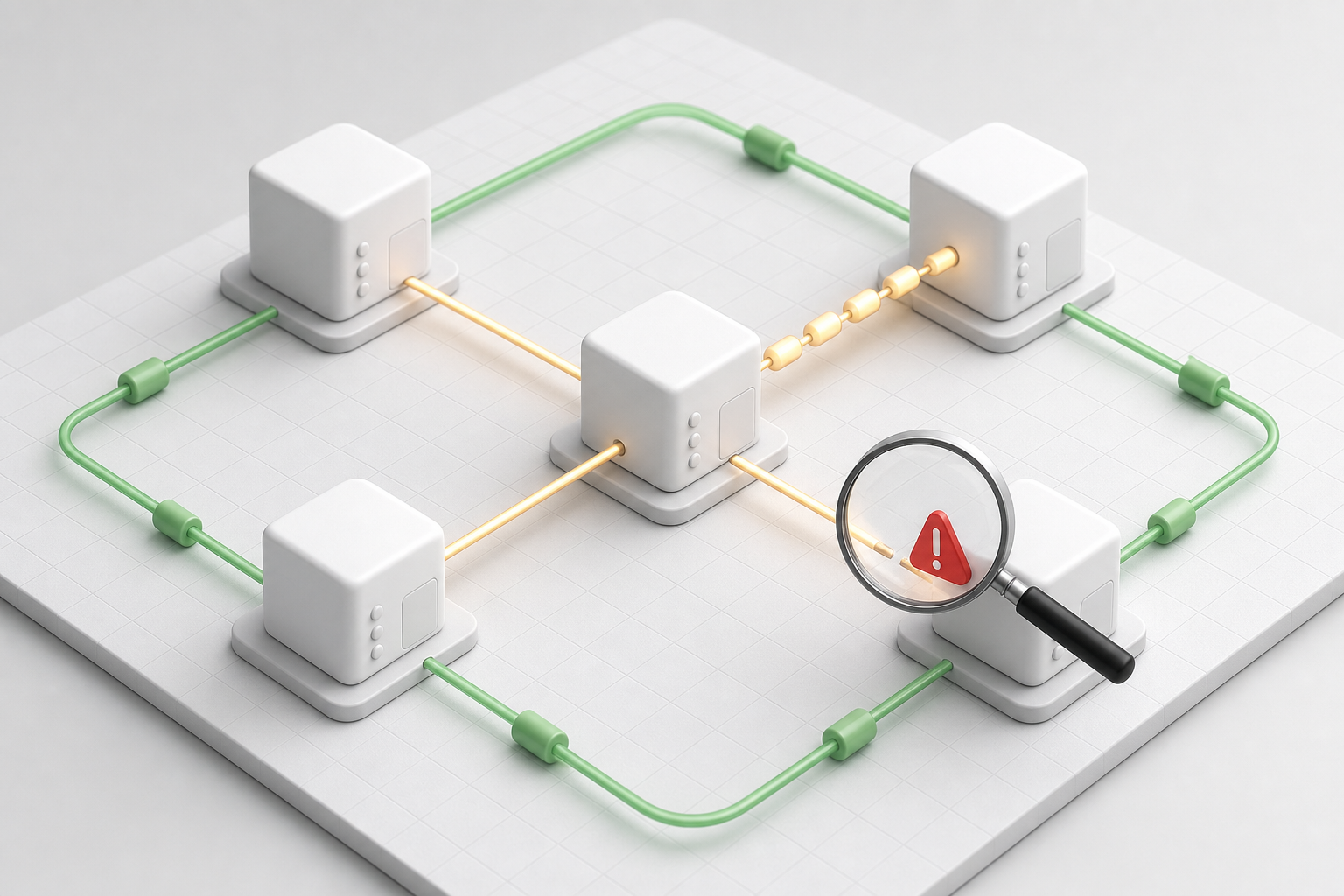
Event-driven architecture testing starts where ordinary endpoint validation stops: after the request returns, when messages, queues, consumers, retries, and downstream state changes determine whether the workflow actually worked.
To test an event-driven API, validate the message contract, broker behavior, consumer effects, retry rules, idempotency, ordering assumptions, and observability evidence. A 200 response or accepted command only proves that the first boundary was reached; it does not prove that the asynchronous business outcome happened correctly.
Why Event-Driven Systems Fail Differently
A synchronous REST test usually asks a direct question: when a client sends this request, does the endpoint return the expected status, headers, and body? In an event-driven system, the API may only accept a command, publish an event, or enqueue work. The meaningful result appears later, often in another service, database, notification channel, search index, audit log, or compensating workflow.
This changes the testing target. Instead of one request-response boundary, testers must examine a chain of observable facts: was the event emitted, did it match the expected schema, did the correct consumers process it, did retries behave safely, and did duplicate or late messages avoid corrupting state? The test is less about a single endpoint and more about a distributed conversation.
That is why event-driven API testing benefits from an explicit evaluation model. NIST’s TEVV-Athlon framework, although focused on AI systems, is a useful reminder that complex systems need structured, adaptable evaluation rather than one static check. Similarly, NIST’s Artificial Intelligence Technology Evaluation announcement highlights common metrics and controlled evaluation environments as important testing practices for complex behavior. The same mindset applies to asynchronous APIs: define what must be observed, where it is measured, and which failure modes matter.
The Endpoint Is Only One Contract Boundary
In an event-driven workflow, the endpoint is often a command boundary. It receives intent, validates basic input, and hands work to a broker or event stream. The test still needs normal API assertions, but those assertions are only the first layer.
| Test focus | Synchronous endpoint testing | Event-driven API testing |
|---|---|---|
| Primary success signal | HTTP status, response body, headers | Published event, consumed event, downstream state |
| Contract shape | Request and response schema | Command schema, event schema, metadata, semantic meaning |
| Timing model | Immediate response | Eventually consistent processing with timeouts |
| Failure handling | Error response and validation message | Retries, dead-letter queues, compensations, poison-message handling |
| Common hidden risk | Incorrect response or missing validation | Duplicate side effects, schema drift, out-of-order processing |
For teams already wrestling with flaky asynchronous automation, the same design principles used in reliable distributed systems testing apply here: isolate controllable dependencies, wait on domain signals instead of fixed sleeps, and make each test prove a business invariant rather than a transient implementation detail.
Testable Contract Points in an Asynchronous Workflow
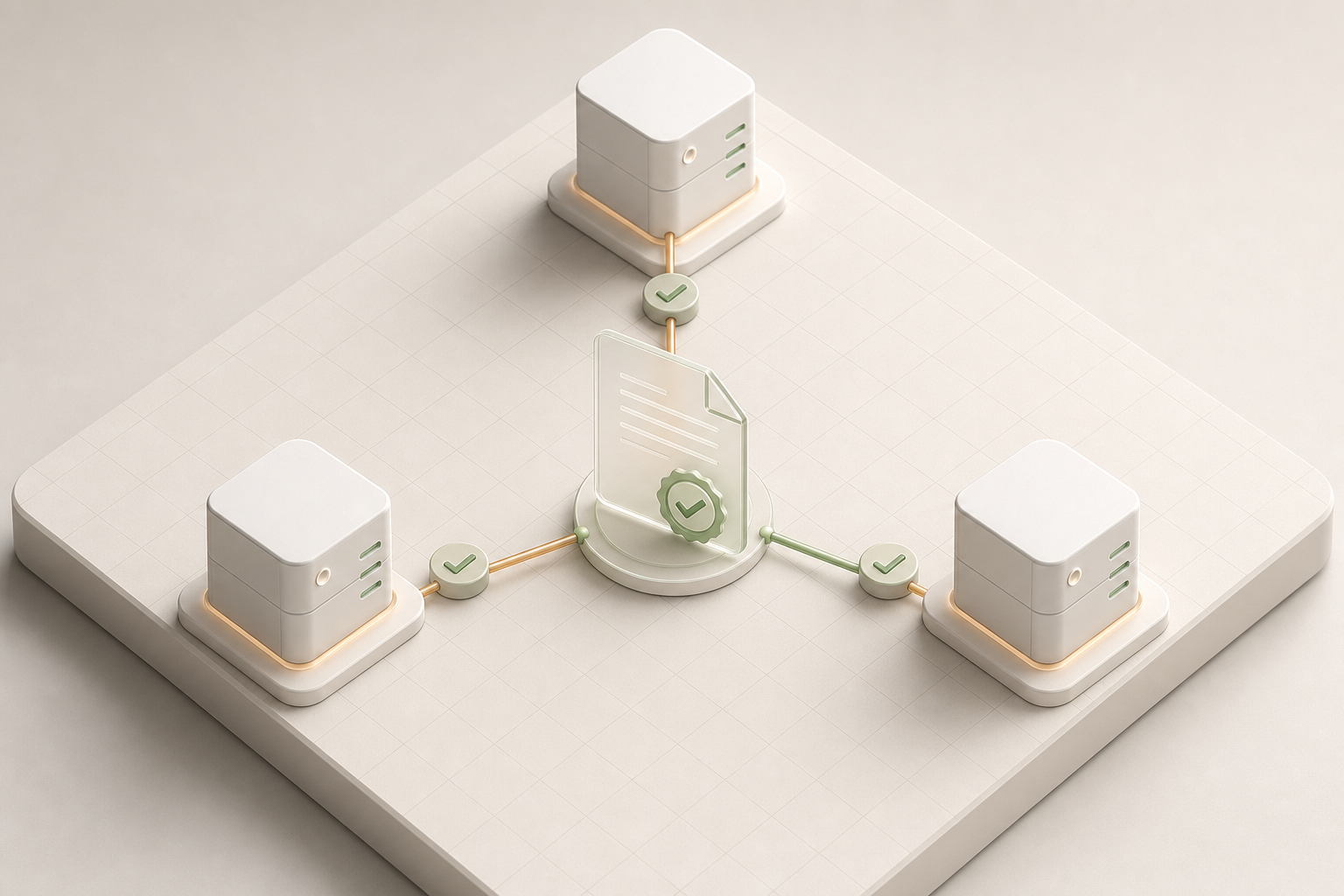
A message contract is more than a JSON schema. It describes the payload fields, metadata, versioning rules, routing expectations, and business meaning that producers and consumers rely on. API testers should separate the contract into layers so each can be verified deliberately.
What should a message contract include?
A practical message contract should include the event name or type, schema version, unique message identifier, correlation identifier, causation identifier, timestamp, producer identity, required payload fields, allowed optional fields, and compatibility rules. It should also define whether the event represents a fact that already happened, such as OrderPaid, or a command requesting work, such as ReserveInventory.
That distinction matters. Events should be immutable facts; consumers should not need to ask the producer what the event meant later. Commands are requests and may be rejected. Tests should check that producers do not blur those semantics by publishing vague events such as OrderUpdated without enough context for safe consumer behavior.
{
  "eventType": "OrderPaymentCaptured",
  "schemaVersion": "2.1",
  "messageId": "7b3c0f8a-1a4e-4c25-b92f-9a8b7c6e1001",
  "correlationId": "checkout-45892",
  "causationId": "payment-command-99210",
  "occurredAt": "2026-11-01T10:15:32Z",
  "producer": "payments-service",
  "payload": {
    "orderId": "ord-10491",
    "paymentId": "pay-77818",
    "amount": {
      "currency": "USD",
      "value": "129.99"
    },
    "captureStatus": "captured"
  }
}
This example is intentionally explicit. The identifiers support tracing and duplicate detection. The version supports compatibility checks. The payload contains the business fact a consumer needs without relying on a hidden database lookup.
How do you validate event ordering without overfitting the test?
First, decide whether ordering is a real business requirement. Many event-driven failures come from accidental assumptions: a consumer expects CustomerCreated before OrderPlaced, but the broker or partitioning strategy does not guarantee that order. If order is required, tests should verify the configured key, partitioning rule, or sequence number that enforces it.
If order is not guaranteed, test that consumers behave safely when messages arrive late or out of order. For example, a shipment consumer receiving OrderCancelled before OrderPacked should not create a shipment simply because a later event appears. The expected behavior may be to ignore stale events, hold pending state, or trigger a reconciliation flow.
Idempotency and Duplicate-Message Checks
Idempotency means processing the same command or event more than once produces the same final result as processing it once. In event-driven systems, this is not optional defensive programming. Brokers, clients, and consumers may retry after timeouts, connection failures, ambiguous acknowledgements, or deployment interruptions.
A strong idempotency test publishes the same message twice with the same message identifier or business idempotency key, then verifies that side effects occur only once. The test should inspect the domain result, not just a log line. For example, it should confirm that only one refund was created, one email was sent, one inventory decrement occurred, or one ledger entry was posted.
- Duplicate command: send the same checkout command twice and verify one order is created.
- Duplicate event: replay the same payment-captured event and verify the order remains paid once.
- Ambiguous timeout: simulate a consumer that processes work but fails before acknowledgement, then verify retry safety.
- Different message, same business key: send two messages with different IDs but the same idempotency key and verify the business rule wins.
Beware of a common pitfall: testing idempotency only at the HTTP layer. If the endpoint rejects duplicate requests but the consumer is not idempotent, replayed broker messages can still corrupt downstream state.
Retries, Dead Letters, and Poison Messages
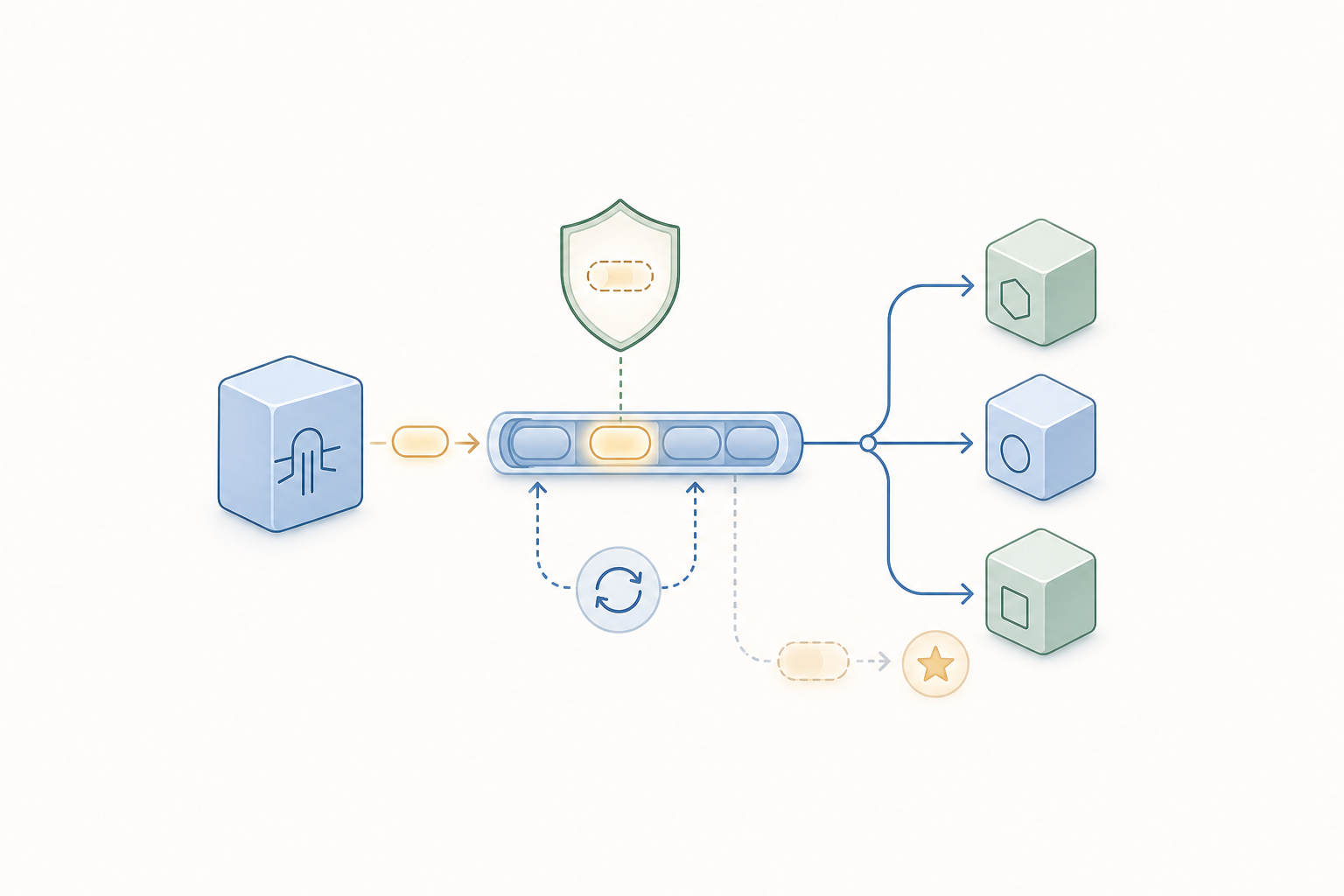
Retry behavior is part of the API contract when work is asynchronous. A consumer that retries forever can create backlog and hide failure. A consumer that never retries can drop recoverable work. A consumer that retries non-idempotent operations can duplicate side effects.
Test cases should cover transient errors, permanent validation errors, dependency outages, and malformed messages. Each type needs a different expected outcome. A database timeout might be retried with backoff. A message missing a required business field should move to a dead-letter queue or failure topic. An authorization failure may require a security alert rather than repeated processing.
consumer:
  topic: order.payment.captured
  retryPolicy:
    maxAttempts: 4
    backoff: exponential
    initialDelayMs: 500
  failureHandling:
    permanentValidationError: dead-letter
    transientDependencyError: retry
    duplicateMessage: acknowledge-without-side-effect
  idempotency:
    key: payload.paymentId
    store: processed_messages
This kind of configuration is testable. A QA environment can inject a transient dependency failure and verify that the message is retried according to policy. It can inject a malformed payload and verify that it is not retried endlessly. It can publish a duplicate and verify acknowledgement without repeated business action.
When should a test use replay instead of synthetic messages?
Use synthetic messages for focused contract and boundary tests because they are small, deterministic, and easy to review. Use replay tests when you need to validate production-like sequences, historical edge cases, migrations, or consumer behavior against real event variety.
Replay testing requires care. Remove or mask sensitive data, isolate side effects, and avoid publishing replayed events into live topics. A safe replay environment should make it impossible to send customer notifications, charge payments, or mutate production systems.
Consumer-Side Verification and Observability Evidence
Event-driven architecture testing should not stop at the producer. A producer can publish a valid event that no consumer can process, or that consumers interpret differently. Consumer-side verification closes that gap by testing the event from the perspective of each service that depends on it.
Consumer-driven contract testing is useful here because consumers document what they need and producers verify they still satisfy it. For microservice teams using contract workflows, the practices described in consumer-driven contract testing with Pact are directly relevant, even when the transport is a message broker rather than HTTP.
Observability provides the evidence layer. A passing asynchronous test should be able to answer: which correlation ID was created, which event was published, which consumer handled it, how many attempts occurred, and which final state changed? Logs, traces, metrics, audit records, and broker offsets can all help, but tests should avoid brittle assertions against incidental wording in logs.
- Trace correlation: assert that command, event, and consumer processing share a correlation ID.
- Business-state probe: query the domain state that proves the workflow completed.
- Broker evidence: inspect test-topic offsets, acknowledgements, or dead-letter entries where available.
- Consumer metric: watch a controlled counter for processed, retried, failed, or deduplicated messages.
CI Strategy for Asynchronous APIs
Continuous integration should not run every event-driven test at the same depth. Fast feedback comes from layering tests by cost and confidence. The goal is to catch contract drift early while reserving slower, environment-heavy scenarios for the right stage.
| Pipeline layer | Best checks | Typical risk caught |
|---|---|---|
| Unit and component | Serializer, schema, handler logic, idempotency store behavior | Incorrect mapping, unsafe duplicate handling |
| Contract | Producer and consumer message expectations | Breaking schema or semantic changes |
| Integration | Broker, topic routing, retry policy, dead-letter behavior | Misconfiguration and transport assumptions |
| End-to-end | Full business workflow across services | Missing downstream effects and orchestration gaps |
| Replay or failure injection | Historical events, dependency faults, out-of-order messages | Rare edge cases and resilience failures |
Avoid fixed sleeps in CI. They make tests slow and flaky. Prefer polling for a domain condition with a sensible timeout, subscribing to a test-only topic, or waiting for a traceable processing marker. Also isolate test data by correlation ID so parallel runs do not consume or assert against each other’s messages.
Common Pitfalls That Hide Event-Driven Defects
The first pitfall is treating the broker as invisible plumbing. Topic names, routing keys, partitions, acknowledgement modes, retention, and dead-letter rules all shape API behavior. They deserve test coverage when a release changes them.
The second pitfall is validating syntax but not semantics. A payload can satisfy a JSON schema while still being wrong: an event name may be too generic, a currency may not match the order region, or an event may say payment was captured before the payment provider confirms capture.
The third pitfall is using end-to-end tests as the only safety net. Full workflow tests are valuable, but they are slower and harder to diagnose. Pair them with smaller contract, handler, and configuration tests so a failure points to the broken boundary.
Key Takeaways
- Event-driven API testing must validate the asynchronous business outcome, not only the initial endpoint response.
- Message contracts should cover metadata, schema versioning, identifiers, semantics, and compatibility rules.
- Idempotency tests should prove that duplicate messages do not create duplicate side effects.
- Retry and dead-letter behavior should be tested as part of the API contract, not left to operations alone.
- Consumer-side verification catches interpretation gaps that producer-only schema checks miss.
- Observability turns asynchronous tests from guesswork into evidence-based validation.
- CI pipelines should layer fast contract checks, integration checks, end-to-end workflows, and targeted replay or failure-injection tests.