Bug-finding techniques are repeatable mental models, observations, and experiments that testing techniques experts use to expose failures before customers do. Manual testing techniques are not a fallback when automation ends; they are targeted investigations into risk, ambiguity, state, data, and human behavior. The best testers combine psychology with method so every click, input, and question has a reason.
Expert testers find bugs by modeling risk, challenging assumptions, and designing small experiments around likely failure points. Bug hunting strategies are planned ways to search for defects under uncertainty, while exploratory testing is simultaneous learning, test design, and execution. The strongest approach blends heuristics, session charters, edge-case data, and careful note-taking.
Why Expert Bug-Finding Starts With Psychology, Not Scripts
Expert bug-finding starts with psychology because most escaped defects survive through assumptions, attention gaps, and misleading confidence. A script can tell a tester what to do, but psychology helps the tester notice what the team forgot to question.
A defect is not only a coding mistake; it is a mismatch between intended behavior, implemented behavior, and user expectations. Experienced testers look for the conditions where people make poor decisions: deadline pressure, repeated flows, familiar screens, partial information, and optimistic acceptance criteria.
Confirmation bias is the tendency to notice evidence that supports what we already believe. In testing, it appears when a tester follows the happy path, sees one successful result, and unconsciously lowers scrutiny for the rest of the session.
Attentional blindness is the failure to notice visible problems when attention is fixed elsewhere. A tester validating tax calculation may miss that the confirmation page shows a stale address, even though the issue is on screen.
Expert testers counter these biases by deliberately changing perspective. They ask what a confused user would do, what a malicious user would try, what a rushed operator would skip, and what a production system would do under partial failure.
This psychological discipline is why exploratory testing can outperform shallow scripted regression in new or unstable areas. Teams that reserve 20 to 30 percent of manual test time for structured exploration commonly report more pre-release discoveries of workflow and data defects, especially in complex business applications.
The Mental Models Testing Techniques Experts Use Under Uncertainty
Testing techniques experts rely on mental models because incomplete information is normal in real projects. A mental model is a simplified representation of how a product, user, risk, or system behavior should work.
Risk-based testing is a prioritization approach that focuses effort where failure impact and failure probability are highest. It prevents manual testing techniques from becoming a coverage theater exercise where every area is touched but few areas are challenged deeply.
Heuristics are fallible rules of thumb that guide investigation when exhaustive testing is impossible. A strong heuristic does not guarantee a bug, but it gives the tester a productive direction faster than random clicking.
One useful heuristic is CRUD plus permissions: create, read, update, delete, and then repeat those actions as users with different roles. Another is recent change plus dependency: inspect not only the feature that changed, but also the shared services, cached views, reports, exports, and notifications it influences.
Expert testers also build a product model before attacking the interface. They identify entities, states, rules, actors, integrations, data transformations, and irreversible actions.
A common benchmark in mature QA groups is that one hour of model-building can reduce unfocused exploratory time by 25 to 40 percent. The gain does not come from testing less; it comes from selecting sharper experiments.
How does a risk model change manual testing techniques?
A risk model changes manual testing techniques by ranking test ideas according to business damage, user frequency, technical volatility, and observability. Instead of distributing time equally, the tester invests deeply where a hidden defect would be expensive or embarrassing.
For example, a cosmetic issue on a rarely used settings panel may receive a quick pass. Payment recovery, password reset, pricing logic, and data export deserve adversarial testing because failures create revenue loss, support escalations, compliance exposure, or user lockout.
The model should be visible, not trapped in a tester's head. A lightweight risk matrix lets product managers, developers, and support teams challenge priorities before execution begins.
Why do expert testers ask better questions than checklists contain?
Expert testers ask better questions because checklists usually encode known expectations, while high-value bugs hide in unknown interactions. Good questions expose ambiguity before the product ships.
Useful questions include: what happens if the user changes their mind halfway through, what state persists after an error, what data is trusted without validation, and what process assumes a stable network. These questions work because they target transitions, assumptions, and dependencies rather than isolated fields.
Question quality is a competitive advantage in manual QA. A tester who can ask precise, uncomfortable questions often prevents defects before a build exists.
Manual Testing Techniques That Expose High-Value Defects
Manual testing techniques expose high-value defects when they are selected for the risk shape of the feature. No single technique is superior; expert testing combines methods to cover rules, flows, data, timing, and user intent.
Boundary value analysis is a technique that tests values at, just below, and just above meaningful limits. It is effective because developers often implement comparisons, validations, and ranges with off-by-one mistakes.
Equivalence partitioning is a technique that groups inputs expected to behave the same way, then samples representative values from each group. It reduces redundant input testing while preserving coverage of meaningful behavior classes.
State transition testing is a technique that validates how a system moves between states after events. It is essential for workflows such as orders, subscriptions, approvals, authentication, refunds, and document lifecycles.
Error guessing is a technique where testers use product knowledge, failure history, and technical intuition to predict likely defects. Despite its informal name, it becomes powerful when tied to defect taxonomies and production incident patterns.
Pairwise testing is a technique that samples combinations of input variables so each pair of values appears together at least once. It is valuable when configuration combinations explode beyond what a human can execute exhaustively.
How does exploratory testing turn curiosity into evidence?
Exploratory testing turns curiosity into evidence by linking each investigation to a charter, observations, data, and reproducible findings. It is not unstructured wandering; it is disciplined learning under time constraints.
A tester might start with a charter such as investigating checkout recovery after payment timeout. During the session, they vary payment status, browser refresh, duplicate submission, saved cards, inventory changes, and notification delays.
The output should include what was tested, what was learned, what remains uncertain, and which bugs or risks need follow-up. Without this evidence trail, exploration becomes hard to defend and harder to repeat.
When should you switch from scripted checks to bug hunting strategies?
You should switch from scripted checks to bug hunting strategies when the feature is new, ambiguous, defect-prone, highly integrated, or recently changed. Scripts are strongest for known expectations; bug hunting is strongest for discovering what the team did not anticipate.
A practical trigger is low information confidence. If acceptance criteria are thin, designs changed late, logs are sparse, or stakeholders disagree about expected behavior, scripted execution alone will underperform.
Another trigger is repetitive pass history. If a regression script has passed ten releases without finding meaningful issues, keep automating the deterministic checks and redirect human attention to new risks.
How do boundary, state, and data tests uncover hidden risks?
Boundary, state, and data tests uncover hidden risks by stressing the places where code must interpret rules rather than merely display screens. These techniques reveal defects that happy-path functional checks rarely reach.
Consider a subscription system with trial, active, past-due, canceled, and reactivated states. The dangerous defects are often not in viewing the subscription, but in moving between states while invoices, permissions, emails, and entitlements update asynchronously.
Data variation adds another layer. Null values, duplicate records, long names, locale-specific characters, old migrated accounts, and partially completed profiles often reveal assumptions that test environments hide.
A Practical Bug Hunting Workflow for Exploratory Testing Sessions
A practical bug hunting workflow gives exploratory testing enough structure to be repeatable without stripping away discovery. The goal is to time-box learning, target risks, capture evidence, and convert surprises into actionable defects.
Session-based testing is a method for managing exploratory testing through charters, time boxes, notes, and debriefs. It creates accountability while preserving the tester's ability to follow promising clues.
Start with a charter that names the mission, scope, risks, data, and constraints. A good charter is narrow enough to guide decisions but broad enough to allow investigation.
Use a visible note format so observations do not vanish into memory. Many expert testers separate notes into setup, actions, observations, questions, bugs, and coverage gaps.
session:
  charter: investigate checkout recovery after payment interruption
  duration_minutes: 90
  product_area: checkout and order confirmation
  risks:
    - duplicate orders after retry
    - stale cart after failed authorization
    - incorrect inventory reservation
    - missing customer notification
  test_data:
    users:
      - returning_customer_with_saved_card
      - guest_user_with_coupon
    payments:
      - timeout
      - declined
      - authorized_then_reversed
  evidence_to_capture:
    - timestamps
    - order ids
    - screenshots of customer-visible state
    - api correlation ids from logs
  follow_up:
    - automate stable recovery checks
    - schedule debrief with payments developer
During execution, use short experiment loops. Form a hypothesis, create the condition, observe the result, change one variable, and record whether the product violated a rule, expectation, or user need.
End with a debrief, not just a bug count. The most valuable outcomes may be a clarified requirement, an automation candidate, a monitoring gap, or a newly discovered risk cluster.
Comparison of Bug-Finding Techniques by Risk and Feedback Value
Bug-finding techniques differ in the risks they reveal, the skill they require, and the speed of feedback they produce. Choosing the right technique is more important than applying every technique mechanically.
| Technique | Best Fit | Defects Commonly Found | Primary Limitation |
|---|---|---|---|
| Exploratory testing | New, ambiguous, or integrated features | Workflow breaks, missed requirements, unexpected interactions | Weak output if notes and charters are poor |
| Boundary value analysis | Validation rules, limits, ranges, pricing, quantities | Off-by-one errors, rejected valid input, accepted invalid input | Less useful when rules are undefined |
| State transition testing | Orders, approvals, subscriptions, authentication, recovery flows | Invalid state changes, stale permissions, broken reversals | Requires accurate state modeling |
| Pairwise testing | Configuration-heavy features with many variables | Combination defects between options, roles, devices, or settings | May miss three-way or sequence-dependent bugs |
| Error guessing | Areas with known failure patterns or production incident history | Recurring mistakes, migration edge cases, integration assumptions | Depends heavily on tester experience |
| Scenario-based testing | End-to-end business workflows and user journeys | Process gaps, handoff failures, inconsistent messaging | Can become too broad without risk focus |
In practice, expert testers layer these approaches. A session may begin with exploratory testing, use state transition testing to map the workflow, apply boundary values at decision points, and add error guessing based on past incidents.
This layering is why human-led testing still matters in delivery pipelines. Automation confirms known checks quickly, while expert manual investigation discovers new risks before they become repeatable checks.
What Teams Commonly Get Wrong With Bug Hunting Strategies
Teams commonly get bug hunting strategies wrong by confusing freedom with lack of discipline. Exploratory work fails when it has no charter, no risk focus, no evidence, and no debrief.
The first pitfall is treating exploratory testing as a leftover activity after scripted regression. When testers receive the most ambiguous work at the end of a schedule, the organization should not be surprised by shallow findings.
The second pitfall is measuring only bug count. A tester who finds two severe data-loss defects may contribute more value than one who files twenty cosmetic issues.
The third pitfall is ignoring testability. If environments are unstable, logs are inaccessible, seed data is unrealistic, and feature flags are undocumented, even strong testers lose time reconstructing basic context.
The fourth pitfall is letting expertise become tribal knowledge. Senior testers may use excellent heuristics silently, but the team gains little if those heuristics never become checklists, charters, examples, or automation candidates.
The fifth pitfall is excessive politeness around requirements. Expert testers challenge ambiguity early because vague requirements become expensive defects later.
Where does this approach break down? It breaks down in safety-critical or heavily regulated contexts if exploratory evidence is not tied to traceability, approval records, and formal coverage obligations.
The remedy is not to avoid exploration. The remedy is to integrate charters, evidence capture, risk rationale, and requirement links into the team's quality system.
Metrics and Benchmarks That Show Bug-Hunting Quality
Bug-hunting quality is best measured through risk reduction, learning velocity, and escaped defect prevention. Counting executed test cases or raw bugs found gives an incomplete and sometimes misleading picture.
Useful metrics include defect severity mix, defects per session hour, duplicate defect rate, reopened defect rate, time from build availability to first meaningful finding, and percentage of exploratory findings converted into automated checks. These indicators show whether manual testing techniques are producing durable knowledge.
Escaped defect analysis is especially valuable. If production issues repeatedly appear in areas that had only scripted checks, the team may need more exploratory charters around integration, data migration, permissions, or recovery paths.
Healthy teams often see 15 to 25 percent fewer reopened bugs when testers attach strong reproduction steps, environment details, data identifiers, and screenshots or logs. They also tend to see faster developer turnaround because the defect report reduces diagnostic uncertainty.
A mature benchmark is not zero manual testing. It is a balanced system where deterministic checks move into automation, humans focus on uncertainty, and every exploratory insight either improves the product, improves a test, or improves a risk model.
How Expert Testers Turn Findings Into Team Learning
Expert testers turn findings into team learning by converting individual discoveries into shared prevention mechanisms. A bug is useful once; a learned failure pattern is useful across releases.
After a strong defect, ask which assumption failed. Was the requirement incomplete, the design misleading, the code path untested, the data unrealistic, or the monitoring insufficient?
Then decide the right follow-up artifact. Some findings become automated regression checks, some become risk checklist items, some become design review prompts, and some become production alerts.
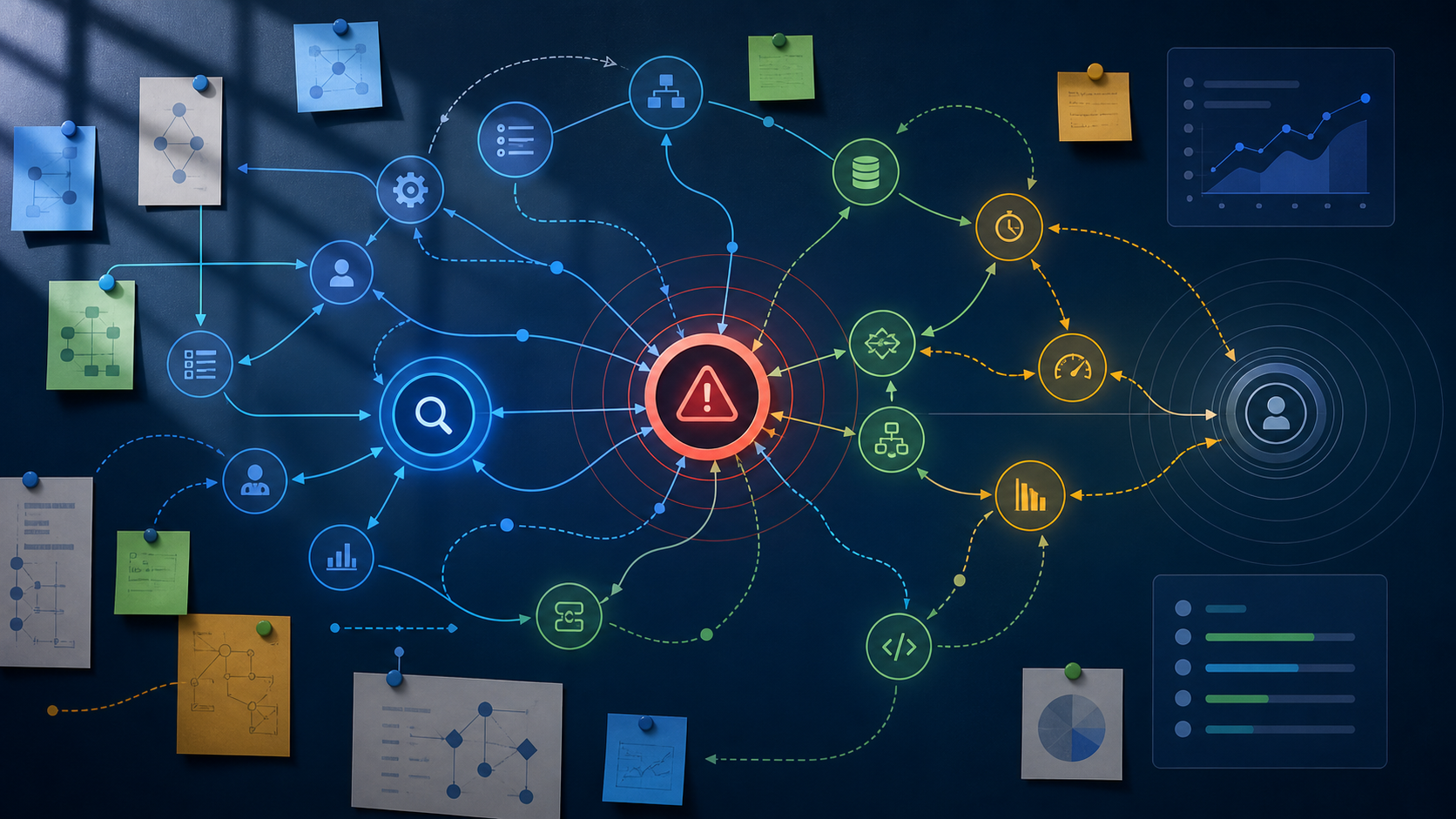
Mind mapping is a visual technique for organizing related ideas, risks, functions, and test paths around a central concept. Many senior testers use it after exploratory sessions to expose coverage gaps and communicate how discovered bugs cluster.
Debriefs should be short but rigorous. The tester explains the charter, coverage, blockers, notable observations, defects, confidence level, and recommended next tests.
This loop improves the whole delivery system. Over time, the team spends less effort rediscovering the same classes of bugs and more effort investigating genuinely new uncertainty.
Key Takeaways
- Expert bug-finding combines psychology and method because the most expensive defects often survive through assumptions, bias, and ambiguous expectations.
- Exploratory testing is most effective when managed with charters, time boxes, evidence capture, and debriefs rather than treated as random clicking.
- Manual testing techniques such as boundary value analysis, state transition testing, pairwise testing, and error guessing reveal different risk patterns and should be layered deliberately.
- Bug hunting strategies should be driven by risk, recent change, business impact, user frequency, and technical volatility instead of equal coverage across all features.
- Teams weaken exploratory work when they measure only bug count, provide poor testability, or fail to convert discoveries into shared learning.
- Strong defect reports reduce developer diagnostic time by including exact data, environment context, reproducible steps, timestamps, and observable evidence.
- The best QA organizations automate stable checks and reserve expert human attention for uncertainty, ambiguity, integrations, and product behavior that scripts cannot yet predict.